
Every fleet buy starts with the same fork in the road — and on an e-tricycle platform it is not a trim level, it is a separate chassis. The passenger trike is engineered around a bench seat, a weather canopy and a duty cycle that ends when the meter closes; the cargo trike is engineered around a drop-side box, a reinforced rear axle and a duty cycle that ends when the payload is emptied. The two share a three-wheel architecture, a differential hub motor and a 60V/72V electrical system — but they solve different jobs and they price differently. This guide puts the two platforms side by side so a buyer can pick the right one for a fleet order, or the right mix for a depot that runs both.
The Two Platforms, Side by Side
The passenger and cargo platforms are built in the same factory on the same three-wheel architecture, but they differ where it matters to a route. Here is the headline spec comparison a procurement manager should carry into a quote call:
| Spec | Cargo E-Tricycle | Passenger E-Tricycle |
|---|---|---|
| Motor | 800W / 1000W / 1200W differential hub, 60V/72V | 800W–1200W differential hub, 60V |
| Battery | 60V 32Ah NMC / 72V 40Ah LFP | 60V 32Ah / 60V 45Ah |
| Range (loaded) | 50–80 km | 60 km per charge |
| Top speed | 25–35 km/h | 40 km/h |
| Payload / capacity | 300 kg (EU) / 500 kg (non-EU), 150–500L box | 2–6 passengers plus driver |
| Weather protection | Drop-sides, optional insulated lining | Canopy plus side curtains |
| Brakes | Hydraulic disc front + dual drum rear, parking brake | Hydraulic disc front + rear |
| Primary market | Logistics and last-mile delivery | Urban taxi, shuttle and ride-hail |
| MOQ | 50 units | 30–50 units |
Three wheels give both platforms the stability that a two-wheeler cannot offer with a load or with passengers on board — the same reasoning covered in the differential and drivetrain guide. The differences below are what actually separate the two.
What the Passenger Platform Optimizes
The passenger trike is a revenue machine built around seating capacity and rider comfort. It seats 2–6 passengers beside the driver, and on the fleet model the config pairs a 1000W differential motor with a 60V 32Ah pack for a 60 km per-charge range and a 40 km/h top speed — the pace a city taxi or shuttle needs to cover a route and come back for the next fare. The spec that makes it work in the real world is the weather canopy and side curtains: a ride-hail seat that gets rained on does not get rebooked, so the enclosure is what protects the per-trip revenue during a monsoon season or a midday heat spike.
Because the passenger platform earns money per seat rather than per kilogram, the operating economics are also different. A trike carrying 3+ passengers clears more revenue per day than the same chassis carrying the same mass as parcels — the per-day revenue model is worked through in the taxi and shuttle guide, and the rental variant in the tourism rental guide. Where the platform really wins is on a short, repeated urban route with many stops, where the seat count compounds across a shift.
What the Cargo Platform Optimizes
The cargo trike is built around mass. On a reinforced steel chassis it carries 300 kg (EU spec) / 500 kg (non-EU) in a 150–500L box with drop-sides, and the box can take an insulated lining for temperature-sensitive loads. The motor is offered in three tiers — 800W, 1000W and 1200W — matched to the payload and the terrain, which is the exact decision covered in the motor power guide. Everything downstream of the motor is spec’d for load: hydraulic disc brake up front plus dual drum rears and a parking brake (brake systems), 3.00-12 front / 3.75-12 reinforced dual rears (tires), and a leaf-spring rear suspension so a laden trike does not beat itself apart on a potholed street.
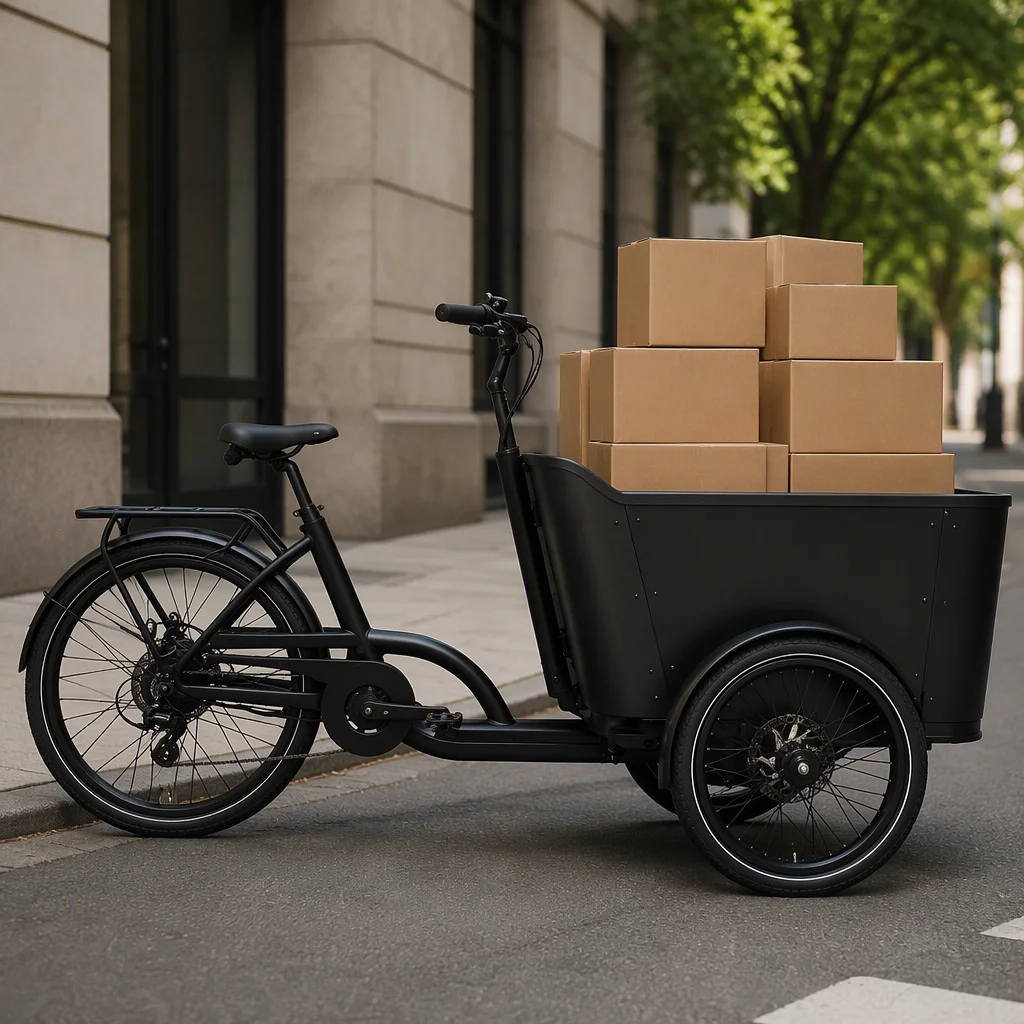
Because it carries weight, the cargo platform is where the per-kilogram economics live. The three FOB price tiers — roughly $1,250–1,550 for the 800W base, $1,580–1,880 for the 1000W build and $1,880–2,250 for the 1200W LFP configuration — track the payload and range, and the full bill-of-materials logic is in the cost breakdown guide. A fleet that moves the same tonnes a day will pick the cargo platform almost every time.
The Real Cost: Dollars per Kilogram vs Dollars per Seat
This is the sharpest way to frame the decision. The cargo platform is bought as cost per kilogram of payload capacity, so a denser route (parcels, produce, beer, building supplies) amortises the vehicle faster. The passenger platform is bought as cost per seat, so a route with a constant stream of riders amortises the vehicle per trip. The two seldom compete on the same street: a lunch-rush courier run is a cargo job, a 6pm shuttle run is a passenger job. When a fleet runs both, the capital question becomes how to finance two platform lines — structured in the fleet financing guide — and how the battery pack is shared across the two.
Duty-Cycle Fit: Which Application Needs Which
Use the application, not the price, to make the first cut:
| Application | Platform | Why |
|---|---|---|
| Food / parcel / courier delivery | Cargo | Needs box volume and payload for stacked drops |
| Grocery / bakery / florist runs | Cargo | Multi-stop drops with holdable, insulated load |
| Retail / wholesale restocking | Cargo | Volumetric goods, heavy crates |
| Street taxi / shuttle / ride-hail | Passenger | Seat count and canopy drive per-trip revenue |
| Campus / resort / airport transfer | Passenger | Multiple riders, weather enclosure, short loops |
| Community health / mobile outreach | Cargo (equipped) | Carries clinics, equipment and supplies |
Every one of these rows has a deeper write-up on the blog — from the construction and grocery runs to the cargo trike vs pickup comparison. The application-first frame keeps a buyer from over-ordering the wrong platform.
The Hybrid Answer: Running a Mixed Fleet
Most depots that grow past a few vehicles end up with both platforms. The chassis is common enough that one order can mix a cargo run and a passenger run on the same bill of lading, and the shared drivetrain — matched by the motor and controller guide — means a depot carries one spares set for two vehicle types. The drop-side cargo box can also be configured as a flatbed or fitted to take a bench seat, so a single chassis can be re-specced if the route mix shifts, which is worth a fast conversation with sales rather than a second platform purchase.
Market Reality: What Your Region Actually Needs
The two platforms ship to the same primary markets — Africa, Southeast Asia and Latin America — where rough roads, heavy loads and long rainy seasons are the norm. That changes the recommendation: for a hot tropical market the cargo platform is offered with an LFP 72V 40Ah pack, which tolerates heat better than an NMC pack and is cycle-rated for the long days a loaded trike works; for a monsoon market the passenger trike’s canopy and side curtains are the difference between an all-weather service and a cancelled one. Compliance and the export paperwork that gets either platform through the border are the subject of the China import guide and the EU vs US certification guide.
A Decision Matrix for Fleet Buyers
Score your fleet against these three columns and the answer usually falls out:
| Decision factor | Lean cargo | Lean passenger |
|---|---|---|
| What you move | Goods, volume, weight | People, per-trip fares |
| Route shape | Many drops, loaded legs | Short repeated loops, constant riders |
| Weight of the day | Heavier per trip | Heavier per day from seat count |
| Weather exposure | Box keeps load dry | Canopy keeps riders dry |
| Repair posture | One spares kit, box+axle focus | One spares kit, seat+canopy+brake focus |
If you still land on both, order both — but order them on one PO against the same MOQ and the same 15–30 day lead time (30–45 days for a first custom-branded run) so the two lines arrive together and can be commissioned as one fleet. That ordering rhythm, and the way a first-time buyer plans a sample before a full container, is laid out in the OEM guide.
Spec the Right Platform for Your Fleet
Tell us whether you move goods, people, or both — plus your route, climate and expected daily volume — and our export engineers will send a cargo or passenger trike recommendation with the motor tier, battery, box or seating config, certification file and FOB pricing for a mixed or single-platform order.
