
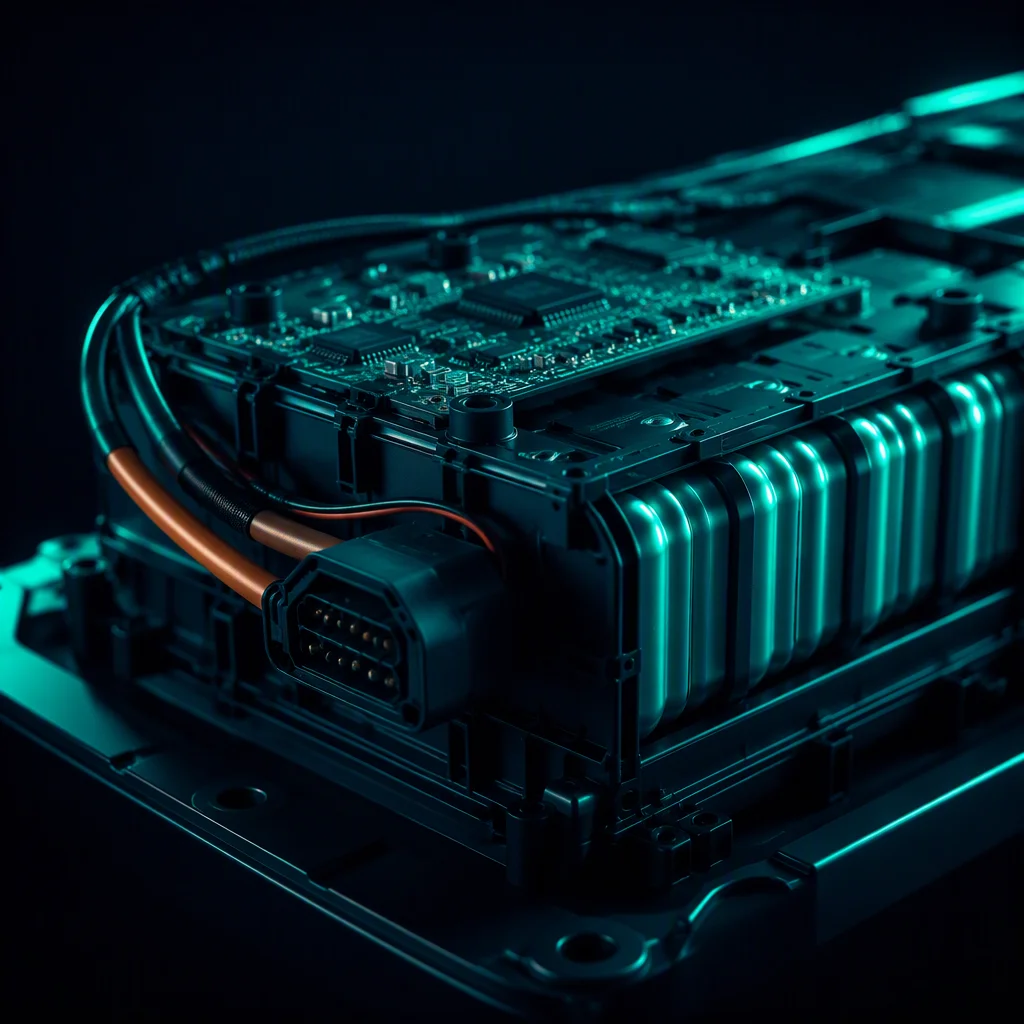
On an e-tricycle the battery pack is the single biggest line in the bill of materials and the one wiring decision a buyer is most likely to guess at. For a fleet of cargo trikes the pack is also the difference between a supplier and a partner: the battery decides how far a route runs, how long a shift is, and how many packs a depot has to keep ready to swap when the working day runs past the first charge. In the electric-tricycle world the pack has to do more than store energy — it has to sit in a space that does not steal cargo volume from a 300–500 kg payload, survive rain and heat on a run that can span 80 km, and be specified as a part the order can be quoted on. On this platform the battery is built on a dedicated lithium assembly line with automated cell sorting, precision spot-welding and full BMS functional testing before it is packaged — a pack family spanning 36V, 48V, 52V, 60V and 72V and 7.5–40Ah, built around 18650 / 21700 cylindrical cells from Samsung 50E, LG M50T or Panasonic NCR, in NMC for density or LFP for fleet-grade cycle life. Every configurable choice — the cell brand, the BMS feature set, the connector, the case tooling — changes a number on the quote sheet and a number in the lifetime cost of running the vehicle.
Why the Pack Is the Whole Procurement Conversation
The battery is not a component you bolt on at the end — it is the component that makes every other specification decision coherent. A 800W hub motor on a cargo trike is unremarkable; an 800W hub motor fed by a 60V 32Ah pack is a vehicle that runs 50–60 km loaded. Bump that to a 1200W / 72V 40Ah LFP configuration and the same chassis carries 300/500 kg for 70–80 km. The motor, the controller and the display are all paired to the pack, which is why the whole drivetrain is spec’d as one system in the motor & controller guide and why the voltage decision deserves its own 60V vs 72V comparison. When you price a tricycle you are pricing the pack as much as the frame, and the pack is where a supplier either earns the margin or hides it.
Form Factor: Where the Pack Lives on an E-Tricycle
The pack is the most physically constrained part of the build. On a three-wheeler there is no room to hide it in a downtube the way you can on a bicycle, so the platform offers four standard mounting configurations and custom tooling for anything else:
| Form factor | Best used for | Trade-off |
|---|---|---|
| Under-deck | Cargo trikes | Keeps cargo box volume; low centre of gravity for stability |
| Rear-box / rear-rack | Passenger rickshaws & trikes | Largest pack space, but raises the centre of gravity |
| Seat-post / under-seat | Light commuter trikes & e-bikes | Compact and removable for indoor charging |
| Downtube (Dorado / Reention) | E-bikes & slim trikes | Integrated lock-and-latch, frame-matched colour |
The mounting choice changes the riding behaviour more than the motor does. An under-deck pack on a cargo trike keeps the weight low, which matters when you are cornering with a heavy box over the back wheel; a rear-box pack on a rickshaw trades that low centre of gravity for the space to run a bigger capacity pack. The same logic about distributed weight and how it keeps a loaded trike stable is covered in the differential & drivetrain guide, and the frame level of this platform — including a dual-battery-ready chassis at +$80 — is detailed in the cargo e-tricycle OEM guide.
Cell Grade: Samsung, LG, Panasonic, or Generic
This is the highest-leverage line in the spec. The cell brand defines the energy density, the continuous discharge and the cycle life, and it sets the pack floor price:
| Cell | Format | Profile | Cost position |
|---|---|---|---|
| Samsung 50E | 21700 | High-capacity consumer benchmark, strong continuous discharge | Premium |
| LG M50T | 21700 | Slightly lower discharge at a modest cost saving | Mid |
| Panasonic NCR | 18650 / 21700 | Proven reliability, broad availability | Mid |
| Generic domestic | 18650 / 21700 | Comparable spec at a 15–20% lower cell cost | Value |
For a fleet you do not always want the top tier. A 1200W / 72V 40Ah LFP pack built around 26650 LFP cells rated to 3,800mAh delivers a 2,000+ cycle life, which is what a depot that runs 8–10 hours a day actually needs; an NMC pack on the same platform is denser per kilogram but cycles to 800+. That is the fundamental trade-off — for a daily-use fleet, cycle life beats raw density, which is why the platform recommends LFP for operators in tropical and desert markets where a pack that gets hot is a pack that degrades. The full chemistry comparison and what it means for the EU Battery Passport is in the battery technology guide; here the point is simpler — the cell grade you pick sets the battery’s replacement-year and the pack’s price, so it must be a deliberate line, not an assumed one.
BMS Intelligence: Basic, Bluetooth, or CAN Bus
The battery management system does not just protect the pack; it is the telemetry layer of the whole vehicle. The platform ships the BMS in three levels, and the level you pick decides whether you can read a pack remotely or only as an on/off box:
- Basic BMS — overcharge, over-discharge, short-circuit and thermal protection. Enough for a single-owner trike with no fleet monitoring.
- Smart BMS + UART — adds communication for a wired dashboard and diagnostics.
- Smart BMS + CAN + Bluetooth — the fleet tier. App-ready, CAN-bus data logging, remote monitoring of state-of-charge, cell balance and temperature across the whole fleet.
For a dealer or a depot running many vehicles, the CAN/Bluetooth tier is not a luxury; it is what lets an operator see a weak cell before it becomes a roadside stop. The operational side of keeping a fleet charged and healthy over a season — including opportunity charging and how LFP accepts partial top-ups without memory effect — is laid out in the fleet charging guide, and the cold-weather behaviour of a smart BMS is in the winter guide.
Connector and Discharge: The Parts That Fail First
Batteries rarely die all at once; they are killed by a connector that melts or a discharge rate the pack was never sized for. The pack range offers XT60, XT90, Anderson and aviation connectors, and the discharge tuning spans a standard 15A up to a high-drain 30A+ configuration. This is the single most common spec miss on an OEM order — the pack is rated for a burst the motor never pulls, so the first hard throttle on a loaded trike browns out the BMS and the rider blames the battery. Matching the connector to what the controller expects is the same kind of pairing discipline the mechanical side of the platform demands, and the full component line — including a matched motor-controller pack and how the charger pairs to voltage — is the subject of the motor & controller guide.
Dual-Battery and Swap-Ready Configs for 24/7 Fleets
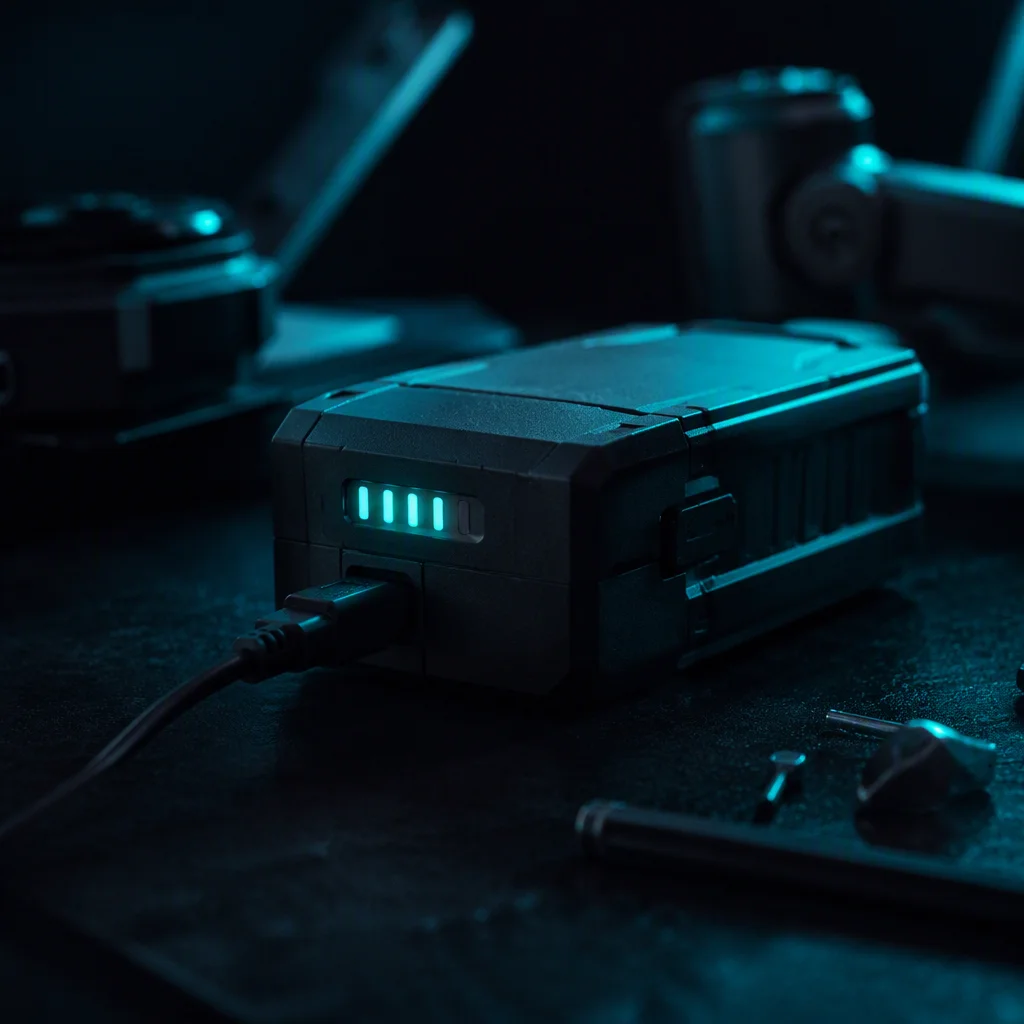
A single pack is enough for one 8-hour shift. A 24/7 fleet needs two. The platform offers a dual-battery-ready chassis at +$80 frame modification and a quick-swap rail mechanism on the pack, which together let a depot keep one pack charging while the other is in use — the difference between a vehicle that is down for a charge and a vehicle that is always on the road. Combined with the LFP 2,000+ cycle life and the 20–30 minute opportunity-charge top-up that extends a shift by 15–20 km, a swap-ready pack is what makes a true multi-shift round practical. The logistics of running that kind of operation — swap points, spares and reorder cycles — is the territory of the after-sales & spare parts guide, and what a swap-ready depot means for a first-time importer is in the China import guide.
Compliance and the Export File
Lithium batteries are the most document-heavy line in any export shipment, and every pack ships with the compliance dossier needed for customs clearance in the destination market. The coverage on this platform is UN 38.3, IEC 62133-2, UL 2271, CE, RoHS and MSDS, with test summaries and MSDS sheets included per shipment. The larger packs used in cargo configurations (the 72V 40Ah cell) are built to UN 38.3 testing with attention to the crush, vibration and thermal-abuse regimes that the higher energy density makes more demanding. Where that compliance stack sits against the vehicle’s own certification — and what a buyer needs to file to clear a cargo trike at the border — is the subject of the EU vs US certification guide and the plain-language riding rules in the e-tricycle laws guide.
Cost, MOQ and Lead Time in an OEM Pack Line
The battery is the cost anchor of the vehicle, and it prices in tiers — a 36V 10Ah NMC pack at roughly $95–120 FOB, a 48V 15Ah NMC pack in the $250–325 band, and a 72V 20Ah LFP pack in the $350–430 band. That spread is exactly why the chemistry decision is a cost decision first: the LFP pack costs more per unit but is built to run for 2,000+ cycles against the NMC pack’s 800+. In an OEM configuration the pack line itself is quoted at a 500-unit MOQ per model in the standalone product line, with a 20–30 day standard lead time and +15 days for custom case tooling — while the tricycle build that carries it runs a 50-unit MOQ and a 15–30 day lead time (30–45 days for a first custom-branded run). Understanding how those two timelines overlap — and how a pack order plans against the vehicle order so the line never waits on the cells — is the same ordering discipline described in the OEM guide.
What to Put on a Battery Pack OEM Spec Sheet
Write the pack down with the same rigour you would write the motor, and the surprises stop before they ship:
- Voltage & capacity: the exact pack (e.g. 60V 32Ah or 72V 40Ah) and the target range in Wh.
- Cell brand & grade: Samsung 50E, LG M50T, Panasonic NCR, or generic domestic — and the cycle-life target that justifies it.
- Chemistry: NMC for density or LFP for fleet cycle life; note tropical/desert operation.
- Form factor: under-deck, rear-box, seat-post or downtube, with the mounting constraint stated.
- BMS level: basic, UART, or CAN + Bluetooth for fleet telemetry.
- Connector: XT60, XT90, Anderson or aviation — matched to the controller.
- Discharge rate: 15A standard or 30A+ high-drain, sized to the motor’s peak.
- Compliance dossier: UN 38.3, IEC 62133-2, UL 2271, CE, RoHS, MSDS.
- Fleet extras: dual-battery chassis, quick-swap rail, heating pad for cold climates.
- Samples & QC: confirm pre-production samples and the per-batch test file.
A pack specified this way is a pack that prices cleanly, clears customs and lasts the season. For a fleet owner the packs are the most enduring part of the platform — the frame will still be on the road years after a first battery is swapped, which is why the after-sales thought in the spare parts guide treats the pack as a long-lifespan line to be supported, not a consumable to be discarded.
Spec a Battery Pack for Your Fleet
Tell us the vehicle platform, the daily range you need and the rider profile, and our export engineers will send a battery pack recommendation with the cell grade, BMS level, mounting, connector and FOB pricing along with the tricycle build — so you can price the whole vehicle against the pack’s lifetime.
