
The motor is the first spec a cargo e-tricycle buyer asks about, and the one most often misunderstood. On a two-wheeler, 750W is a legal ceiling and a marketing number. On a cargo trike, the motor rating decides whether the vehicle can actually move 300 kg up a ramp, hold 25 km/h on a delivery route, and survive a five-year commercial duty cycle. The three ratings that dominate the export market are 800W, 1000W, and 1200W, and the difference between them is not "more power = better." It is a trade-off between hill-climb torque, controller current draw, battery drain, and, in several markets, the regulatory class the vehicle falls into. This guide explains what each rating buys you, what it costs you, and how to spec the right one for your route profile and payload.
How Motor Ratings Work on a Cargo Tricycle
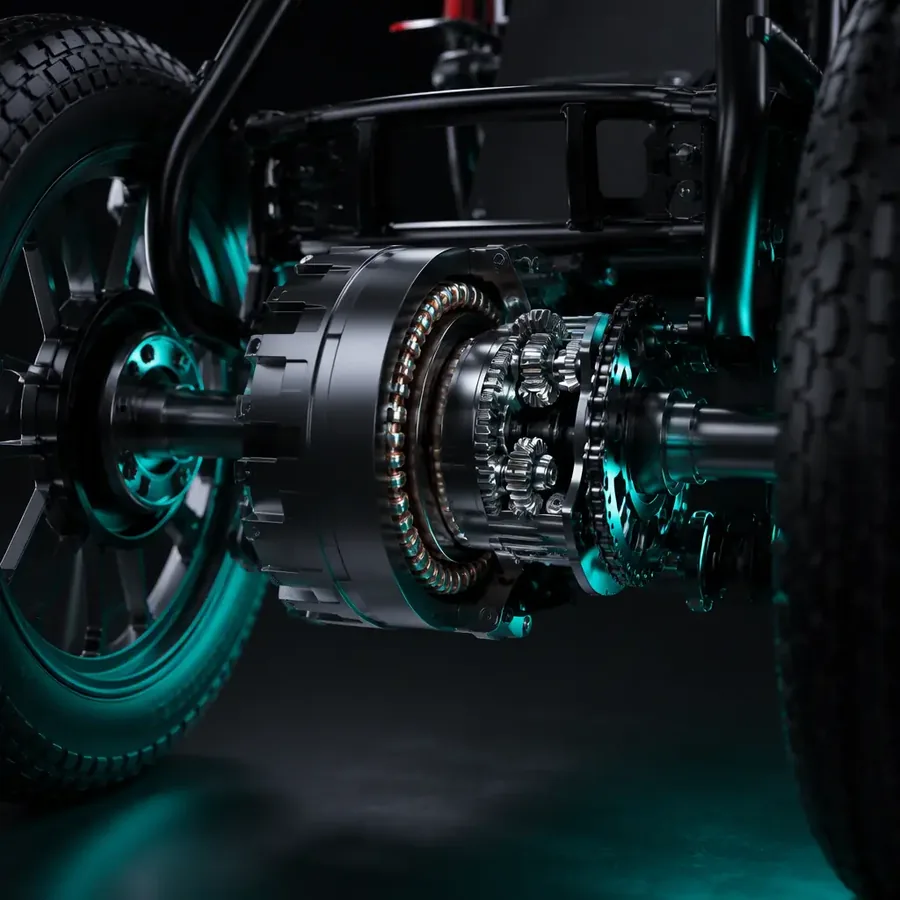
A cargo trike motor rating is the continuous power output the hub motor can sustain without overheating, not its peak burst. A 1000W hub motor will typically pull 1800–2400W peak for 30–60 seconds. That peak is what gets a loaded trike moving from a standstill or climbing a ramp. What separates the ratings in practice:
- 800W . The entry rating for cargo trikes. Sustains 25 km/h on flat ground with 300 kg gross load. Peak torque roughly 80–100 Nm. Fine for flat city routes and light farm duty; struggles on sustained gradients above 8% with a full box.
- 1000W . The export volume rating. Comfortably carries 300–500 kg, holds speed on 6–8% grades, and pairs naturally with 60V packs. This is the rating most Chinese factories build around, which means the widest parts availability and the lowest per-unit cost.
- 1200W . The heavy-duty rating for 500 kg loads, hilly terrain, and routes with frequent stop-start. Draws more current, so it pairs with 72V packs and a heavier-duty controller. Runs hotter; cooling and controller quality matter more.
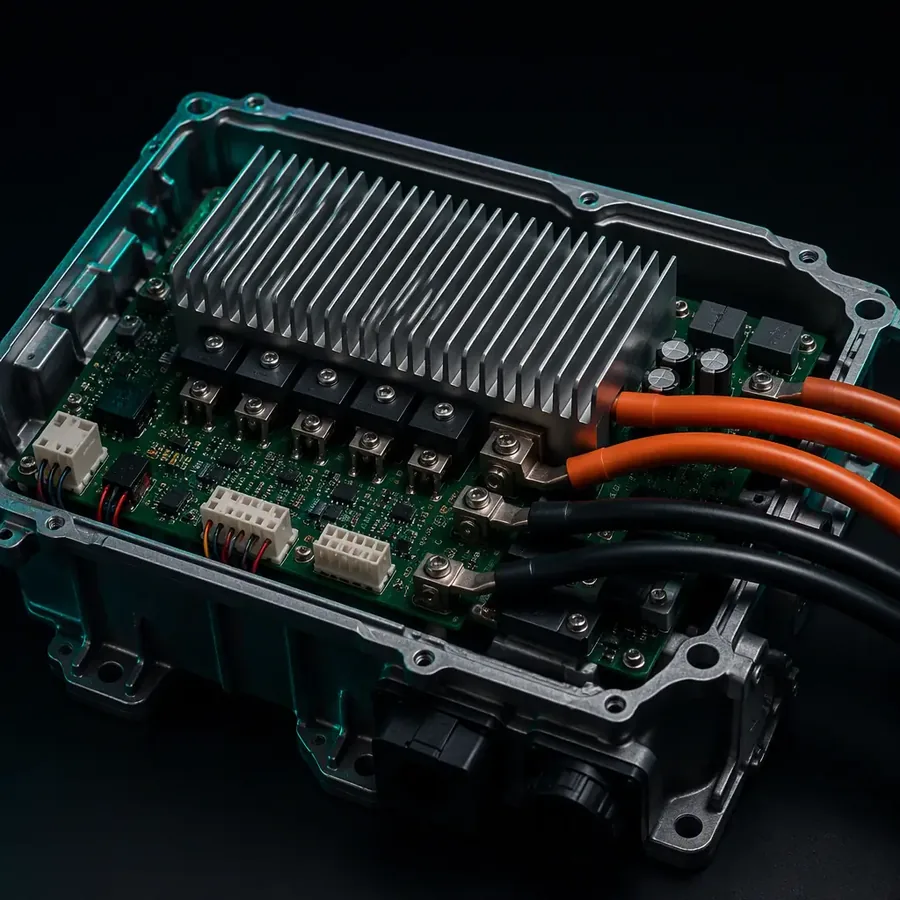
Two numbers on the spec sheet matter more than the wattage itself: rated torque at the wheel and the controller's continuous current limit. A 1000W motor with a 40A controller will out-haul a 1200W motor with a 25A controller. Ask both numbers, not just the watts.
800W vs 1000W: The Real Difference on a Route
For a 300 kg payload trike on flat-to-moderate terrain, 800W and 1000W feel similar on the first ride and very different in month six. The differences show up as measurable numbers:
| Parameter | 800W | 1000W | 1200W |
|---|---|---|---|
| Max payload (typical) | 300 kg | 300–500 kg | 500 kg |
| Sustained speed, flat | 25 km/h | 28–32 km/h | 32–35 km/h |
| Sustained grade at full load | 4–6% | 6–8% | 10–12% |
| Battery draw (cruise) | ~18–22A | ~22–28A | ~28–35A |
| Typical pack pairing | 60V 32Ah | 60V 32Ah | 72V 40Ah |
| Controller requirement | 30A | 40A | 50A+ |
| Cost premium vs 800W | , | +8–12% | +18–25% |
On a 20-stop delivery route with 4% ramps, 800W and 1000W both finish. On a route with one 10% loading dock ramp and a 400 kg average load, the 1000W motor keeps the controller out of thermal derating; the 800W motor will cut power at the exact moment the rider needs it most. The battery pairing logic behind these numbers is covered in depth in our 60V vs 72V battery guide . The motor and pack must be specced as one system.
What 1200W Actually Buys, and Costs
The 1200W rating exists for three use cases: 500 kg loads, sustained hills, and routes that never stop. If your operator runs a trike from 7:00 to 19:00 with 60 kg of groceries per trip on rolling terrain, the 1200W motor is the difference between a vehicle that finishes the shift and one that spends the afternoon in thermal protection. But there are three real costs:
- Battery life . A 1200W motor at sustained cruise draws 28–35A. On a 60V pack that is 1.7–2.1 kW of continuous draw, which empties a 32Ah pack in under two hours of hard running. The 1200W rating assumes a 72V 40Ah pack and a budget for more charge cycles per year.
- Controller and wiring . Everything downstream must be upgraded: 50A+ controller, heavier phase wires, larger connectors. A 1200W motor bolted to a 30A controller is a fire risk, not an upgrade.
- Regulatory class . In the EU, a 1200W continuous trike cannot be sold as an EPAC; it needs L2e type approval (eMark) and registration. In the US it sits above Class 2 and falls into state NEV or moped rules that vary by state. The compliance map for both regions is in our US and EU trike regulation guide, and the 750W US Class 2 ceiling is explained in our e-bike motor power class guide.
The math on the hill case: a 1000 kg gross trike (500 kg payload + 220 kg vehicle + rider) climbing a 10% grade at 8 km/h needs roughly 2.2 kW at the wheel. That is a 1200W continuous motor working near its peak. Spec the grade you actually have, not the grade you wish you had.
Motor Type: Geared Hub vs Direct Drive vs Mid-Drive
On cargo trikes, the motor type matters as much as the rating:
- Geared hub motor . The standard for export cargo trikes. Internal planetary gears multiply torque, giving the 80–120 Nm wheel torque that moves heavy loads from standstill. The trade-off: gear wear is the #1 motor failure mode at high mileage, so the gear quality and the factory's warranty terms matter.
- Direct-drive hub . Simpler, quieter, longer-lived, but low torque at low RPM. Only suitable for flat, lighter-duty routes; rarely specced for 300 kg+ trikes.
- Mid-drive . Common on cargo e-bikes, rare on trikes. Drives through the chain, which on a trike means the differential and axle must be designed as a unit. Higher cost, higher efficiency on hills, harder to service in the field.
On the EMS-EBIKE cargo trike line, the standard configuration is a brushless geared hub with an integrated differential on the rear axle. The differential is what lets the inside wheel rotate slower in corners instead of scrubbing and dragging. That axle assembly is the component to inspect on a sample unit, because it carries the full payload torque. For fleet buyers deciding between motor and battery combinations, our cargo e-tricycle OEM guide walks through the full spec sheet, and our cargo trike vs pickup truck cost comparison shows why the 800–1200W range dominates commercial fleets.
Battery and Motor: Spec Them as One System
The motor rating is meaningless without the pack behind it. Three rules of thumb for pairing:
- Voltage sets the speed ceiling, current sets the torque. 60V is the export standard for 800–1000W trikes; 72V gives the headroom the 1200W motor needs without overspeeding the controller.
- Continuous discharge must exceed peak draw. A 1000W motor pulling 40A peak needs a pack rated for continuous 40A+ discharge. A 32Ah NMC pack with a heavy-duty BMS does this comfortably. The BMS limits, not the cell count, are what protect the motor.
- Range math uses cruise, not peak. At 25 km/h on flat ground, a 60V 32Ah (1.92 kWh) pack delivers 50–80 km with a 200 kg load. Double the load and the range roughly halves. The full chemistry and BMS decision framework is in our battery technology guide.
Choosing the Right Rating for Your Market
Practical selection framework by route profile:
- Flat urban delivery, ≤300 kg, ≤6% ramps, 800W with a 60V 32Ah pack. Lowest cost, EU-friendly, adequate margin.
- Mixed urban + suburban, 300–500 kg, 6–8% grades, 1000W with 60V 32Ah, 40A controller. The export volume sweet spot and the configuration EMS-EBIKE builds around for fleets.
- Hilly terrain, 500 kg, continuous duty, 1200W with 72V 40Ah, 50A+ controller. Budget for eMark/NEV compliance where required.
For US buyers, note that the 750W Class 2 path keeps the vehicle out of licensing. The trade-off between a legal 750W build and a faster 1000W+ build is a business decision, not an engineering one, and it is covered in detail in our EU vs US certification guide. The demand context for why 1000W trikes dominate the export market right now, price points from $1,250–1,550 FOB versus pickup trucks and UTVs, is in our why Americans are buying Chinese e-tricycles analysis.
Spec Sheet: The Motor Line to Put in Your RFQ
When you send an RFQ to a factory, demand these eight lines in writing:
- Motor type (geared hub / direct drive / mid-drive) and brand
- Continuous power rating and peak power (with duration)
- Rated torque at the wheel (Nm) and controller continuous current (A)
- Sustained grade at full payload (degrees or %) with test method
- Top speed at full load on flat ground (km/h)
- Thermal protection behavior: at what controller temperature does it derate?
- Warranty on motor and controller (years) and spare-part availability
- Certification documents matching your target market's class
EMS-EBIKE ships cargo trikes in 800W / 1000W / 1200W with 60V/72V packs, 300–500 kg rated payloads, 150–500 L boxes, and a 12-month vehicle warranty with a 24-month battery warranty. For a motor and battery configuration matched to your route profile, send us the payload, the grade, and the daily distance. The export engineers will spec the exact combination and quote FOB China with a 50-unit MOQ.
Spec the Right Motor for Your Route
Tell us your payload, terrain grades, and daily route distance. We will spec the motor rating, controller, and pack combination, with grade test data and a sample unit before mass production.
