
The passenger e-tricycle is the quietest large market in electric mobility. While e-bike and e-scooter categories compete on speed and tech specs, passenger trikes sell on one thing: the confidence to ride without putting a foot down. The buyers are not enthusiasts. They are mobility dealers, senior-living distributors, healthcare procurement teams, and families purchasing for aging parents. The demographics are unforgiving: Japan, Germany, and Italy are all over 20% population aged 65+, and every one of those markets is actively subsidizing or promoting age-friendly mobility. For OEM buyers, the passenger e-tricycle is a margin-friendly, low-return-rate category that requires different engineering priorities than any two-wheeler. This guide covers the stability architecture, the speed classes, the battery strategy, and the ergonomics that define a successful senior-mobility program.
The Demand: Aging Demographics and Mobility Channels
Passenger e-tricycles sell through four channels, each with different requirements:
- Mobility retail dealers . The largest channel in Europe. Dealers who sell electric wheelchairs and mobility scooters increasingly carry passenger trikes as the "outdoor" product: higher top speed, longer range, and the visual language of a bicycle rather than a medical device. Dealer margins on trikes run 25–35%, which is why they push the category.
- Senior-living and care communities . Facilities buy small fleets for resident mobility. These buyers require quiet operation, low step-over height, and minimal maintenance. Certification documentation matters more than price.
- Healthcare and rehabilitation distributors . In markets where trikes are partly reimbursable (notably parts of the EU and Japan), distributors need the product classified correctly and documented for subsidy applications.
- Direct-to-consumer online . The fastest-growing channel for 250W trikes in the EU. Online buyers are price-sensitive and return-averse; the product must be shippable partially assembled and simple enough to set up at home.
The common thread across all four channels: the rider is older, less agile, and less tolerant of complexity. Every engineering decision below is measured against that rider.
Three-Wheel Architecture: Where Stability Comes From
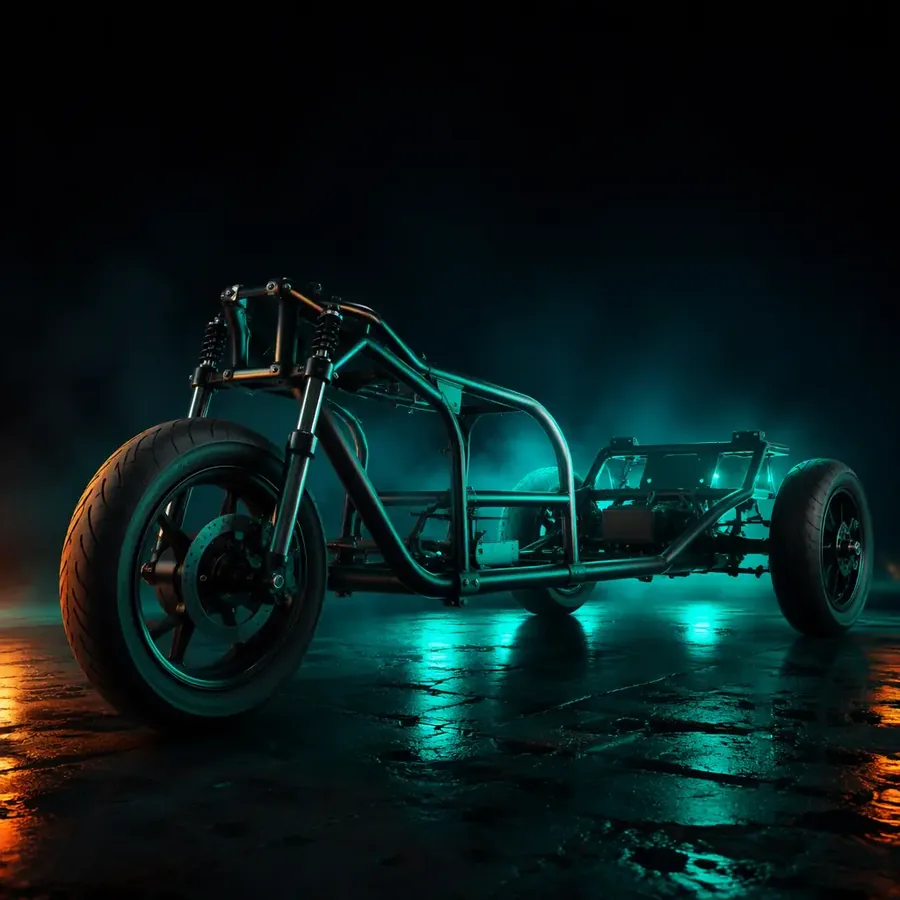
Passenger trikes are almost universally two wheels at the rear, one at the front (the "delta" layout), for a reason: the rear axle provides the stability that matters at low speed, and the front wheel carries the steering. The engineering specs that define a stable passenger trike:
- Track width . The rear track (distance between the two rear wheels) is the stability currency. A senior-mobility trike should spec 650–750 mm rear track; below 600 mm the trike feels tippy to a rider with limited core strength.
- Wheelbase, 1,100–1,300 mm balances stability against maneuverability in tight doorways and elevators. Longer wheelbases ride smoother but make indoor parking harder.
- Center of gravity . The battery should sit as low as possible (under the seat or in the frame floor), and the seat height should stay under 550 mm so the rider can place both feet flat. A low center of gravity is the single most important safety spec for a rider who cannot quickly put a foot down.
- Differential . The rear axle should carry a differential (or at least a freewheel) so the trike corners without dragging the inside wheel. A solid rear axle makes low-speed cornering feel unstable and wears the inside tire fast.
The delta layout is forgiving at low speed, which is exactly the regime these riders live in. Note the contrast with cargo trikes, which use the same layout for payload rather than stability reasons; the cargo-specific engineering (payload 200 kg+, torque-heavy motors) is covered in our cargo e-bike and e-tricycle fleet guide.
Motor and Speed Class: 250W EU vs 750W US
Passenger trikes sit at the intersection of e-bike regulation and vehicle regulation, and the class determines everything downstream:
| Market | Class | Motor | Speed | Licensing |
|---|---|---|---|---|
| EU | EPAC pedelec | 250W continuous | 25 km/h assist | None (EN 15194) |
| EU | L2e (tricycle) / L1e | Up to 4 kW | 45 km/h | AM/B license, eMark |
| US | Class 2 (throttle) | 750W | 20 mph (32 km/h) | None (most states) |
| US | NEV / state moped | >750W | 25–35 mph | Varies by state |
For the EU senior market, the 250W EPAC path is the volume play: no license, no plate, sold through bicycle and mobility retail with EN 15194 certification. A 250W front or rear hub with 45–60 Nm of torque is enough for a 130 kg trike plus rider on moderate terrain, and the class keeps the product out of vehicle regulation entirely. For the US, the 750W Class 2 throttle path is the standard, throttle operation matters for riders who cannot pedal continuously. The full power-class logic, including the torque numbers that matter for trike weights, is in our motor power class guide, and the certification cost and scope comparison is in our EU vs US certification guide.
Battery and Range for Mobility Use
Senior riders judge a trike by range confidence and charging simplicity, not peak performance:
- 48V 15–20Ah is the sweet spot . A 48V 17.5Ah (840Wh) pack delivers 50–70 km of real range on a 250W trike at 20 km/h average, which covers a week of errands for most riders. Range anxiety is the #1 reason trikes get returned, over-spec the battery.
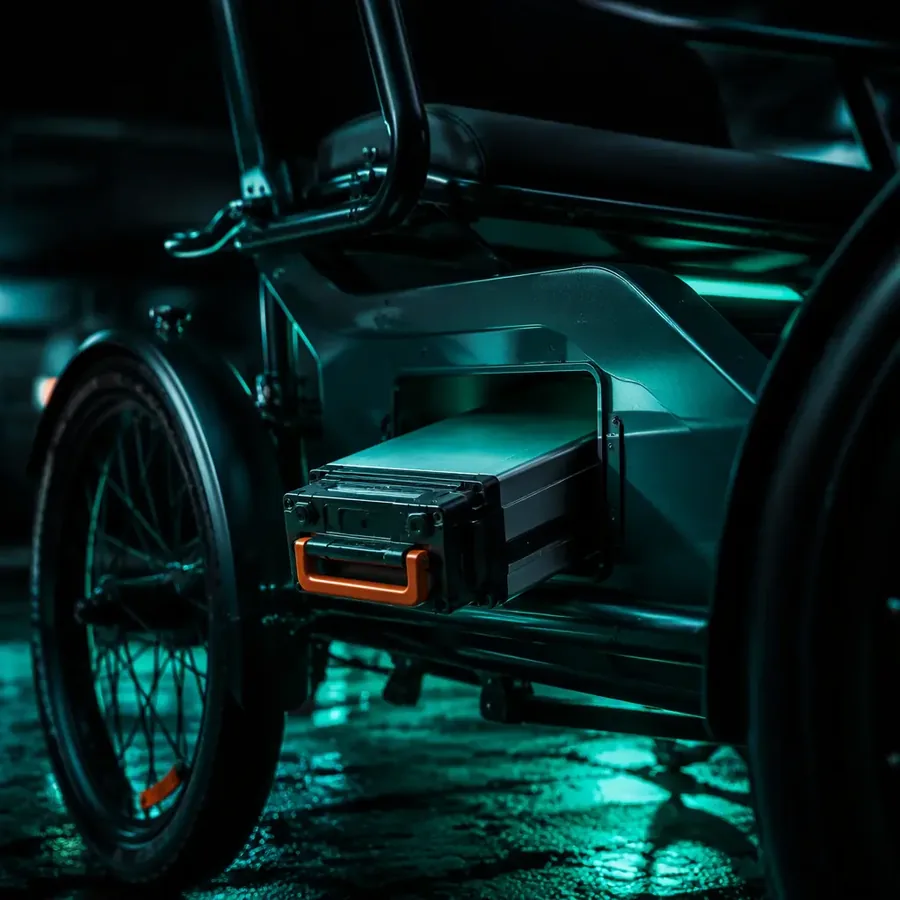
- Swappable or easily removable packs . A senior rider cannot haul a 4 kg battery out from under a seat every day. Prefer a slide-out pack with a carry handle at waist height, or design for on-bike charging with the charger port reachable without bending. The removal weight should stay under 4.5 kg.
- Low-temperature behavior . Trikes are used year-round in Northern Europe, so the BMS should include low-temperature charge cutoff and the pack should hold capacity in cold weather. The chemistry and BMS decisions here are the same discipline covered in our battery technology guide, including the EU Battery Passport requirements that apply to trike packs from 2027.
One specific failure mode to engineer out: deep discharge from infrequent use. Senior riders often leave trikes parked for weeks. The BMS should include a standby draw under 1 mA and a low-voltage cutoff that protects the pack through a month of inactivity, or the first warranty claim will be a bricked battery.
Ergonomics and Safety for Senior Riders
The ergonomics checklist for a senior-mobility trike is specific, and each item is testable on a sample:
- Step-over height under 300 mm . A step-through frame with a low top tube is non-negotiable. The rider should be able to mount without lifting a leg over a crossbar.
- Seat height 500–550 mm with adjustable seatpost . Both feet flat on the ground at rest, with a backrest option. A sprung saddle or suspension seatpost matters more on a trike than any other category because the third wheel transmits road shock directly.
- Throttle and assist modes . A walk-assist mode (5–6 km/h push-along) is a differentiator; many senior riders walk the trike through doorways and gates. The throttle should be a twist or thumb control with progressive response. Abrupt throttle maps cause the exact instability the category is supposed to solve.
- Brakes . A parking brake is essential (rear-wheel lock or handlebar-mounted). Hydraulic or cable discs on both rear wheels with a linked front brake; the stopping distance at 25 km/h with a 200 kg combined mass must be verified on the sample.
- Lighting and reflectors . Always-on headlight with automatic activation, a wide-angle rear light, and side reflectors. Senior riders are disproportionately involved in low-light incidents; the OEM spec should exceed the minimum legal requirement.
These specs are not optional features. In several EU markets, e-tricycle eligibility for mobility subsidies is tied to step-through height and stability characteristics, so the ergonomics spec is also a market-access spec.
Certification Paths for Passenger Trikes
The certification route depends on the speed class:
- 250W EPAC trikes, EN 15194 applies to pedal-assist cycles including trikes. Some importers also pursue voluntary standards that mobility dealers recognize, which eases the retail conversation even where not legally required.
- 45 km/h L2e trikes . These are type-approved vehicles requiring eMark whole-vehicle approval (the same UN ECE regulations, R10, R136, R47, that govern e-mopeds). The approval process, cost range, and factory checkpoint list are covered in our e-moped and e-motorcycle OEM guide; the trike variant adds R-regulations specific to three-wheeled vehicles.
- US trikes . The 750W Class 2 path uses UL 2849, while higher-speed products fall into state NEV or moped rules. The US state-by-state fragmentation for these classes is discussed in our certification guide.
Whichever path you choose, document the rider weight limit, the incline capability (specified in degrees, e.g. 8–10° at full payload), and the range under a defined test cycle. These three numbers are what mobility dealers put on their spec sheets, and they are the numbers a return-happy customer will test first.
OEM Checklist for Mobility Buyers
When evaluating factories for a passenger trike program, verify these five items on the sample and in the factory:
- Tip-over test data . A documented static and dynamic stability test (the EU requires stability testing for L-category trikes; for EPAC trikes it is best practice). Ask for the test angle and the pass criterion.
- Battery stand-by draw . Measured, not claimed. A sub-1 mA stand-by draw protects the "parked for a month" use case.
- Brake test at full payload . Stopping distance at 25 km/h with rider + trike at the spec'd gross weight, documented per unit type.
- Frame fatigue certification . The frame welds and the rear axle assembly should carry the same EN 15194 or L-category fatigue validation as a two-wheeler; trikes carry more mass and more stress cycles.
- Spare parts and service training . Confirm the factory stocks the wear items (brakes, tires, battery, controller) and can supply service documentation in the target market's language. Mobility dealers will not stock a trike they cannot service.
On MOQ and lead time, passenger trikes typically start at 50–100 units for a custom color and seat package, with first-article samples at 4–6 weeks; the negotiation structure is the same as any OEM program, detailed in our OEM buying guide.
Spec a Passenger E-Tricycle for Your Mobility Channel
Tell us your target markets, rider profile, and distribution channel (dealer, senior-living, or online). We will spec the track width, step-over height, battery, and certification path, with stability and brake test data included in the sample phase.
