
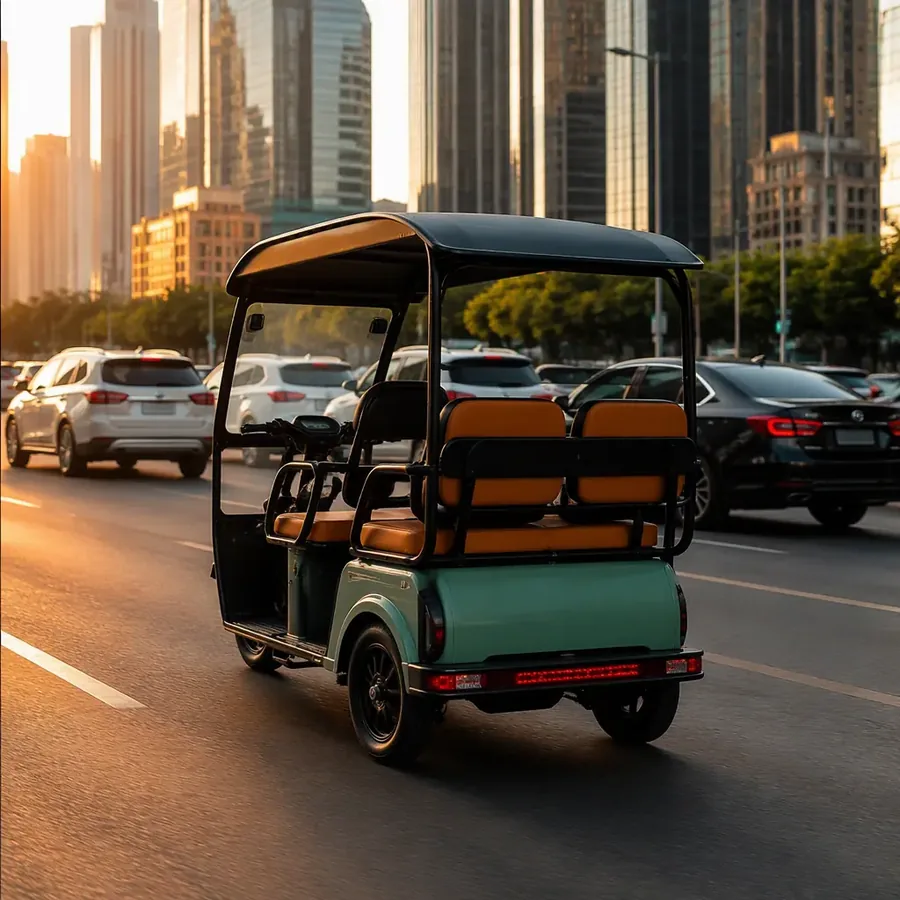
The three-wheeler that has carried passengers through Bangkok, Mumbai, and Manila for decades is now a planned fleet purchase in Europe and North America. The reason is arithmetic: an electric passenger tricycle costs roughly $1,450 FOB, carries two passengers and luggage, runs on a few dollars of electricity a day, and needs no shifting, no clutch, and almost no maintenance. For a city operator, it is the cheapest per-seat electric vehicle on the market, and the fastest to put into fare service. This guide covers the legal classes, the duty-cycle specs, the revenue model, and the OEM checklist for building a passenger trike taxi or shuttle fleet that survives an 8-hour shift, every day.
Why Operators Are Switching from Gas Tuk-Tuks
If you already run a three-wheeler taxi operation, the conversion math is the easiest pitch you will make to a lender or a city council:
- Fuel versus electricity . A gas tuk-tuk burns $6–10 of fuel per day in typical city duty; the equivalent electric trike consumes 3–4 kWh, or roughly $0.60–1.20 at commercial rates. That is a $1,500–2,500 saving per vehicle per year.
- Maintenance . No clutch, no gearbox, no exhaust, no fuel system. The service items shrink to brakes, tires, and battery checks. The maintenance routine is detailed in our electric tricycle maintenance guide.
- Regulatory tailwind . Cities from Paris to Quito are restricting or banning combustion three-wheelers from city centers; electric trikes are arriving with a clean compliance story and, in some markets, purchase subsidies.
The category trend behind this shift, and the demand numbers operators are planning against, is analyzed in our 2026 three-wheeler market guide.
What You Can Legally Operate: Vehicle Classes
The legal class determines your license, your insurance, and your driver requirements. Settle it before ordering, because changing class after import means re-certification. The three common operating paths:
| Region | Class | Motor / speed | Operator requirement |
|---|---|---|---|
| EU | L2e (light trike) | Up to 4 kW / 45 km/h | AM or B license, eMark type approval |
| EU | L5e (heavy trike) | > 1 kW / > 45 km/h | B license, eMark, registration |
| US | State moped / NEV | 750W–several kW | Varies by state; NEV = plate + license |
| Asia / LatAm | Local 3-wheel taxi | 1–4 kW | Local registration + hackney license |
The class-by-class certification scope and cost are compared in our EU vs US certification guide, and the speed-class logic that keeps a 1000W trike inside a given legal lane is in our motor power guide. For the full US state-by-state map, see our tricycle law guide.
Duty Cycle: The Spec That Survives 8-Hour Shifts
A taxi trike is a working vehicle: two shifts a day, stop-and-go traffic, full passenger loads, and charging windows measured in hours, not days. The spec that survives that duty cycle:
- Motor: 1000–1200W hub with differential . Enough torque for two passengers plus luggage on city grades, with the differential protecting the drivetrain in tight U-turns. The 800W base motor is fine for light cargo duty; fare service is a 1000W-plus application.
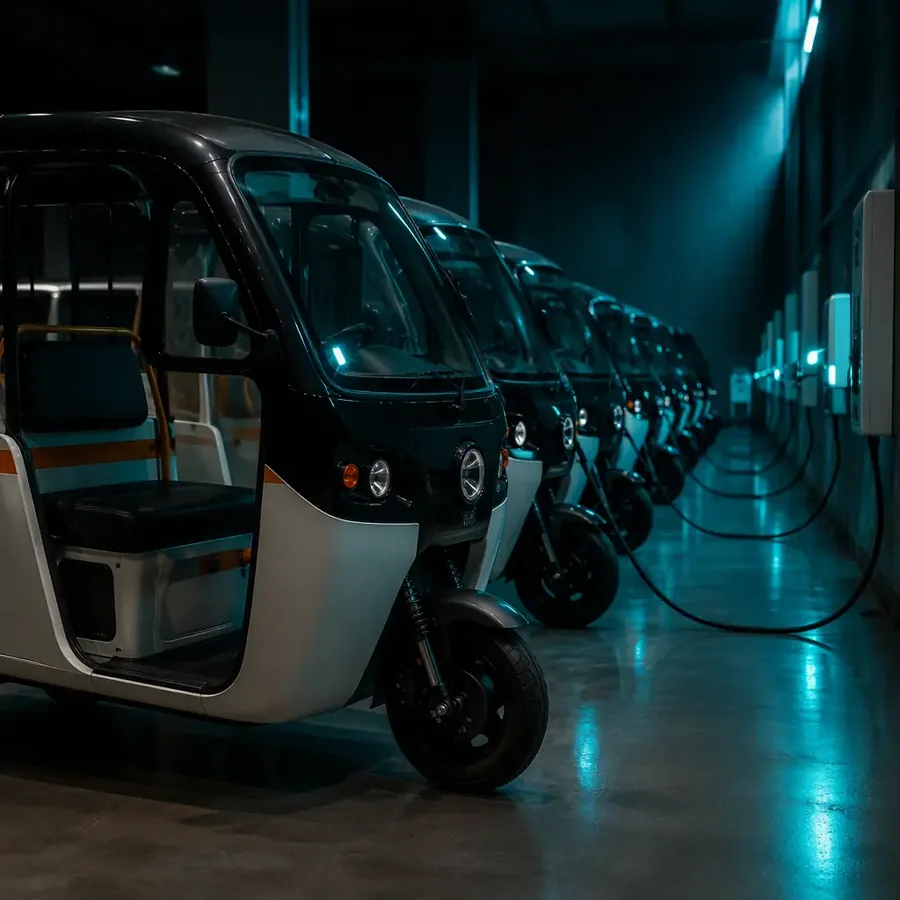
- Battery: 60V or 72V with swappable packs . A 60V 32Ah pack delivers 50–80 km of city range; a 72V 40Ah LFP pack extends it toward the high end. For continuous operation, run two packs per trike and swap at midday, a 2-minute swap beats a 6-hour charge. The 60V vs 72V trade-off is examined in our 60V vs 72V guide, and the chemistry choices in our battery technology guide.
- Charging: 6–10 hours on a 5A charger . Overnight charging for a single-shift fleet; for double-shift operations, spec the swappable-pack build and a small charging rack at the depot.
- Brakes and tires: heavy-duty trim . Hydraulic front disc plus dual rear drums, and 3.00-12 / 3.75-12 tires rated for the loaded weight. Continuous stop-and-go duty is the harshest brake test there is; the braking spec is covered in our brake systems guide.
Passenger-Side Features That Drive Revenue
Fare revenue depends on comfort and utility as much as on range. The passenger-side spec list for a taxi build:
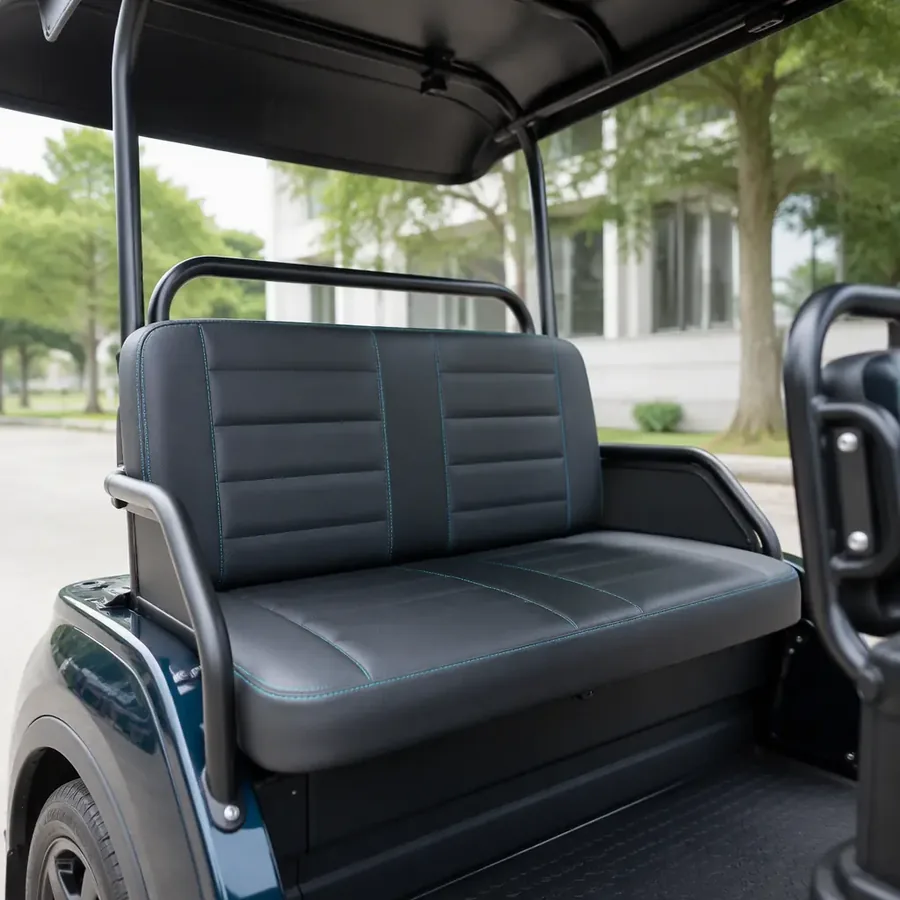
- Two-passenger bench with backrest and grab handles . The seating that turns a 10-minute ride into a repeat booking. A flat floor with foot space and a step-up height under 300 mm matters for older passengers and luggage.
- Full canopy with windscreen . Weather protection is a revenue feature: it keeps the trike running through rain, when half the competing fleet is parked.
- Luggage tray or rear rack . Airport and station transfers are the highest-value fare segments; a trike that carries a suitcase wins them.
- Meter mount, USB charging, and audio mounting point . The small integrations that make the trike a fare vehicle rather than a toy: a flat dashboard area for the meter, a 12V or USB outlet, and a bracket for the driver's phone or radio.
For the ergonomics and stability architecture behind these features, the same delta-layout engineering that defines passenger trikes, see our passenger e-tricycle OEM guide.
Licensing, Insurance, and Compliance for For-Hire Service
Passenger-for-hire changes everything downstream of the vehicle spec:
- Operating license . Taxi and hackney licenses are city-level and often capped; shuttle and private-hire permits are usually easier to obtain. Check the cap and the wait before ordering vehicles, not after.
- Commercial insurance . A for-hire trike needs business-use passenger-carrying cover, which is priced on the vehicle class and driver records. Bicycle-class trikes (750W/20 mph) command near-scooter premiums; L2e and NEV classes are priced as vehicles. The insurance and registration mechanics are covered in our insurance and registration guide.
- Driver requirements . License class, medical checks, and background screening follow the vehicle class table above. The 750W bicycle-class build lets you hire drivers without motorcycle endorsements in most US states, a real hiring advantage in a tight labor market.
Fleet Economics: Revenue per Trike per Day
Build the model with conservative assumptions and the unit still works. A sample for a resort or city shuttle trike at $3.50 per average fare:
| Metric | Value | Notes |
|---|---|---|
| Fares per day (6h active) | 18–24 | 12–15 min average trip |
| Gross revenue / day | $63–84 | At $3.50 average fare |
| Electricity / day | $1–1.5 | 3–4 kWh at commercial rates |
| Driver cost / day | $25–40 | Market dependent |
| Net margin / day | $20–40 | Before financing and insurance |
| Vehicle cost FOB | $1,450–1,600 | 1000W passenger build |
At those margins the vehicle pays for itself in 6–10 months of operation, before subsidies. Rental-fleet operators can compare this fare model against the daily-rental revenue model in our passenger trike rental guide . The same platform, two revenue plays.
OEM Checklist for Taxi Operators
- Fix the class and the license first . Confirm the operating path (taxi, shuttle, private hire) and the vehicle class it requires before ordering. The class drives motor, speed limiter, certification, and insurance.
- Order the swappable-battery build . For double-shift operations, two packs per trike and a depot charging rack. Confirm the pack removal weight (under 20 kg on our 60V builds) and the swap mechanism on the sample.
- Spec the passenger package explicitly . Bench, backrest, grab handles, canopy, luggage tray, meter mount, USB. These are line items, not assumptions.
- Collect the certificate pack . EMark or UL 2849 documents plus UN 38.3 battery reports; the city licensing office and the insurer will both ask.
- Plan spares and service . Stock brake pads, tires, and controllers, and confirm the factory's after-sales commitment. The import logistics, HS codes, container loading, and landing cost, are covered in our China import guide, and the OEM negotiation structure in our OEM buying guide.
Spec a Passenger Trike Fleet for Your City
Tell us your operating model (taxi, airport shuttle, campus transit, or resort transfer), your routes, and your target class. We will spec the motor, swappable battery, passenger bench, and certification path for continuous-duty operation.
