
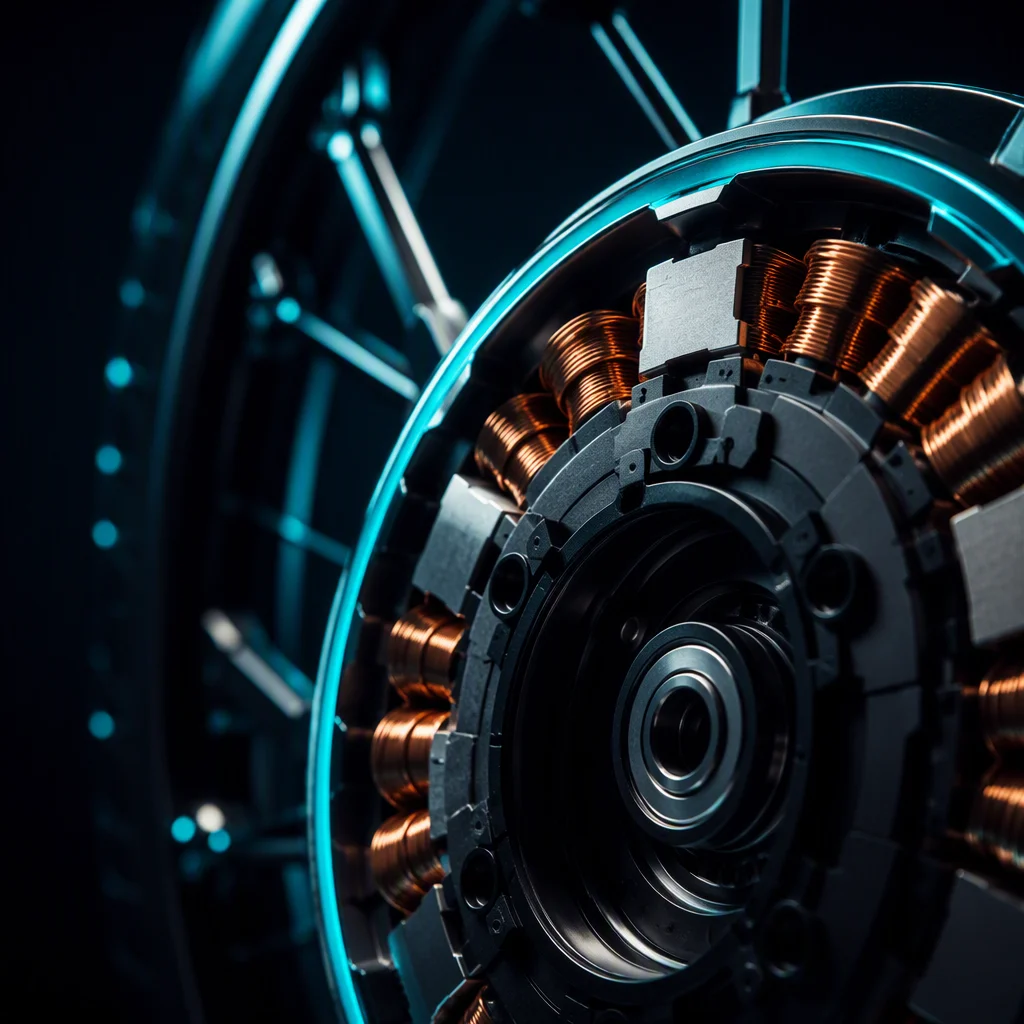
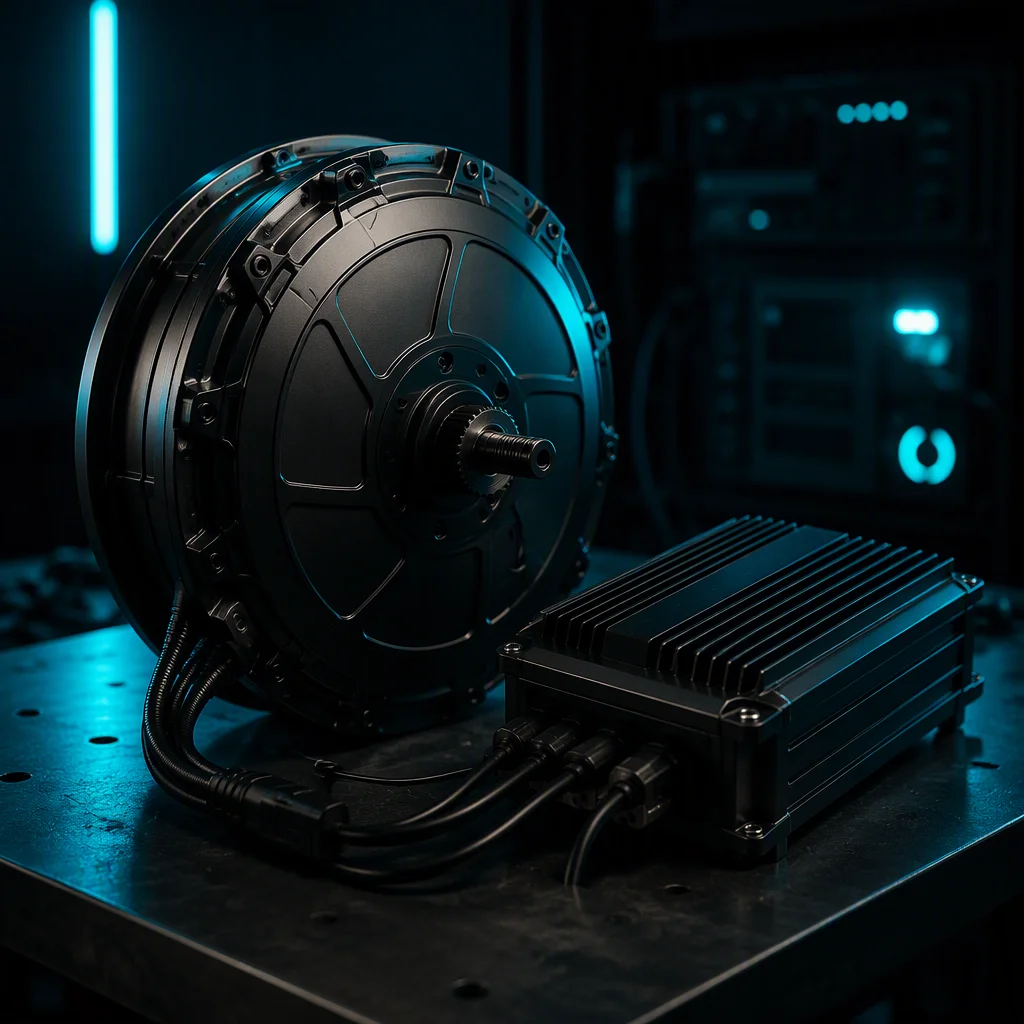
On an electric tricycle the components a buyer names first are the motor, the battery and the cargo box. The one that quietly decides how the vehicle feels, how the pack ages and whether the trike can back out of a loading dock without the rider even trying is the motor controller. It is easy to treat as a black box, “the factory sorts that out”, and then discover a drivetrain that shudders on a loaded launch, a range that drops faster than the battery alone explains, or a fleet of 40 trikes that cannot be told apart on a shared depot. On this platform the drivetrain is an 800W–1200W brushless hub motor with a differential, driven by a sine-wave FOC controller, and the motor and controller are built and tuned as a matched pair . Dyno-tested together at five load points before every production batch leaves. This guide explains FOC versus square-wave control, why regenerative braking matters on a heavy three-wheeler, and what to actually put on a motor controller in an OEM order.
Why the Controller Is the Drivetrain's Decision-Maker
The controller is the translator between the throttle, the battery and the motor. It takes a raw rider input and shapes it into the three-phase waveform that turns the hub. Everything the rider experiences as “how this trike drives”, how smoothly it pulls away under 200kg of payload, how hard it regenerates, whether the reverse gear is usable, is a controller decision, not a motor one. That is why the spec is described as a matched system: the motor and controller are dyno-tested at five load points, and a test report rides with every production batch. The family covers 250W to 3000W across 36V to 72V, with geared-hub, direct-drive-hub and mid-drive units on a Bafang-compatible platform, reaching a peak efficiency zone of 80–92%. Choosing the motor is the start of the conversation; how you want it controlled is where the platform becomes y’ours, and that is the subject of our motor power selection guide.
FOC vs Square Wave: What the Waveform Actually Changes
There are two control topologies, and they sound like electrical jargon until you ride both side by side. Square wave (six-step commutation) is the cheap, simple option: it switches the winding in coarse steps, which produces a distinct whine and a slightly choppy pull that is tolerable on a light bike but visible on a laden trike climbing from a standstill. FOC (field-oriented control) drives a smooth sinusoidal waveform, which means quieter running, better low-speed torque for the launch case that matters on a loaded three-wheeler, and noticeably kinder hill behaviour because the stator field is always optimally oriented to the rotor. The trade-off is cost: an FOC controller is more expensive than a square-wave unit, and it needs a matched winding to do its best.
| Characteristic | Square wave | FOC (sine wave) |
|---|---|---|
| Waveform | Six-step, coarse blocks | Sinusoidal, field-oriented |
| Startup under load | Noticeable step, can surge | Linear, controlled launch |
| Audible noise | Distinct whine | Quiet, low whine |
| Regenerative braking | Limited / crude | Smooth, adjustable strength |
| Efficiency zone | Narrower | Wider, higher peak |
| Relative cost | Lower | Higher |
For a passenger or cargo tricycle that routinely carries a loaded 300kg (EU) or 500kg (non-EU) platform plus a rider, FOC is the default that avoids the worst failure mode, a lurching start that strips the rider’s confidence and, at the extreme, stresses the drivetrain. Whether the motor itself should be hub or mid-drive for your duty cycle is the question answered in the hub vs mid-drive comparison.
Regenerative Braking Is a Payload Decision, Not a Gadget
Because a loaded trike carries a lot of mass, every stop holds recoverable kinetic energy. Regenerative braking matters most on routes that stop and go constantly, a courier run, a multi-drop delivery round, a waste collection loop, where the recovered energy pays for itself on the battery over a shift. But regen strength is a firmware setting, and it is easy to get wrong: set too strong and the braking becomes abrupt enough to unsettle the load or lock the rear; set too weak and you capture almost nothing. The controller supports regenerative braking, cruise control, walk mode and a PAS sensor input, so a fleet can tune the regen curve and a walk mode that pulls the trike along beside a rider instead of being pushed. How the brake package interfaces with regen, and whether a hydraulic front disc plus twin rear drums is right for your route, is worked through in the brake systems guide.
Waterproofing and the Potted Build: IP54 vs IP65
This is where a controller fails before it ever “dies” from age: water ingress. On a farm, a wet delivery route or a coastal town, vibration and moisture are the two killers. The platform quotes the motor winding at IP65 and the controller at IP54–IP65, and controllers are potted . The electronics are set in epoxy so that a splash, a pressure-wash or a rain-soaked crossing does not reach the board. Potting is the difference between a controller that survives years of exposure and one that shorts in the first wet season. The 18-month warranty against MOSFET failure and water ingress is the manufacturer’s own acknowledgment of where the risk sits, and the details of the rest of the electrical system, motors, BMS cell-balancing logic and the harness, are spelled out in the maintenance guide.
Connectors, Sensors and Display Pairing
Motor and controller are useless without the right interfaces on the right cables. The controller accepts twist throttle, thumb throttle, torque sensor or cadence sensor inputs, and pairs with a display over UART, CAN bus or a Bluetooth module . So the dashboard you spec must match the controller’s communication port. On the trike platform that display is an LCD showing speed, battery percentage, a load indicator and the reverse-gear status, with a forward / neutral / reverse selector and three speeds. The connector choice matters just as much here as it does on a charger: L1019, Julet and waterproof types are available, and the cable exit position on the axle side should be specified so the harness clears the frame and the cargo drop-sides. If you are replacing the pack, the connector discipline you need on the charge side is covered in the charger guide.
Magnet Grade, Winding and Firmware: The OEM Tuning Knobs
Two trikes with the same 1200W motor can deliver completely different characters, and it is almost all controller and winding tuning. The magnet grade is specifiable from N35 up to N38SH and N40H, where the SH/H suffixes are high-temperature ratings that resist demagnetisation when the motor is pushed hard on a hill on a hot day. The winding is either standard-torque or high-speed, and that single choice trades top speed against low-end grunt. The difference between a trike that carries cargo up a grade and one that quietly cruises. The controller firmware is where a bespoke platform is really made: acceleration curve, regen strength and a speed limit can be programmed, and the motor side cover can carry a laser engrave or silkscreen brand. The full OEM package, from motor to branding, is laid out in the cargo e-tricycle OEM guide.
Certification and the Compliance File
On a vehicle sold into the EU or North America the drivetrain has to carry the right marks, and the controller is part of that case. The motor and controller family is built against the compliance package that your destination needs, CE, UL, EN 15194, UKCA, eMark and RoHS . And the per-order documents include cell and BMS test reports where applicable. Because a tricycle is legally an L-category vehicle in Europe, the regulatory split between what counts as a bicycle-class ride and a vehicle is the subject of the EU vs US certification guide. The mismatch between the 60V and 72V platform, and what each does to the power electronics and the pack energy you have to replenish nightly, is in the 60V vs 72V guide.
What a Controller Costs and How to Order One
As a line item the motor controller is small next to the battery, but it is the part that keeps the whole powertrain behaving. On this platform a motor and controller configuration is ordered at a 50-unit MOQ per configuration, with a 15–30 day standard lead time and 30–45 days for a first custom-branded run. Pre-production samples ship before mass production, so you can test the tuned acceleration curve and regen feel on a sample before committing a fleet. For the wider cost picture, where the controller sits against the battery, frame and cargo box in the total build, the cost breakdown guide is the reference, and the factory sequence that assembles and tests the drivetrain is in the manufacturing process guide.
Put It in Writing: An OEM Controller Spec Sheet
Write the spec down and stop surprises before they ship. A short checklist that has caught more than one mis-order:
- Motor type and power: geared hub / direct-drive hub / mid-drive, and the wattage (250W–3000W) matched to your payload and top speed.
- System voltage: 36V / 48V / 52V / 60V / 72V, the controller voltage must match the pack.
- Control topology: FOC sine wave by default; square wave only if cost is tightly constrained.
- Regen and firmware: specify the regen strength, acceleration curve, speed limit and walk mode.
- Waterproofing: potted controller at IP54–IP65, motor winding at IP65.
- Connectors and sensors: L1019 / Julet / waterproof connectors, cable exit side, and throttle or torque-sensor input.
- Display pairing: UART / CAN / Bluetooth to match your LCD or TFT dash.
- Certification: list the destination market, CE, UL, EN 15194, UKCA, eMark or RoHS, and request the test reports for your own filing.
- Samples and QC: confirm pre-production samples and the dyno test report before the production run.
Keeping the controller and motor as a matched, warrantied pair is the same principle you should apply to the battery and charger. And the after-sales philosophy that keeps a fleet running over several seasons is described in the after-sales & spare parts guide.
Spec a Controller for Your Platform
Tell us the motor power, the destination market and how you want the trike to launch and brake, and our export engineers will send a matched motor and controller recommendation with the firmware tuning, connector and lead time. So you can price the whole drivetrain before you commit.
