
The cargo e-tricycle is the fastest-growing OEM category coming out of China, and the reason is arithmetic rather than fashion: a three-wheeler with a 300 kg (EU) / 500 kg (non-EU) payload rating, a 150–500 L box and a $1,250–1,550 FOB price replaces vehicles that cost many times as much to own and operate. For OEM buyers, delivery operators, mobile-vending businesses, municipal yards, rural distributors, a cargo trike is a different engineering problem than a passenger trike or an e-bike. The frame is a load-bearing structure rather than a bicycle frame, the motor has to deliver torque rather than top speed, and the box is a product in its own right. This guide walks through every specification that actually changes the vehicle when you source cargo trikes under your own brand.
Where the Cargo Trike Sits in the Lineup
Cargo trikes sit between passenger trikes and cargo e-bikes, and each category answers a different buying question:
- Passenger e-tricycles . Engineered around rider comfort and low step-over height, with payloads in the 150–250 kg band. The engineering logic for that platform is set out in our passenger e-tricycle guide.
- Cargo e-bikes . Two-wheeled longtails and front-loaders, roughly 100–200 kg payload, manoeuvrable in dense urban cycle lanes but requiring the rider to balance the load. We compare them directly against trikes in the cargo delivery fleet guide.
- Cargo e-tricycles . Two rear wheels carrying the load, continuous payload ratings of 300 kg EU / 500 kg non-EU, stable at a standstill with no balancing required. This is the category for heavy, bulky or multi-stop work.
A practical rule from our own build experience: if the load regularly exceeds 200 kg, needs a box larger than 150 L, or has to survive gravel yards and curb cuts, the trike wins. The ownership maths that makes that decision obvious is worked through in our cargo trike vs pickup truck cost comparison.
Motor, Drivetrain and the Differential Question
Cargo trikes are specified for torque, not for top speed. The export platform runs a brushless hub motor with a differential on the rear axle, and the differential is the one option buyers most often try to delete and most often regret: two driven rear wheels without one fight each other in every corner and scrub the tires flat. The three motor steps we build:
| Motor | Voltage | Realistic payload | Top speed | Best use |
|---|---|---|---|---|
| 800W hub + differential | 60V | 300 kg (EU rating) | 25 km/h | EU compliance band, flat urban routes |
| 1000W hub + differential | 60V | 400 kg | 28 km/h | Mixed terrain, hilly cities |
| 1200W hub + differential | 72V | 500 kg (non-EU rating) | 35 km/h | Heavy duty outside the EU, rural and farm routes |
The speed figure is not fixed at the factory: the 1200W/72V build ships with the governor settable to 25 / 35 / 40 km/h, which lets one platform clear a 25 km/h road-legal cap in one market and still run at full speed in a private yard. Every cargo trike also carries a three-position selector, forward / neutral / reverse. At 400 kg you do not push a trike backwards by hand, and reverse is what makes alley docking and market-stall positioning practical rather than theatrical. Continuous versus peak wattage, and what a watt is actually worth on a grade, is covered in our motor power guide.
Payload, Frame and Running Gear
Payload is a frame engineering decision long before it is a sticker on the box. The numbers that come with the platform:
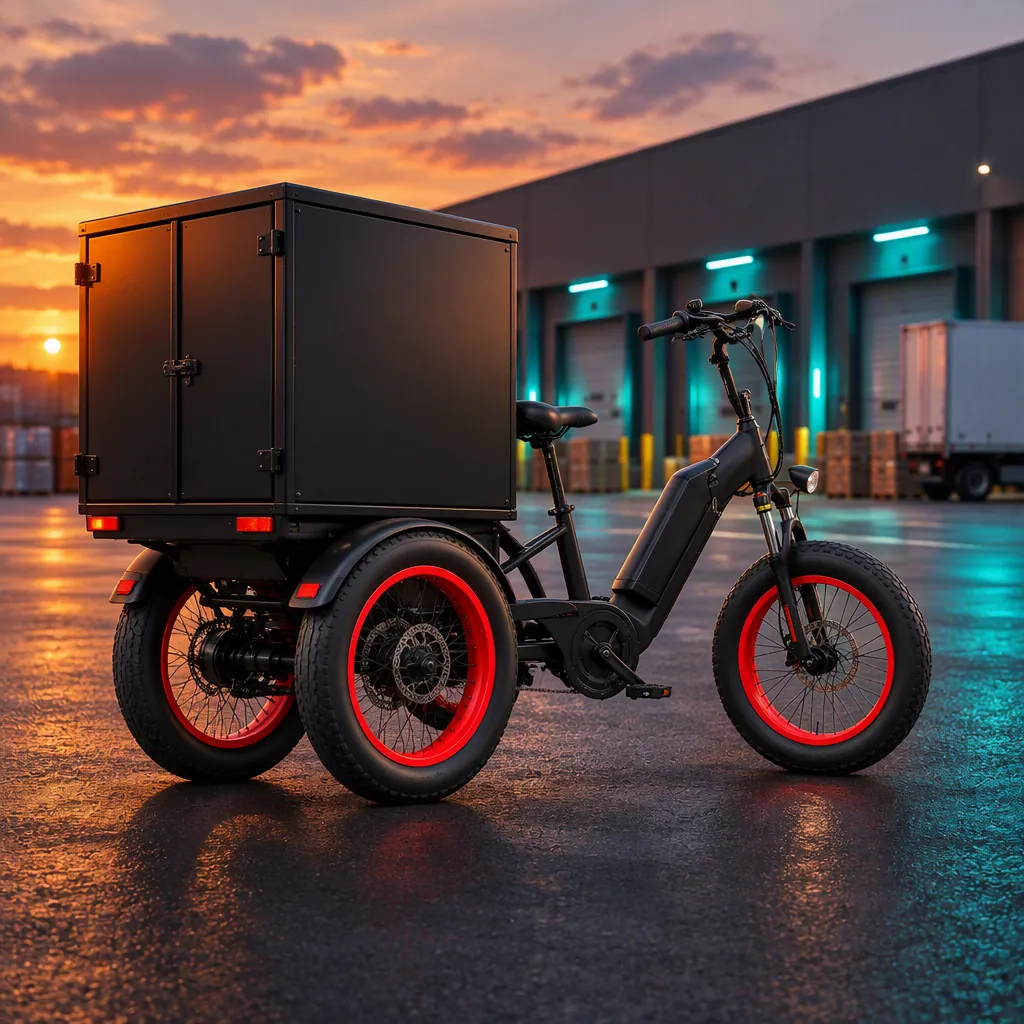
- 300 kg rated (EU) / 500 kg rated (non-EU) . The EU rating keeps the vehicle inside the lighter L-category envelope; the non-EU rating is the structural maximum of the same frame running a stiffer rear spring pack.
- Curb weight 150–220 kg depending on battery and box, so the trike is expected to carry roughly twice its own weight. That ratio is why the rear cargo deck is welded full-length to the main tube instead of being a bolt-on rack.
- Tires 3.00-12 front, 3.75-12 dual rear . The dual rear tires carry the load and create the standstill stability that makes loading and unloading safe on your own, without a second person steadying the vehicle.
- Brakes: hydraulic disc front, dual drum rear, plus a parking brake . And the parking brake is not a formality at 500 kg on any slope. A loaded trike rolls, and it rolls hard.
Brake fade under load is the single most common field complaint on cheap cargo trikes, and it almost always traces back to a drum-only front end. Our platform puts the dynamic braking duty on a hydraulic disc up front and keeps the dual rear drums for the parking and emergency circuit. The service intervals for pads and drums at these weights are in our tricycle maintenance guide.
Drive Time, Grades and Duty Cycle
Range claims are only meaningful next to a duty cycle, so here is the honest arithmetic. A 60V 32Ah pack is 1.9 kWh and delivers 50–65 km at 200 kg payload on flat ground; the 72V 40Ah pack is 2.9 kWh and delivers 65–80 km. Those are the two packs we build, and neither of them is a 300 km commuter figure. Which matters when you are writing the product page for your own customers.
What buyers get wrong is the interaction between grade, load and motor step. A 300 kg load on an 8–10° grade pulls current far outside the flat-ground envelope, and the correct fix is to move up a motor/voltage step, not to add battery capacity. More cells behind an undersized motor simply gets you a larger pack that still overheats on the same hill. Charging on the standard 5A charger takes 6–10 hours, which suits an overnight single-shift operation and does not suit a double-shift one. For two-shift duty the platform supports swap packs . The lock-and-slide tray changes over in well under a minute, so one chassis can serve two shifts with a spare pack always on charge. Chemistry and BMS choices, including why LFP earns its price premium on high-cycle cargo duty, are covered in our battery technology guide. Operators sizing a depot around these numbers should also read our fleet charging guide.
The Cargo Box: 150–500 L of Product Definition
The box is where an OEM program stops being a vehicle purchase and starts being a product line. Four box families answer for almost every channel:
- Flatbed (150 L equivalent) . For contractors, and for couriers who carry their own totes. Add stake sides or a pipe rack depending on the trade.
- Fixed box (250–300 L) . The delivery standard: one-piece steel or composite body, tailgate, lockable lid.
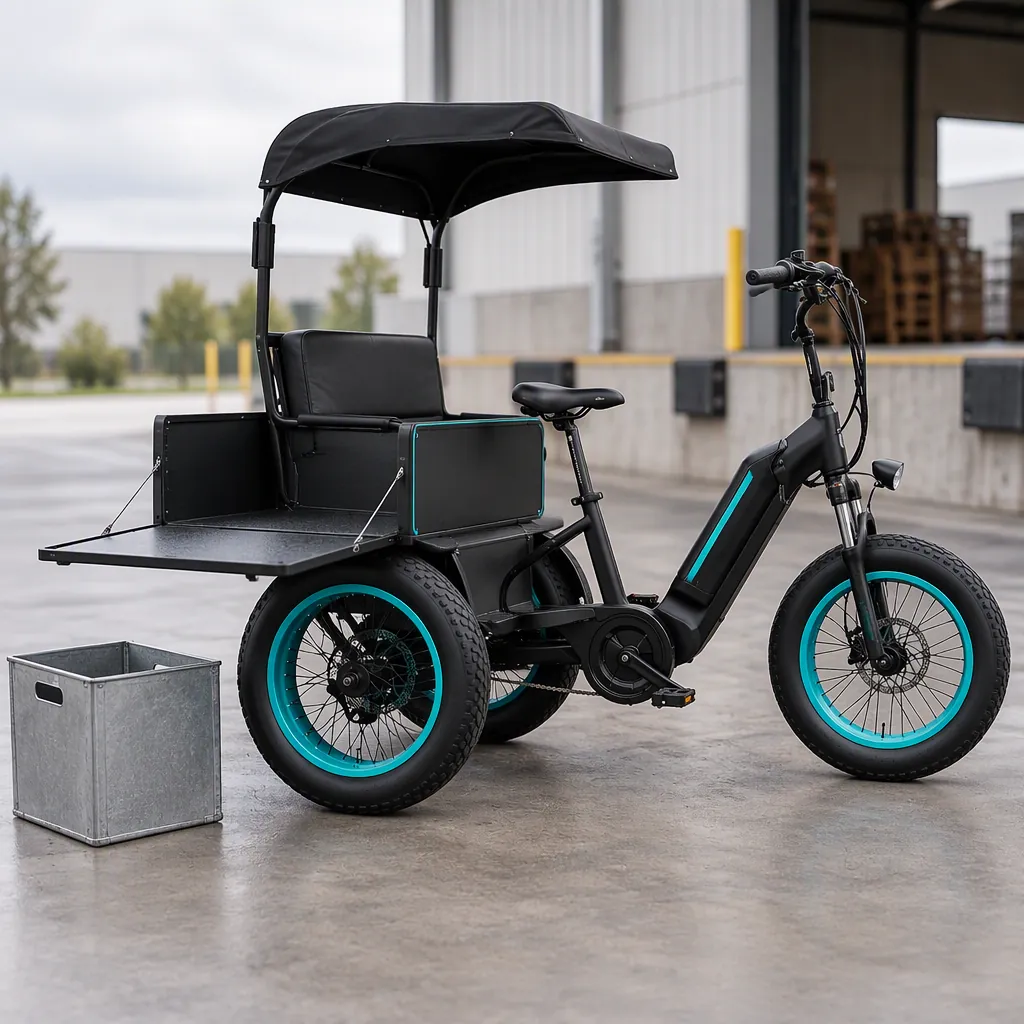
- Drop-side box (300–500 L) . Three hinged sides that fold flat so crates, sacks and feed can be loaded from any angle. This is the configuration most often specified by our farm and ranch buyers and by market traders.
- Custom build-out . Insulated inserts for food, beverage racks, canopy frames, sign panels and shelving. Vending operators typically start from the drop-side box and layer their cart build-out on top, a process documented in our mobile vending guide.
Material choice drives longevity more than most buyers expect. Steel with an e-coat base survives market-square abuse and repeated loading from the side; a composite body saves roughly 15–20 kg of curb weight, which converts directly into range. Both mount to the same deck rails, so a dealer can change box family on the same frame, a genuinely useful option to offer downstream, and the reason drop-side remains our default recommendation for mixed-duty buyers. Cold-chain operators should read the insulated-panel configuration notes in our cold chain guide before choosing a box family.
What Changes When You Add a Brand
An OEM program is mostly a list of decisions that each carry a cost and a lead time. The ones that recur in every project:
- Paint and frame colour . Batch-matched powder coat to your colour code, which is a first-article approval item rather than a per-unit one.
- Box build . Dimensions, side count, latch type, lock, interior tie-down points and shelving. Custom box tooling is what moves first-order lead time from 15–30 days to the 30–45 day band.
- Branding . Laser or silkscreen marking on the frame, decals, and a serial-number plate tied to a build record. Note that any readable brand marking has to be a real production marking, not artwork added in a photo.
- Dashboard and controls . The standard LCD shows speed, battery state, payload indication and gear position; fleet buyers can request the controller data port used for telematics.
- Lighting and options . Full LED lighting front and rear is standard, with an optional warning-light bar for road-work and municipal duty.
The negotiation structure, payment terms and quality gates are practically identical regardless of category, and they are laid out step by step in our OEM buying guide. If your program needs a longer development runway on the frame itself, the process is described alongside our cargo trike OEM program pages and in the manufacturing process guide.
Certification and Compliance by Market
Certification follows the market, not the vehicle, and the same trike can be a utility vehicle in one country and a light motor vehicle in the next:
- EU . The 300 kg-rated 800W configuration can be positioned as an EPAC-adjacent utility vehicle or type-approved under L-category rules depending on throttle configuration and pedal-assist design. The decision tree and the cost of each route are in our EU vs US certification guide.
- US . The 750W-equivalent and 1000W configurations are generally handled under Class 2 / state moped rules, and the state-by-state reality varies enough that it affects the spec you build. See our electric tricycle laws guide.
- Battery transport. UN 38.3 is the baseline for air and sea freight into every market; EN 50604 or UL 2271 then depends on the destination. Certification and field-safety expectations are treated in more depth in our safety features guide.
Sourcing Terms: MOQ, Price and Lead Time
The commercial baseline for this platform is straightforward, and it is deliberately the same for a first order and a repeat order: MOQ 50 units for standard configurations, $1,250–1,550 FOB China for the standard build, 15–30 days production after deposit, and first-article samples at 4–6 weeks where custom colours or box build-outs are involved. Custom tooling for a branded box is the usual reason a first order lands in the 30–45 day band rather than the standard window.
On the import side, a 40′ HQ container takes roughly 48–54 knocked-down trikes depending on box family and packing method, so unit freight cost is sensitive to whether you order a full container and to how the boxes are packed. HS classification, container loading plans and landed cost build-ups are covered in our import guide, and the total cost of ownership comparison against a light truck is in our pickup truck comparison. Buyers who want the full cost structure rather than the headline FOB number can work through our cost breakdown guide.
How to Qualify a Supplier
Most OEM failures are not engineering failures, they are specification-drift failures between the sample and the third container. Five checks that catch the majority of them:
- Ask for the load rating in writing, with the test basis. "1 ton capacity" means nothing; 300 kg EU and 500 kg non-EU with a stated payload envelope and a test method means something you can hold a supplier to.
- Confirm the motor and voltage pairing for your grades. A supplier who quotes all three load classes with one motor spec has not actually done the duty-cycle work.
- Get the battery cell grade on the purchase order. Pack capacity is easy to hit with cheap cells and hard to keep hitting after 300 cycles.
- Sample first, then tool. Approve a physical sample against a written checklist including box dimensions, latch type, paint code and marking position before any custom tooling is committed.
- Fix the spare-parts list before the first container. Brake pads, drums, tubes in 3.00-12 and 3.75-12, controllers and chargers should all be orderable separately from day one.
If you are at the stage of choosing between platforms rather than suppliers, the decision framework for cargo versus passenger bodies is in our cargo vs passenger e-tricycle comparison.
Frequently Asked Questions
Can the same platform be sold as a 25 km/h road vehicle and a 40 km/h yard vehicle? On the 72V build, yes. The governor is settable to 25, 35 or 40 km/h, so one SKU can serve a road-legal and an off-road channel with a configuration change rather than a second product line.
Is a differential really necessary? At these payloads, yes. Without one, the two driven rear wheels travel different arcs in every turn, which produces tire scrub, steering fight and premature wear. It is one of the few options where deleting it saves money once and costs money continuously.
How many trikes fit in a container? Roughly 48–54 knocked-down units in a 40′ HQ, depending on box family and packing. That number drives your freight per unit more than the FOB price does, which is why it belongs in the first supplier conversation.
Spec a Cargo E-Tricycle for Your Channel
Tell us your payload target, box configuration, and end market (delivery, vending, municipal, or rural distribution). We will spec the motor, battery, axle and box, with load-test data and a 3D box drawing included in the sample phase.
