
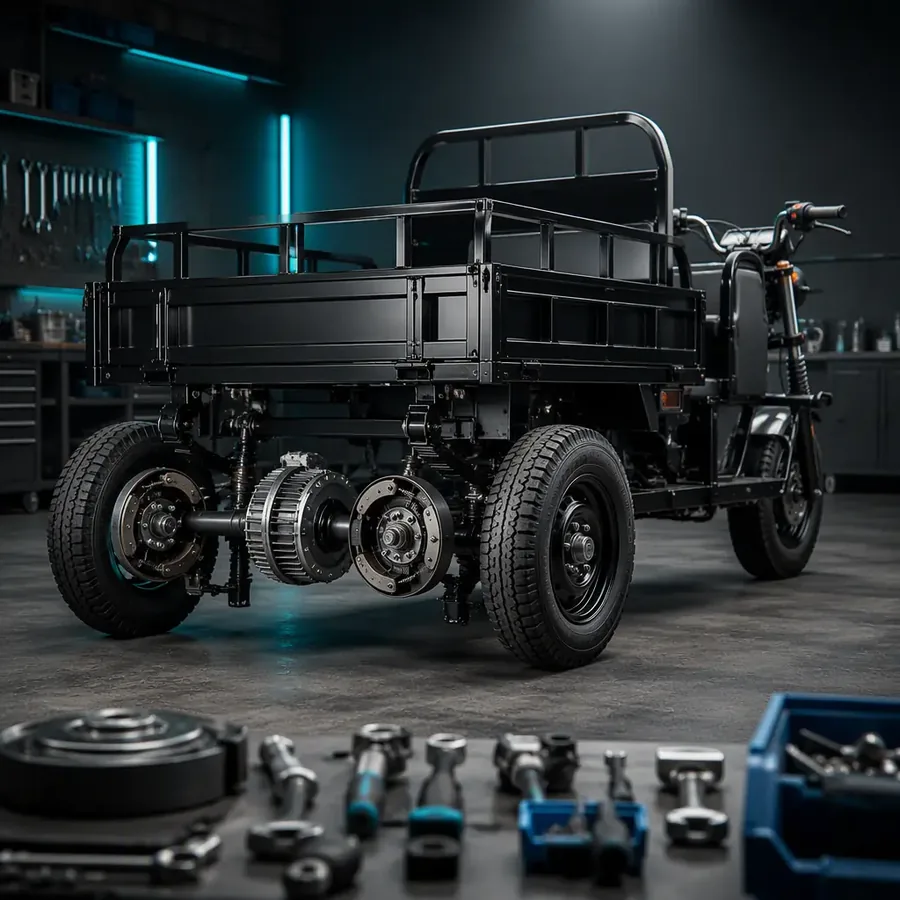
"It's simple to fix" is the sentence that sells electric tricycles, and it is true. A cargo or passenger trike is mechanically the simplest vehicle most owners will ever run: one hub motor, one controller, three wheels, hydraulic disc brakes up front, dual drum brakes at the rear, and a chain. There is no transmission, no oil system, no radiator, and no engine. The entire annual service list is brake pads, tires, and periodic electrical checks, and the realistic budget is USD 150–250 per year including a tire replacement . Versus USD 1,000–1,500 for a pickup, as costed in our cargo trike vs pickup comparison. This guide is the maintenance playbook for owners, fleet operators, and the OEMs who write the service documentation.
The Annual Service Budget: What Actually Breaks
Across the tricycle's service life, the wear items are few and cheap:
- Brake pads . Front hydraulic disc pads at 3,000–5,000 km; rear drum shoes at 6,000–10,000 km. Parts cost USD 10–25 per set.
- Tires, 3.00-12 front and 3.75-12 rear duals, 5,000–8,000 km depending on surface; USD 20–40 each. The two rear tires wear at slightly different rates because of the differential, rotate them at every pad change.
- Chain and sprocket, 6,000–10,000 km; a chain is USD 15–30.
- Controller and connectors . Check quarterly for corrosion and loose terminals; failures are almost always water ingress, not electronics.
- Battery . The pack is the only big-ticket item; with correct care it outlives the 2-year warranty (or 500 cycles).
The comparison that matters to owners is not trike vs trike, it is trike vs car. The service schedule above is the full extent of it, and most owners can do 90% of it with a basic tool kit.
Daily and Weekly Checks
A 60-second routine before each shift catches nearly everything that strands a trike:
- Tire pressure . The front tire carries steering, the two rear tires carry the load; check all three weekly. Under-inflated rear tires cause the majority of "wobble" complaints, which are tire issues, not stability issues.
- Brake feel . Squeeze both levers before moving; a soft lever means pads are worn or the hydraulic line needs bleeding.
- Chain tension. 10–15 mm of play at mid-span; a slack chain wears sprockets and can skip under load.
- Connector check . After rain, verify the battery-to-controller and controller-to-motor connectors are seated; corrosion here is the #1 intermittent failure.
- Parking brake . Engage and push; a trike that rolls on its parking brake is a liability on slopes.
Brakes: Discs Up Front, Drums at the Rear
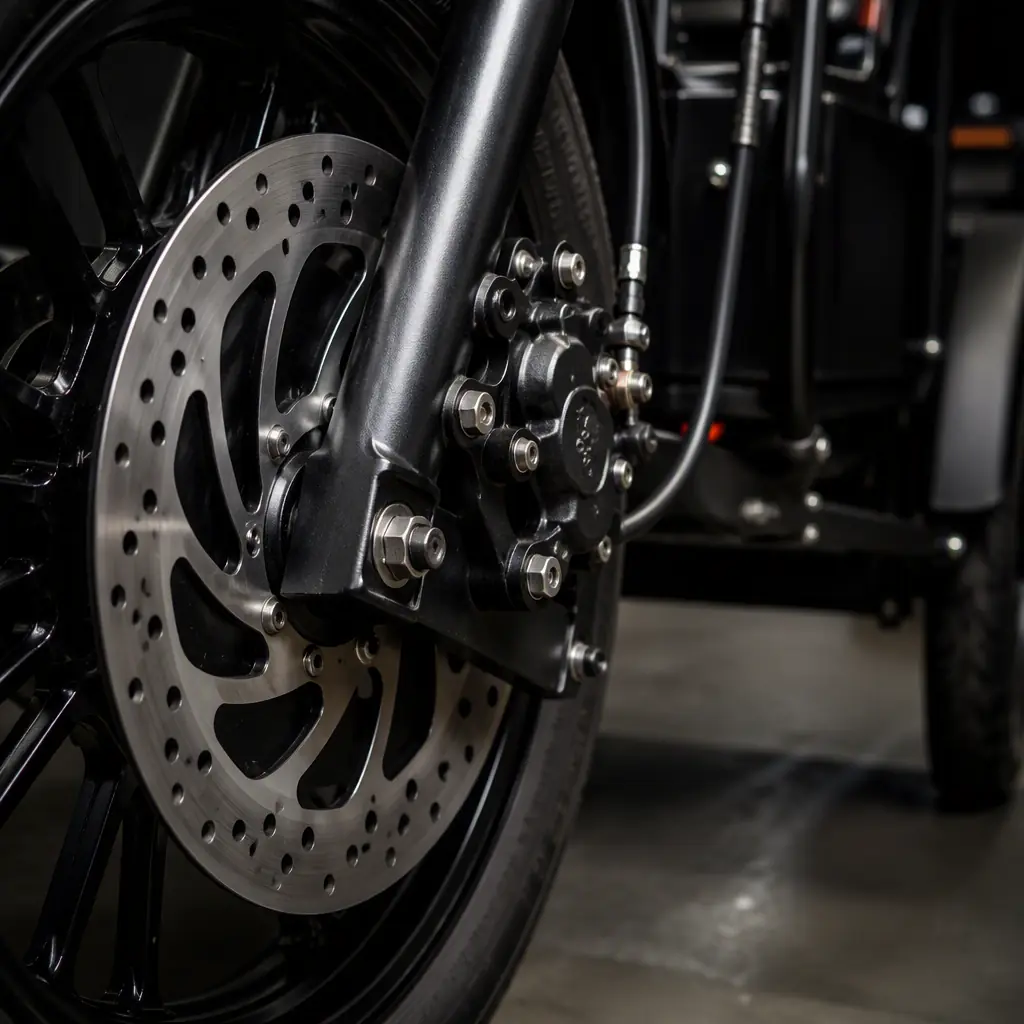
The brake layout on a cargo trike, hydraulic disc front, dual drum rear, plus a parking brake, is chosen for load: the front disc does most of the stopping, the drums add stable rear braking under heavy payload, and the parking brake holds the rig unattended. Service notes: replace disc pads at 3,000–5,000 km and bleed the hydraulic line annually or when the lever feels spongy; adjust drum shoes when the rear brake lever travel exceeds half; and never grease the drum shoes, the standard mistake that kills rear braking. The stopping-distance spec that matters (25 km/h at full payload, verified on the sample) is a checklist item in our passenger trike OEM checklist.
Battery Care That Doubles Pack Life
The battery is the one component where behavior, not wear, determines lifetime. The rules that protect a 60V/72V pack:
- Charge to 80–90% for daily use, full 100% only before long rides. Shallow cycling is what extends lithium packs toward and beyond their 500-cycle rating.
- Never store at empty . A trike parked for weeks should sit at 50–70% charge; the BMS's low-voltage cutoff protects against full discharge, but a pack left at 0% for a month is the classic bricked-battery warranty claim.
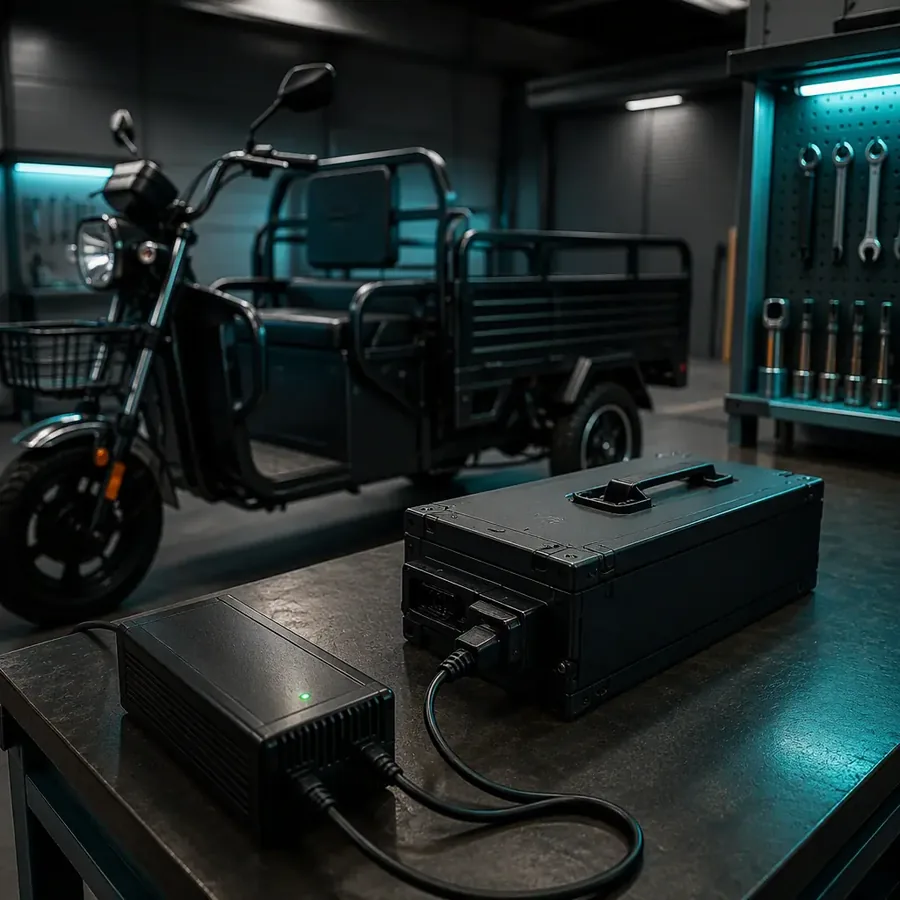
- Charge in dry, ventilated space . The 5A charger finishes a 60V 32Ah pack in 6–10 hours; overnight charging is fine, but avoid charging immediately after a cold ride (let the pack warm to room temperature first).
- Cold storage . Below 0 °C, store the pack indoors; the BMS low-temperature cutoff prevents charging damage, but the pack itself should come inside. The chemistry and BMS details are in our battery technology guide, including the 2027 EU Battery Passport requirements.
Motor, Differential, and Drivetrain
The hub motor is effectively sealed for life, the maintenance is around it, not in it. What needs attention: the differential (or freewheel) on the rear axle, which lets the two rear wheels turn at different speeds in corners; a locked-up differential manifests as a dragging or scrubbing feel in tight turns and accelerates inner-tire wear. The chain and sprocket are the only true wear items in the drivetrain. Keep them clean and correctly tensioned, replace the chain before it stretches (a stretched chain is the usual cause of "slipping under load"). The motor sizing logic that determines whether 800W or 1200W suits a payload is in our motor power guide, and the hub vs mid-drive trade-offs in our hub vs mid-drive guide.
Seasonal and Long-Term Storage
Tricycles get parked for weeks at a time, between market seasons, over winter, or during a rider's time off, and how the vehicle is stored determines whether it starts clean in spring. Before any long pause: charge the battery to 50–70% and remove it from the trike (a pack left attached drains through the controller and BMS standby draw, which is precisely how batteries "die in storage"), inflate all three tires to the top of the pressure range to avoid flat spots, and clean and lightly oil the chain so it does not rust in humid storage. On return, do the full daily-check routine before the first ride, and give the brakes one hard stop at low speed to re-seat the pads. Fleet operators storing multiple trikes should log the storage charge level per unit. The 50–70% rule is the single cheapest way to keep a fleet's battery warranty claims at zero.
Parts Availability and Service Network
Before buying any trike, as an owner or as a distributor, verify the factory stocks the wear items: brake pads, tires, chain, controller, and battery. A trike is only as serviceable as its parts pipeline, and the mobility dealers who stock passenger trikes will not carry a model they cannot service. On the OEM side, confirm the factory provides service documentation in the target market's language and holds first-article samples for the parts that matter. The negotiation structure for spare-parts commitments is part of any OEM program, detailed in our OEM buying guide. For fleet operators running multiple trikes, a small on-site stock of pads, tubes, and connectors plus a quarterly inspection schedule keeps the fleet available and the USD 150–250 per-unit annual budget predictable.
Get a Trike Spec With a Real Service Plan
Tell us your fleet size and use case. We will spec the trike, confirm spare-parts stock, and provide service documentation in your market's language, with the USD 150–250 annual service budget built into the quote.
