
Battery packs are the largest single line item in the BOM of an electric bicycle, e-scooter or cargo tricycle. On the EMS-EBIKE platform that line item is quoted separately from the vehicle: a 48V 15Ah NMC pack sits in the $250–325 FOB band at 500-unit MOQ, while an equivalent 36V 10Ah pack lands at $95–120 and a 72V 20Ah LFP pack at $350–430. Multiply that by an order quantity and you can see why chemistry, capacity and BMS level are negotiated line by line rather than accepted from a catalogue.
This guide works through the specification decisions an importer actually has to defend in a purchase order: which chemistry fits which duty cycle, how pack voltage and capacity are arranged from cells, what a smart BMS does beyond protection, what the EU Battery Passport will require from February 2027, and which documents have to travel with the container.
LFP vs NMC: Choosing Chemistry by Duty Cycle
Two chemistries cover almost every light electric vehicle order. NMC (lithium nickel manganese cobalt oxide) packs more energy into less weight and volume. LFP (lithium iron phosphate) trades that density for cycle life, thermal margin and a lower cost per watt-hour. The choice is not a preference; it is set by how many charge cycles the vehicle will see and where it will be parked.
| Parameter | NMC (LiNiMnCoO2) | LFP (LiFePO4) |
|---|---|---|
| Cycle life to 80% capacity | 800+ cycles | 2,000+ cycles |
| Reference FOB, 48V-class pack | $250–325 (48V 15Ah, ~720Wh) | $200–275 (48V 15Ah equivalent) |
| Typical pack weight | ~3.8 kg (48V 15Ah, 21700 cells) | ~8.5 kg (72V 20Ah, 26650 cells) |
| Operating temperature | -10°C to 55°C | -20°C to 60°C |
| Cell types on the platform | 18650 / 21700 (Samsung 50E, LG M50T, Panasonic NCR) | LFP 26650 and prismatic formats |
| Where it wins | Commuter and sport e-bikes where weight and range matter | Cargo tricycles, passenger trikes, hot climates, multi-shift fleets |
The cycle-life number is the one that changes a fleet's maintenance budget. A delivery tricycle that does two charge cycles a day will put roughly 700 cycles on its pack in a year of operation. An 800-cycle NMC pack is therefore close to its end of useful life inside 14 months, while a 2,000-cycle LFP pack runs for nearly three years on the same duty. If the vehicle is a leased asset that must still hold capacity at the end of a 24-month contract, that difference is a contractual risk, not a spec-sheet footnote.
Weight runs the other way. The 8.5 kg reference above is a 72V 20Ah LFP pack, and the same energy in NMC would be materially lighter. On a two-wheel commuter bike that the rider lifts onto a train or carries up stairs, the extra kilos are a product defect. On a 300 kg-payload cargo tricycle with a steel frame and 3.75-12 rear tyres, nobody notices. Match the chemistry to the platform before you match it to the price list.
Cold is the third variable. LFP retains usable capacity further down the temperature scale, but charging either chemistry below 0°C risks lithium plating on the anode. Packs specified for northern European or Canadian markets should carry a BMS with a charge cut-off at 0°C, and a heating pad option is available as a customisation for vehicles stored outdoors overnight. The winter operating pattern for these fleets is covered in more detail in the winter operation guide.
How Voltage, Capacity and Cell Count Fit Together
Pack voltage is not a free choice. It follows the motor and controller on the vehicle. The platform spans 36V, 48V, 52V, 60V and 72V, with capacity configurable from 7.5Ah to 40Ah by cell count and arrangement. Two configurations come up in most enquiries:
- 48V commuter packs for 250–500W hub-motor city and fat-tyre bikes, built from 21700 cells in a 13-series arrangement to reach the 48V nominal band.
- 60V and 72V packs for 1000W-plus cargo tricycles, passenger trikes and moped-class scooters, where the higher voltage keeps current and cable gauge manageable at sustained loads.
Capacity then sets range, and range is a claim you have to be able to defend. Published range figures for the tricycle platform are quoted at a stated payload on flat ground, not at maximum load on a hilly route. If a customer's route includes gradients or a heavy cargo box, size the pack against the worst leg of the route rather than the average. The 60V versus 72V comparison works through how that decision plays out on cargo vehicles, and the motor power guide explains what the controller draws at peak.
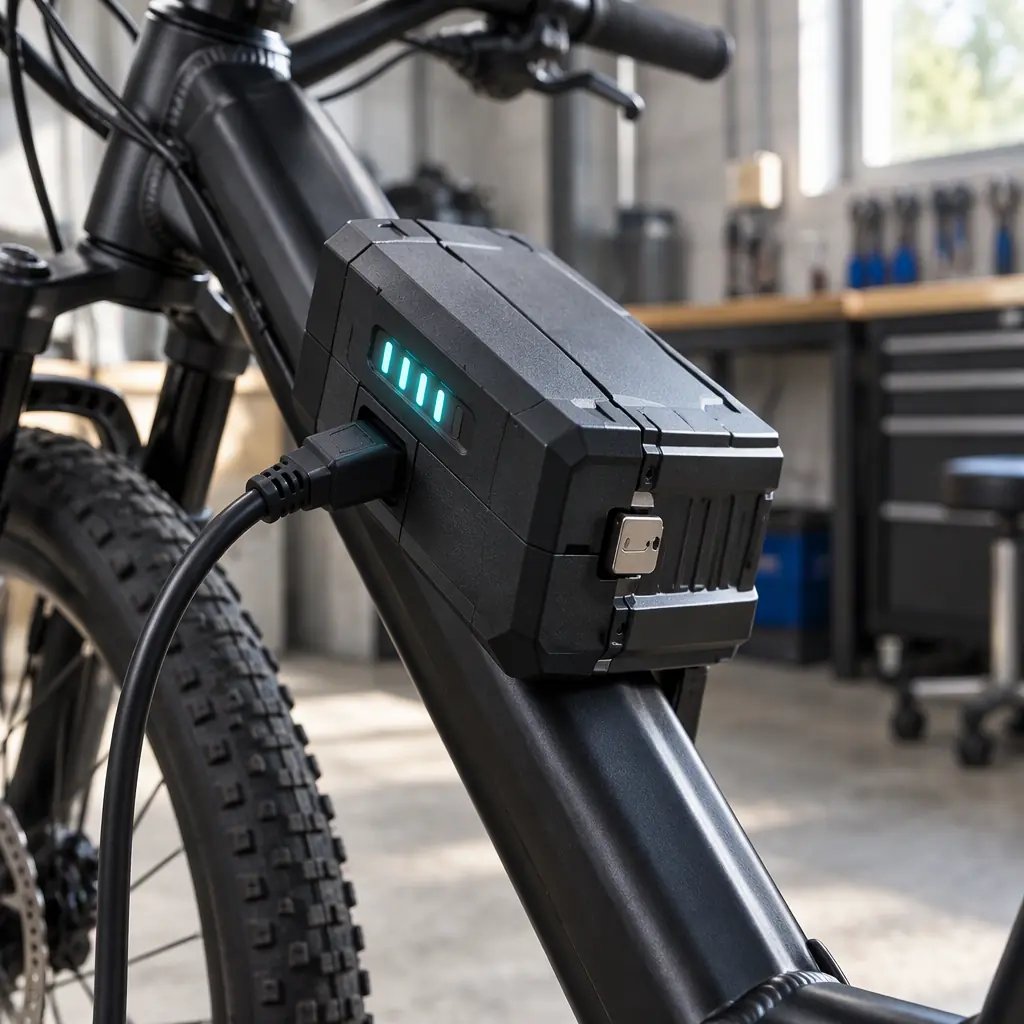
Form factor is the final fit question. Standard options include downtube packs in the Dorado and Reention families, seat-post packs, under-deck packs, under-seat packs and full customs. A downtube pack with an integrated lock-and-latch is the default for commuter bikes; under-deck and rear-box configurations are used on cargo trikes and passenger rickshaws where the battery must stay out of the load area. Choosing the form factor early matters because it constrains frame tooling, and retooling a frame after the pack is fixed is the most expensive kind of late change.
Removable or Fixed: The Charging Workflow Decision
Whether the pack detaches from the frame is a fleet-operations question disguised as a design question. A removable downtube pack lets the rider carry the battery indoors to charge, which is the only practical option for apartment buildings, cold-climate markets and any site without a powered parking bay. It also makes swap operations possible: a depleted pack comes off in seconds and a charged one goes on, cutting vehicle downtime to the length of the swap rather than the length of a charge.
A fixed pack saves the rail, the lock and the latch, gives a cleaner frame line and lowers tooling cost. What it removes is the ability to charge the pack anywhere other than where the vehicle is parked. For a fleet that runs two or three shifts back to back, that single constraint can turn into a requirement for a second vehicle per route. The fleet charging guide covers how depot charge capacity and swap routines are sized against shift patterns.
Theft resistance usually decides the argument in the other direction. A removable pack is the most valuable component on the vehicle, and a rider who takes it with them removes both the theft target and the fire risk of an unattended pack. Where packs stay on the vehicle, the lock and latch should use a stainless steel latch rather than zinc alloy so that coastal humidity does not jam the mechanism after a season.
Connector choice belongs in the same conversation. Standard options on the platform are XT60 and XT90 for compact and high-current packs, Anderson connectors for fleet packs drawing above 30A, and aviation-style connectors for custom builds. Charge-side connectors are quoted with the pack; the charger guide covers how charge current and connector type are matched so that a fast-charge option does not outrun the pack's own limits.
What a Smart BMS Actually Protects
The battery management system is the board inside the pack that decides when the pack may charge and discharge. On this platform the standard is a smart BMS with overcharge, over-discharge, short-circuit and thermal protection, with UART, CAN or Bluetooth communication as options. Those four protection functions are the floor, not the feature list.
Overcharge protection terminates charging when any cell group reaches its voltage ceiling. This is the function that prevents the failure mode that matters most: a pack that keeps accepting current past the ceiling goes into lithium plating, and plating is a precursor to thermal runaway rather than a gradual degradation. Over-discharge protection disconnects the load before cell voltage falls far enough to damage the anode. Short-circuit protection acts on the discharge path, and thermal protection uses thermistors placed inside the pack to cut charging and discharging outside safe temperature windows.
The communication option is what separates a fleet pack from a consumer pack. A CAN bus link lets the BMS report state of charge, individual cell-group voltages, cycle count and fault codes to a fleet backend, which is the difference between servicing a vehicle because a dashboard flagged a weak cell group and discovering the problem when a rider is stranded. Bluetooth is the consumer equivalent, giving a rider pack health on a phone app, and is close to standard on premium consumer models.
One sizing rule prevents most field failures: the charge and discharge FETs must be rated above the controller's peak draw, not its nominal draw. A 1000W motor at 60V pulls well over 15A under load, and a BMS whose discharge path is rated only for a nominal figure will run hot on every incline. When specifying, quote the motor, controller and intended payload together so the BMS is selected against the peak rather than the average. The battery pack selection guide goes deeper into cell grade and BMS tiering, and the controller guide covers the current side of the same calculation.
The EU Battery Passport from February 2027
Regulation (EU) 2023/1542 introduces a digital battery passport for batteries placed on the EU market, and light means of transport batteries, which includes e-bike, e-scooter and e-tricycle packs, fall inside its scope from February 2027. The passport is reached through a QR code on the pack and carries the pack's identity and performance record. For an importer, the practical consequence is that the pack has to arrive with data attached, not just a test certificate in a folder.
- Identity and performance data: rated capacity in Ah, energy in Wh, expected lifetime and round-trip efficiency, tied to the specific pack rather than the model.
- Carbon footprint declaration: calculated per the battery product environmental footprint rules, covering cell manufacture, pack assembly and transport.
- Recycled content declaration: the share of recycled cobalt, lithium and nickel in the pack, with minimum content thresholds applying from 2031.
- Supply chain due diligence: a policy covering cobalt, natural graphite, lithium and nickel sourcing, aligned with OECD guidance and traceable to smelter or refinery level.
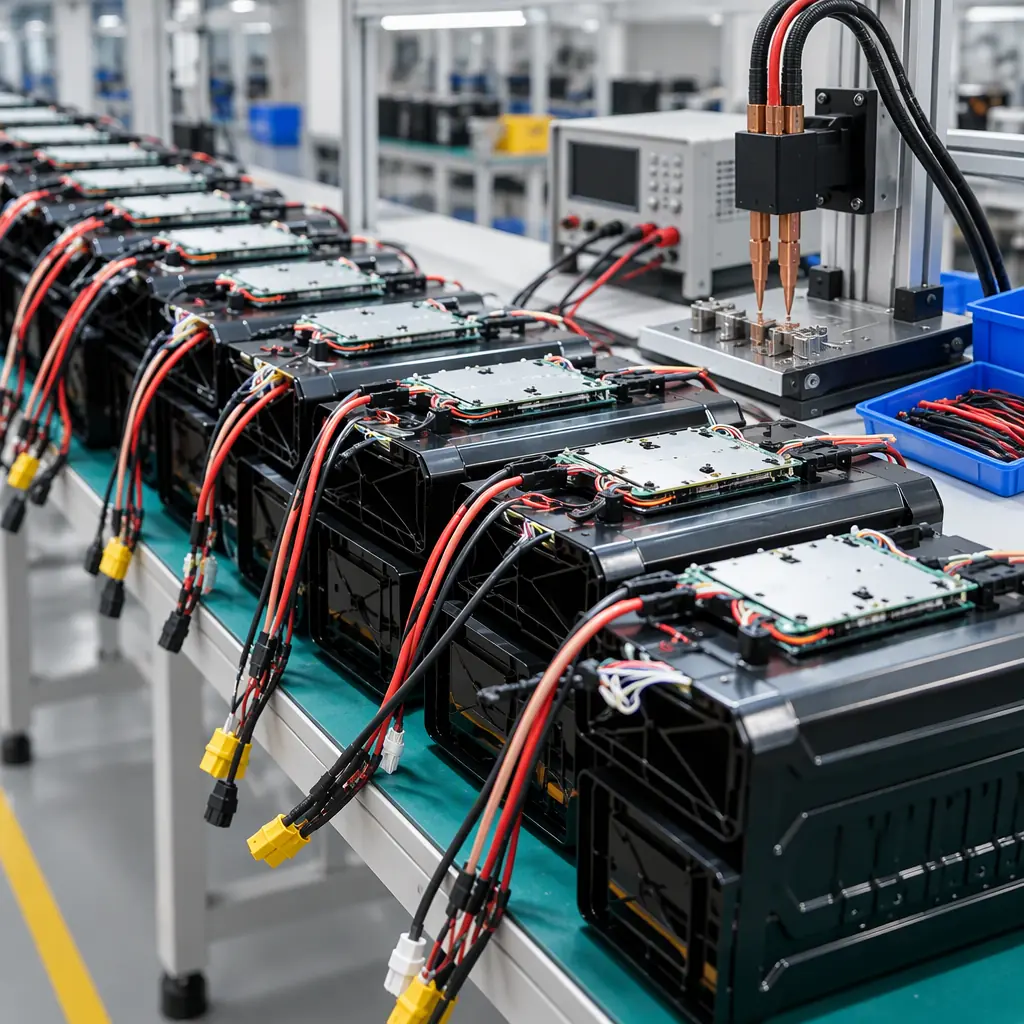
The part that catches importers out is traceability granularity. A passport that describes a model is not the same as a passport that describes a pack, and the difference is whether cell lot, BMS serial and pack test record were captured at assembly. On this platform, packs are assembled on a dedicated line with automated cell sorting and spot-welding, and each order carries cell, BMS and test-report documents in the export file. Buyers with EU destinations should confirm the documentation scope in the order, because stitching the data together after the container has shipped is not realistic.
Certification runs alongside the passport rather than replacing it. Packs on the platform are documented to UN 38.3 for transport, IEC 62133-2 for cell and pack safety, UL 2271 for the US market, and CE and RoHS for the EU, with MSDS sheets in the shipping file. Where a market requires design-specific testing, that is scoped per pack design rather than assumed. The EU versus US certification guide sets out how the two regimes differ for the rest of the vehicle.
Specifying Battery Packs for an OEM Order
A battery purchase order should be as specific as a frame drawing. The following points are the ones that cause the most re-quotes when left open:
- Cell brand and grade: Samsung 50E, LG M50T and Panasonic NCR18650B cells are sourced through authorised distributors with traceability. Grade-A domestic cells are available at a 15–20% cost reduction for price-sensitive markets, and the trade-off should be a conscious choice rather than a surprise at inspection.
- Capacity and configuration: state the Ah and Wh, not just the voltage. A 48V 15Ah pack and a 48V 20Ah pack sit in different cost bands and different weight classes.
- BMS level: basic protection, Bluetooth, or CAN bus with fleet telemetry. This is the single line most often under-specified relative to the vehicle's price point.
- Case and connector: plastic or aluminium extrusion, XT60 / XT90 / Anderson / aviation connector, and the lock mechanism material.
- Ingress protection: packs are rated IP54 with IP65 connectors as standard. Vehicles used in continuous rain or washed down at a depot should be discussed as a specific case rather than assumed covered.
- Labels and market text: warning text and recycling marks in the destination language, plus your own branding if the enclosure is to carry it.
Commercial terms follow the specification. Pack MOQ is 500 units per voltage and capacity variant, with custom cell arrangement and BMS configuration included at no extra charge from 1,000 units. Standard lead time is 20–30 days, and custom case tooling adds roughly 15 days. Samples are available at 1.2x unit price with a DG courier surcharge, and a custom case sample requires a mold fee that is credited against the first 1,000-unit order.
Shipping is where battery orders differ from any other accessory. Packs travel as Class 9 dangerous goods with a sea freight declaration, in UN-approved packaging with anti-static wrap and silica gel, twelve packs per master carton. A 20GP container holds roughly 8,000–12,000 packs depending on form factor, and the DG surcharge is per shipment rather than per unit, which is another reason small trial orders and full-container orders have very different landed economics. The cost breakdown guide shows where the battery line sits against the rest of the vehicle BOM.
Matching the Pack to the Vehicle Platform
The same pack family has to serve four vehicle types on this platform, and each one stresses it differently. City commuter and folding e-bikes use downtube and seat-post packs with keyed lock-and-latch mechanisms, where weight and appearance drive the choice. Fat-tyre and eMTB models use larger 21700-based packs with higher discharge capability for sustained climbing. E-scooters take under-deck and stem-integrated packs in slim aluminium cases with a bottom-drain design. E-tricycles and cargo trikes take under-deck and rear-box packs, where LFP is preferred for the cycle life that multi-shift fleet work demands.
That last case is where battery specification and vehicle economics meet. A cargo tricycle rated for a 300 kg payload in the EU and 500 kg outside it is a working vehicle, and its pack is cycled daily. Specifying the cheapest NMC pack that meets the range target pushes the replacement cost forward by a year and a half in a fleet that runs two shifts. The payload capacity guide explains how load affects the energy the vehicle draws per kilometre, which is the input to that calculation.
Before committing an order, the sensible sequence is a specification sheet, a sample pack, and a test report review. The battery is the component that determines whether the vehicle meets its warranty, its certification scope and its resale value, and none of those are recoverable after the container ships. Buyers comparing chemistries across vehicle types can also work from the OEM buying guide for the wider purchase process.
Get Battery Specs and Samples for Your Next OEM Order
Tell us your target range, motor power, and budget. We will recommend the right cell, pack configuration, and BMS, with compliance documentation for your target market, including EU Battery Passport readiness.
