
The wattage on an e-bike motor sticker is the most misunderstood number in the industry. A 750W sticker does not mean the motor delivers 750W continuously, and a 250W motor in a German commuter bike can feel more powerful than a 500W motor in a poorly matched budget bike. For OEM buyers, the power class decision is really three decisions in one: what the law allows in your target market, what the terrain demands, and what the battery can sustain. This guide decodes continuous versus peak ratings, maps the legal classes in the EU and US, and gives you a market-by-market selection framework.
How Motor Power Ratings Actually Work
Two numbers matter, and most spec sheets only print one. Continuous (rated) power is what the motor can sustain indefinitely without overheating, this is the number that matters for legality. Peak power is the short-duration burst (typically 20–60 seconds) the motor can deliver for acceleration and hills, usually 1.8–2.5x the continuous rating. A "750W" hub motor with a 48V controller typically draws 1,200–1,500W at peak for brief periods.
The controller is the hidden actor. The same motor can be marketed at 250W, 500W, or 750W depending on the controller's current limit and the firmware. Which is why "watts" on a sticker is a marketing decision as much as an engineering one. When you compare quotes from factories, ask for three numbers: continuous motor rating, controller peak current, and battery discharge rating. A quote that cannot state all three is a quote you cannot evaluate. The component trade-offs between hub and mid-drive architectures, where the same power class behaves very differently, are covered in our hub motor vs mid-drive comparison.
The Legal Classes: EU 250W vs US Class 1-2-3
Power classes are defined by regulation, not engineering. The two frameworks that cover most export volume:
| Market | Class | Motor Limit | Speed Limit | Registration |
|---|---|---|---|---|
| EU | Pedelec (EPAC) | 250W continuous | 25 km/h assist | None (EN 15194) |
| EU | L1e moped | No power cap | 45 km/h | Plate, license, eMark |
| US | Class 1 | 750W | 20 mph (32 km/h) assist | None |
| US | Class 2 | 750W | 20 mph, throttle | None (most states) |
| US | Class 3 | 750W | 28 mph (45 km/h) assist | None (age 16+, helmet in some states) |
| US | Above class | >750W | Any | Moped/motorcycle plate |
The structural difference: the EU caps continuous power at 250W, the US caps it at 750W. That single difference determines which motors you can legally sell where, and it is why a factory's motor lineup is organized around these two ceilings. The certification paths behind both frameworks, EN 15194 for the EU, UL 2849 for the US, are compared in detail in our certification guide.
250W: Where the EU Market Lives
The 250W class is not a handicap, it is a market. Germany, the Netherlands, and the Nordics buy millions of 250W pedelecs per year, and the category rewards torque tuning, not raw watts. A well-tuned 250W hub motor with a 45–50 Nm torque rating handles city commuting for 95% of riders. The engineering rules for this class:
- Torque beats power. 250W continuous with 50 Nm peak feels stronger than 350W with 35 Nm on real hills, because acceleration is torque-limited, not power-limited.
- Weight discipline . Every kilogram of motor and battery tax the rider. A 250W system should add no more than 12–15 kg to the base bike; the EU market punishes heavy e-bikes at the point of sale.
- Compliance is strict. EN 15194 caps assist at 25 km/h and requires the motor to cut out above that. Some EU importers ask for "unlocked" firmware; it voids certification, exposes the importer to liability, and is the fastest way to lose a retail channel.
- Battery pairing . A 36V 10–14Ah pack is the standard pairing. The chemistry and BMS decisions for EU-market packs: including the low-temperature charge cutoff for Nordic winters, are in our battery technology guide.
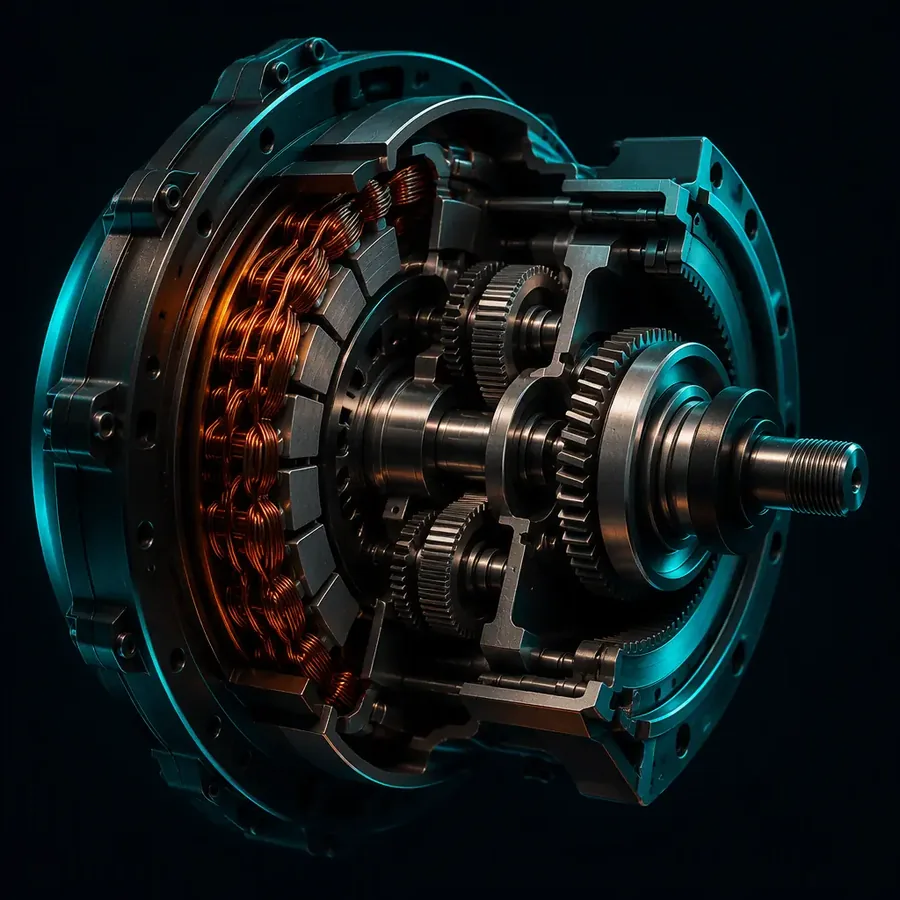
For the EU, consider the mid-drive premium: 250W mid-drives exploit the bike's gearing, so the motor output at the wheel is multiplied 2–3x in low gear. That makes a 250W mid-drive feel like a 500W hub on hills. Which is why the German market is dominated by mid-drive despite the 250W cap. The cost difference ($200–350 per unit) and the maintenance profile are analyzed in our hub vs mid-drive deep dive.
500–750W: The North American Sweet Spot
The US market's 750W ceiling creates a power band that simply does not exist in the EU. The practical class structure:
- 500W hub (55–65 Nm) . The entry point for US commuters. Handles 90 kg riders, moderate hills, and 30–40 km/h cruising. Cheapest compliant system and the volume leader.
- 750W hub (70–85 Nm) . The Class 1/2/3 sweet spot. Sustains 45 km/h assists (Class 3), climbs 12–15% grades with a 100 kg rider, and powers fat-tire and cargo builds. This is the motor class EMS-EBIKE specifies for the majority of North American OEM orders.
- 750W mid-drive (120–160 Nm) . The premium US option for mountain and cargo. Gear multiplication delivers wheel torque that no hub motor matches, at a $200–350 BOM premium.
- Class choice affects retail. Class 2 (20 mph + throttle) avoids most state registration and is the default for throttle-first US buyers; Class 3 (28 mph assist) requires age 16+ and helmets in some states. Many importers ship Class 2 firmware as default with Class 3 as a dealer-enabled option.
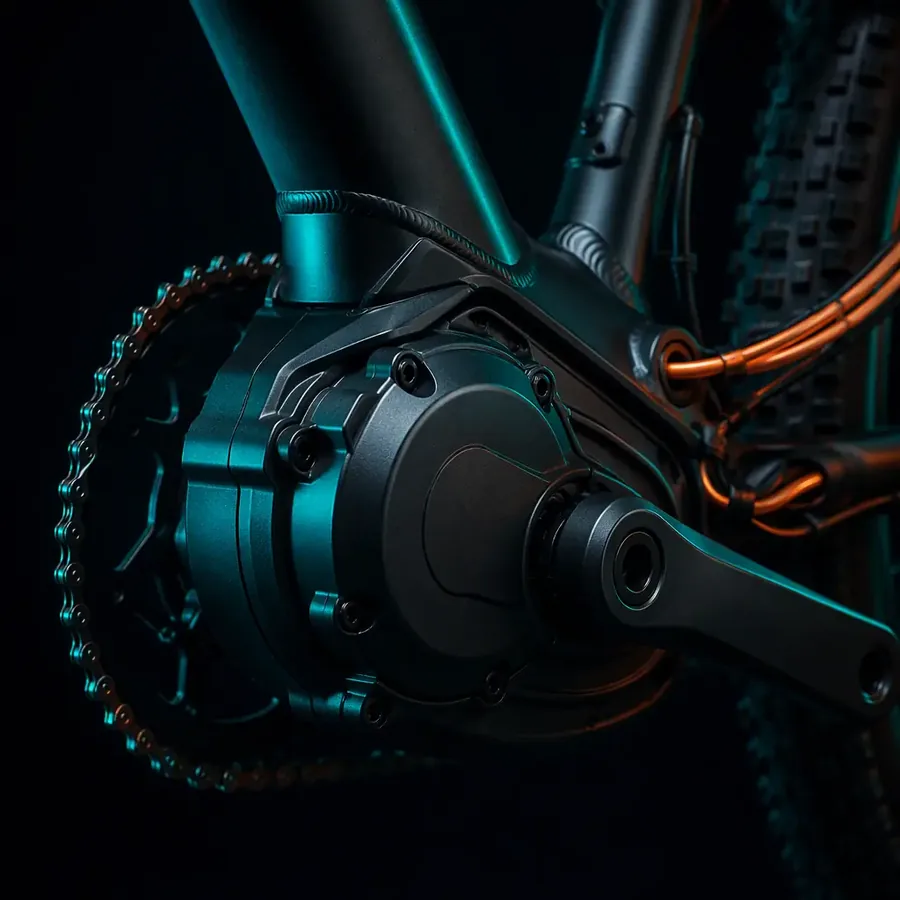
The 750W class interacts heavily with the wheel build. Hub motors at this power need 12-gauge spokes and 36H rims, and the frame's rear dropout must match the motor axle width. For fat-tire builds in this class, the tire, torque, and brake specifications are detailed in our fat-tire e-bike OEM guide.
1000W+: Moped Territory and Registration
Above 750W, the product stops being an e-bike in the eyes of most regulators. A 1000–3000W machine is a moped or motorcycle: it needs plates, insurance, and often a license, and its certification path is eMark or DOT rather than EN 15194 or UL 2849. Where does this class make sense?
- Off-road and recreational . E-dirt bikes and trail machines at 1000–3000W are sold as off-road vehicles without road registration in many jurisdictions. This is the cleanest market for high power.
- Cargo and utility . Heavy cargo trikes and quadricycles benefit from 1000W+ torque, especially with 200+ kg payloads. The payload and motor math for cargo platforms are covered in our cargo fleet buyer's guide.
- Rental and tourism . Destination rental fleets in countries with permissive moped laws run 1000W+ machines. But check the local license requirements before committing. A rental fleet requiring a motorcycle license has a much smaller addressable rider pool.
- The US 750W gray zone . Some US states (notably the ones that adopted the three-class framework wholesale) treat any >750W machine as a motor vehicle. Verify the target state's statute before importing 1000W+ units; the sales channel can disappear overnight with a classification change.
The higher the power, the more the battery dominates the BOM. A 2000W system needs a 52V or 72V pack with 30A+ continuous discharge, a 48V 20Ah pack sags and overheats. Voltage, chemistry, and pack sizing for high-discharge builds are covered in our battery technology guide.
Power vs Torque: The Spec Buyers Misread
Power (watts) describes work rate; torque (Nm) describes force. For e-bike buyers, torque is the number that predicts real-world satisfaction, because it governs acceleration from stops and hill climbing, the two moments riders actually judge. The practical conversion: a rider experiences roughly 15–25 Nm of wheel torque per 100W of motor power at typical gear ratios, so a 750W motor with 80 Nm feels dramatically stronger than a 750W motor with 55 Nm, even though both are "750W."
When comparing quotes, standardize on peak torque at the wheel, not motor watts. Ask each factory for the torque curve (torque at 50%, 75%, and 100% throttle) and the sustained-power thermal limit. A factory that cannot produce a torque curve is a factory that has not tested its own motors. And that data gap will show up as warranty claims in your market.
Market-by-Market Selection Framework
Putting it together, the power class decision for a new OEM line:
| Target Market | Recommended Class | Motor Spec | Battery | Certification |
|---|---|---|---|---|
| Germany / Netherlands / Nordics | 250W pedelec | 250W mid-drive or torque-tuned hub, 45–50 Nm | 36V 10–14Ah | EN 15194 |
| US / Canada, commuter | Class 1/2, 500W | 500W hub, 55–65 Nm | 48V 12–15Ah | UL 2849 |
| US / Canada, fat-tire, cargo, mountain | Class 2/3, 750W | 750W hub (70–85 Nm) or mid-drive (120–160 Nm) | 48V 15–21Ah | UL 2849 |
| Global, off-road / rental | 1000W+ (off-road or moped) | 1000–3000W hub or mid-drive | 52V / 72V high-discharge | eMark / DOT per market |
One practical note on mixed portfolios: a single frame platform can often carry 250W, 500W, and 750W motor variants with different controllers and batteries, which lets one SKU family serve EU and US channels simultaneously. That is the structure EMS-EBIKE uses for most OEM programs, same frame, market-specific powertrain, market-specific certification. The MOQ and lead-time implications of running multiple powertrain variants are covered in our OEM buying guide, and the retail-channel decisions for scooters follow the same power-class logic in our electric scooter OEM guide.
Get a Motor Recommendation for Your Target Market
Tell us your target markets, terrain, rider weight assumptions, and product category. We will recommend the power class, motor architecture, and battery pairing, with the certification path (EN 15194, UL 2849, or eMark) for each market.
