
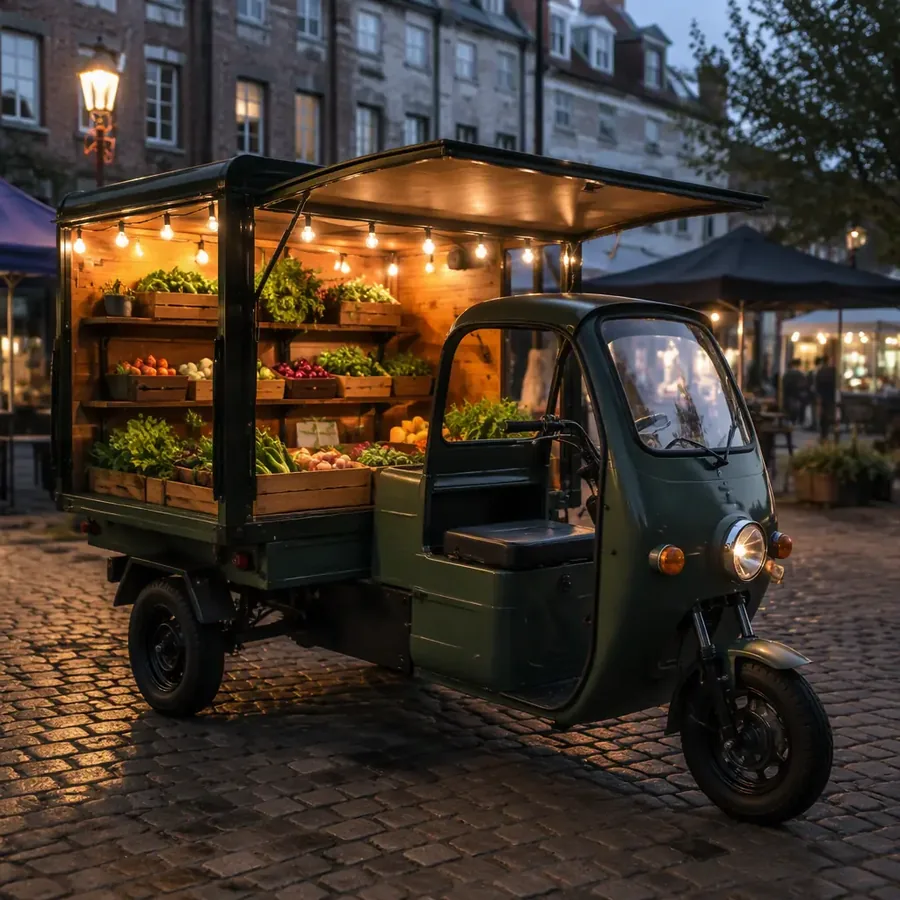
The cargo e-tricycle is quietly becoming the entry vehicle of the street food and mobile vending industry. A food truck costs USD 50,000–150,000 to build; a cargo tricycle costs USD 1,250–1,550 FOB plus a 2,000–8,000 USD build-out, and it can park where trucks cannot. Street vendors, coffee carts, farmers market sellers, and small-batch food businesses across the US and EU are converting three-wheeled cargo trikes into mobile shops. And distributors are adding "vending trike" packages to their catalogs. This guide covers the platform specs, the build-out weight budget, the permits that apply, and the operating economics, written for both vendors and the OEMs supplying them.
Why Vending Trikes Are Exploding
The economics are brutal in the vendor's favor. A licensed food truck build-out runs $50k–$150k with a commercial vehicle to insure and maintain. A vending trike program: one cargo tricycle at $1,250–1,550 FOB, a $2k–$8k build-out (counter, canopy, insulated box, 12V fridge, battery second pack), and no commercial driver's license in most jurisdictions because the vehicle is Class 2 (750W / 20 mph) or an EPAC trike. The same license-free path that is driving the wider US three-wheeler boom documented in our China three-wheeler USA boom analysis. The trike also parks in a standard bike rack spot, dodging the parking-fee structure that eats food truck margins.
Spec the Platform: Payload, Box, and Power
A vending build-out works only on a platform that can carry it. The specs that matter:
- Payload headroom . A vending rig (box + counter + fridge + stock) weighs 150–300 kg before the operator. Spec a 300 kg (EU) or 500 kg (non-EU) rated trike, not the minimum. The payload rating must include the build-out, not just the cargo.
- Box volume 150–500 L with drop-sides . Drop-side boxes convert from transport to service counter in seconds; 300 L+ suits coffee carts and prepared-food vendors, 500 L suits grocery and beverage stalls.
- Motor 800W–1200W with differential . A loaded vending trike is heavy and starts/stops all day; the differential keeps cornering stable. 1200W is the right default for a 400 kg+ rig.
- 60V/72V battery with a swappable second pack . Vending days run 6–10 hours with a fridge drawing continuously. One 60V 32Ah pack plus a hot-swap spare covers a full shift; the 5A charger refills overnight in 6–10 hours.
- Hydraulic disc front + dual drum rear + parking brake . The parking brake matters more than anywhere else: the rig sits unattended on slopes while the vendor serves customers.
The full platform spec sheet, tires 3.00-12 front / 3.75-12 rear, LCD with load display, forward/neutral/reverse gearing, is the same config we detail in our cargo trike vs pickup comparison, applied here to vending rather than freight.
Designing the Cart Build-Out
The build-out is where vendors overspend and overweight. Budget discipline:
- Weight budget first . List every component (counter top, canopy frame, insulated box, fridge, water tank, propane or battery cooktop) and sum it before buying. Keep the permanent build-out under 40% of the trike's rated payload so stock and operator weight stay inside the rating.
- Power budget second . A 12V/60W fridge draws ~5A, and a cooktop or coffee machine needs an inverter sized off the battery's BMS continuous rating, not the peak. Over-inverting is the #1 cause of trike battery failures in vending use, the BMS protects the pack by cutting out mid-service.
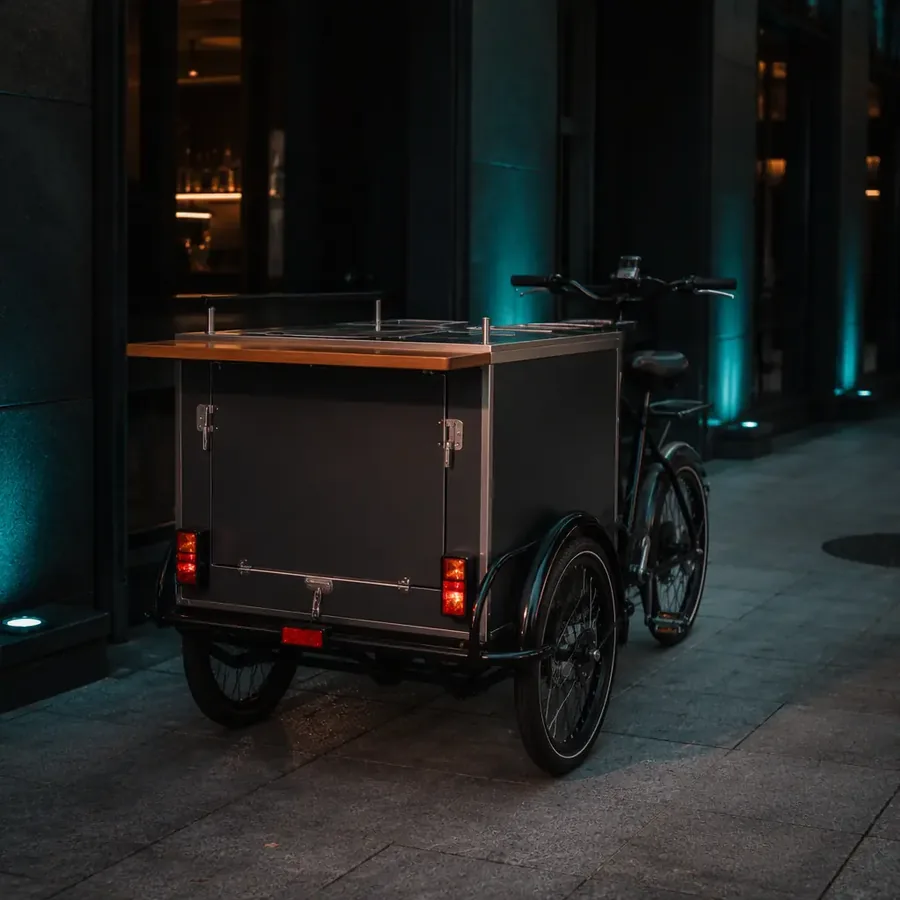
- Insulated box with drainage . Beverage and ice-cream vendors need a sealed, drainable cold box; a 150–500 L drop-side box with a food-grade liner is the standard build.
- Canopy and lighting . A lightweight canopy (5–8 kg) and LED strip lighting complete the stall look; both are low-draw on the 60V system via a DC-DC converter.
Battery discipline for a vending rig, charge cycles, cold storage, and the 2-year battery warranty, is the same care regime we document in our battery technology guide; vendors should treat the pack as a daily-use asset, not an afterthought.
Permits, Health Codes, and Where Trikes Fit
Vending regulation varies more than vehicle regulation. In the US, the vehicle itself rides the Class 2 / UL 2849 path in most states (no license, no plate), but the vending permit is local: health department inspection of the food surface, fire code for propane or cooktop use, and a street-vending license per city. In the EU, EPAC trikes (250W / 25 km/h) face the least vehicle regulation, while 45 km/h L2e trikes need eMark approval and an AM/B license, the exact class boundaries are mapped in our electric tricycle laws guide for the US and EU. The practical pattern: vendors start with pre-packaged goods (no cooking) to clear health inspection, then add cooktop capability once the permit stack is proven.
The Daily Operating Economics
Run the numbers on a coffee-cart example: a $5 average ticket, 40–80 transactions on a weekend market day, and the trike's full cost (amortized build-out + power + maintenance) lands near USD 8–15 per operating day. Compare: a food truck's fuel, insurance, and parking run $80–150 per day before a single sale. The trike's daily charge cost is under USD 1.50 at typical residential rates for a full 60V 32Ah cycle, and the annual service bill stays in the USD 150–250 range. Brake pads, tires, and periodic checks, as costed in our maintenance comparison. Vendors typically break even on the trike + build-out investment in 3–6 months of weekend trading.
Sourcing and Landing Your First Unit
For vendors importing directly (or distributors adding a vending-trike SKU), the import path is the same as any trike program: HS classification, certification checklist before deposit, container planning (a 20-ft container holds roughly 12–16 knocked-down cargo trikes), and sample verification before the production run. The step-by-step process, including the 2026 tariff rates and the factory verification checklist, is in our import electric tricycles from China guide. OEM buyers adding vending packages can also start from the platform negotiation structure in our OEM buying guide.
Build a Vending Trike Package for Your Channel
Whether you are a vendor importing one unit or a distributor launching a vending-trike SKU, we will spec the payload, box, battery, and certification path, with container plans and build-out weight budgets included.
