
The short answer: an electric tricycle with operable pedals, a motor at or under 750W, and a top speed at or under 20 mph (32 km/h) is legal to ride without a license, registration, or insurance in most US states, because it meets the federal low-speed electric bicycle definition. In the EU, a pedal-assisted tricycle at 250W and 25 km/h is an EPAC under EN 15194 and also needs no license. Anything faster or more powerful is classified as a motor vehicle, a moped or three-wheeled L-category vehicle, and requires a license, type approval, and registration. The details below matter because three-wheelers sit at the boundary between bicycle law and vehicle law, and importers get the classification wrong often enough that it is worth checking before ordering a container.
How the US Classifies E-Tricycles
The foundation is federal. Under 15 U.S.C. § 2085, a low-speed electric bicycle is a two- or three-wheeled vehicle with fully operable pedals, an electric motor of less than 750W, and a maximum speed below 20 mph on a paved level surface when powered solely by the motor with a 170-pound rider. Vehicles meeting this definition are excluded from federal motor-vehicle regulation. Which means the Department of Transportation does not treat them as vehicles, and state laws that follow the model e-bike framework (now adopted in over 40 states) treat them as bicycles:
| US class | Spec | License / reg / insurance |
|---|---|---|
| Class 1 (pedal-assist) | 750W, assist to 20 mph | None (most states) |
| Class 2 (throttle) | 750W, throttle to 20 mph | None (most states) |
| Class 3 (speed pedelec) | 750W, assist to 28 mph | None, but age 16+ and helmet in many states |
| Over 750W / over 20 mph | Moped / NEV rules | License, registration, varies by state |
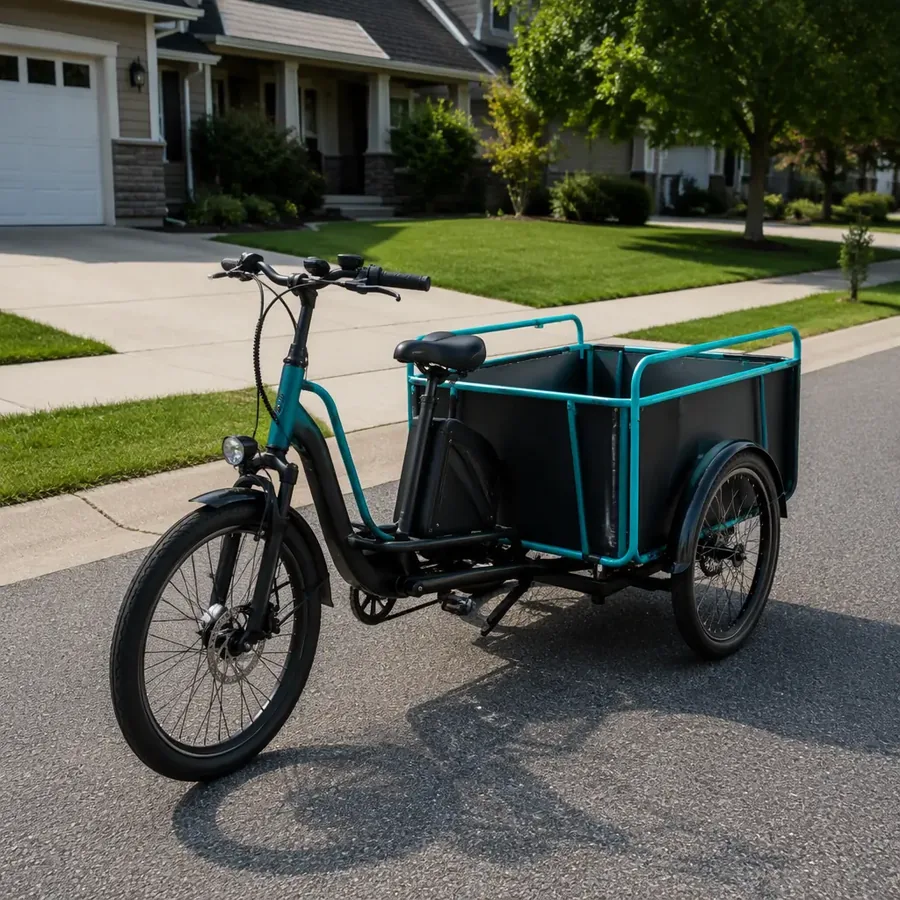
The two details that trip up importers: pedals must be fully operable . A throttle-only trike does not fit the federal e-bike definition and falls into state moped or NEV rules, and the 20 mph limit is the motor-only limit, so a trike with a 1200W motor and a 25 mph controller is a motor vehicle in most states even if it looks like a bicycle. That is why the US-market EMS-EBIKE cargo tricycle configuration is spec'd to the 750W / 20 mph Class 2 path, with the higher-power (800–1200W) versions routed to markets and states where moped or NEV registration is the accepted path. The legal background on how these classes evolved is in our EU vs US certification guide.
State-Level Differences: What Changes by State
Federal law sets the ceiling, but states set the floor. The practical variations to plan for:
- Class 2 acceptance . Most states accept throttle Class 2 trikes as bicycles; a handful treat throttle operation more restrictively, so confirm the target state's statute (most follow the model legislation: Class 2 throttle allowed on bike paths, Class 3 restricted to roads).
- Age and helmet rules. Class 3 riders must be 16+ with helmets in many states; some states extend helmet requirements to all classes.
- No state e-bike law . A few states still lack an e-bike statute; there, the federal definition plus local traffic code governs, and enforcement varies. Importers selling nationwide should carry documentation of the federal classification.
- Throttle-only trikes . States without pedals on a 750W trike may classify it as a moped: license endorsement, registration plate, and a helmet requirement. This is the single most common classification surprise for cargo trike importers.
The US market's legal simplicity is exactly why the three-wheeler boom took off there; the market context is in our analysis of the US three-wheeler boom.
UL 2849 and UL 2271: The Standards Behind the Law
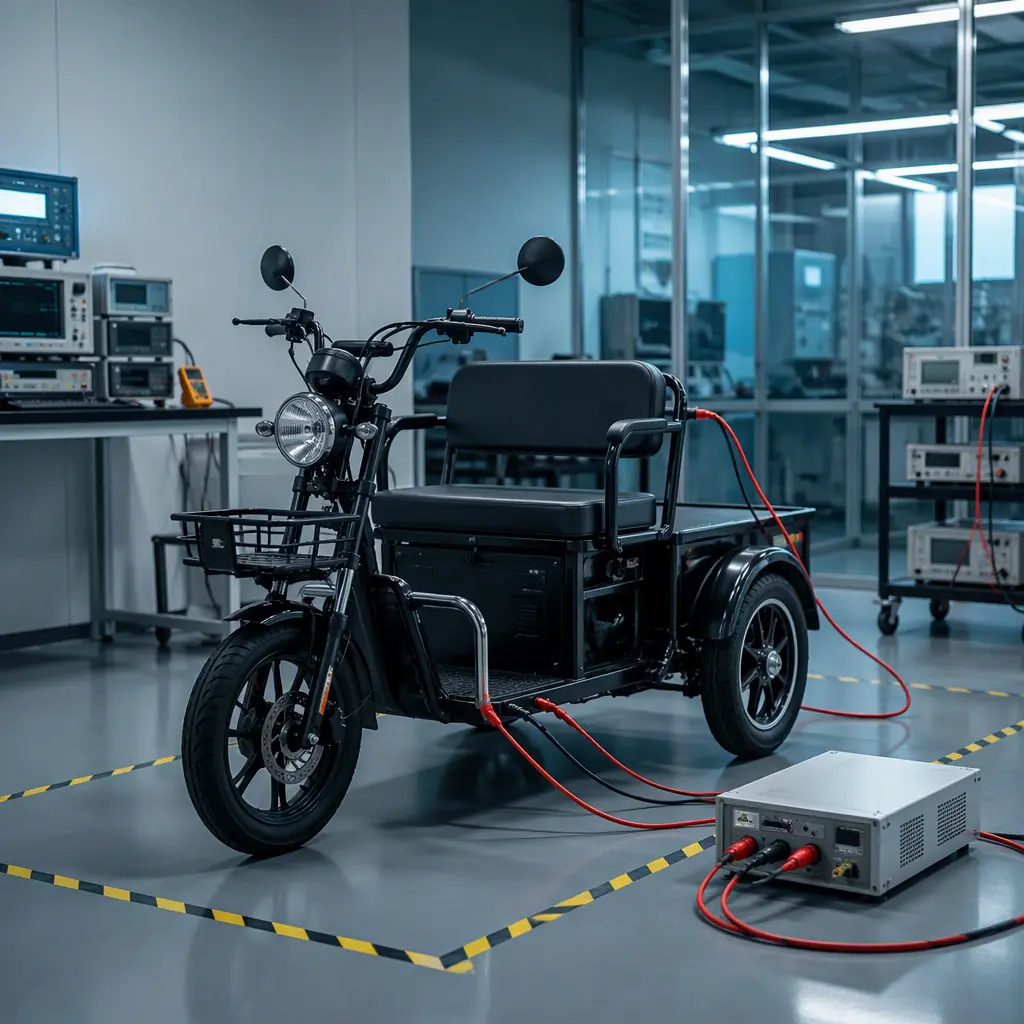
Classification is one thing; the safety standards are another, and they have become de facto law. UL 2849 covers the electrical drive system of e-bikes and e-tricycles, motor, battery, controller, and wiring under fault conditions (thermal runaway, short-circuit, overcharge). It is not federally mandated, but cities and states increasingly require it: New York City has required UL 2849 for e-bikes and e-trikes sold or rented in the city since 2023, and other jurisdictions have followed. UL 2271 is the battery-pack standard for light electric vehicles and is the component-level requirement behind UL 2849. Importers should treat UL 2849 as a market-access requirement for the US, not an optional extra. The certification structure and testing scope are explained in our certification guide.
EU Classification: EPAC vs L1e vs L2e
The EU draws the line at 250W continuous power and 25 km/h pedal-assisted cutoff. Below that line, a tricycle is an EPAC (Electrically Power Assisted Cycle) under EN 15194: treated as a bicycle, no license, no plate, no insurance, no type approval. Above that line, the vehicle enters EU Regulation 168/2013 and needs whole-vehicle type approval with an eMark:
| EU category | Spec | Requirements |
|---|---|---|
| EPAC (EN 15194) | 250W continuous, 25 km/h assist, pedals | No license, no plate, no approval |
| L1e-A (powered cycle) | Up to 1 kW, 25 km/h, no pedals needed | eMark, AM license, plate, insurance |
| L2e (three-wheel moped) | Up to 4 kW, 45 km/h | eMark, AM/B license, plate, insurance |
| L2e-P (light quadri/tricycle) | Power-to-weight limit, 45 km/h | eMark, B license (car license) in most states |
The eMark approval process runs through the UN ECE regulations (R10 electromagnetic compatibility, R136 for electric powertrains, R47 for moped braking), the same framework that governs e-mopeds. The full approval workflow, cost range, and factory checklist are in our e-moped and e-motorcycle OEM guide. The passenger-trike variant of this logic, including which class mobility dealers actually prefer for senior riders, is in our passenger e-tricycle guide.
UK Rules After Brexit
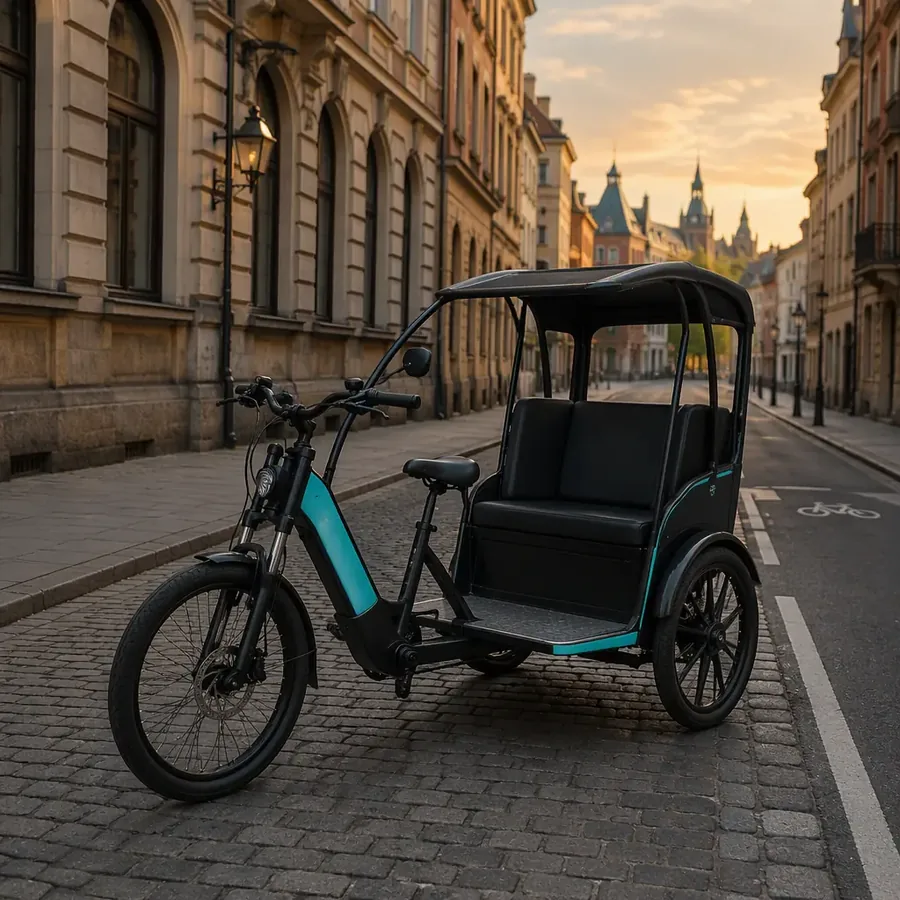
The UK keeps the same 250W / 15.5 mph (25 km/h) line under the EAPC (Electrically Assisted Pedal Cycle) rules: pedals required, no license, no registration, no tax, no insurance for the rider. Above the line, vehicles need type approval, UNECE or UK-specific, plus a license category (AM for mopeds, A1/A2 for motorcycles), registration, and insurance. The UKCA mark applies to the product, and the battery must ship with UN 38.3 documentation. The certification differences between the UK, EU, and US markets are laid out in our certification guide.
Import Compliance: What the Importer Must Provide
Whether the destination is the US, EU, or UK, the import documentation stack is the same shape:
- HS code . Electric tricycles ship under HS 8711.60 (cycles with an auxiliary electric motor); the classification drives duty rates and any anti-dumping exposure, so verify with your broker.
- Battery transport . Lithium packs need UN 38.3 test reports and proper Class 9 dangerous-goods packaging on the air leg; ocean containers with the cells installed in the vehicle are the lower-friction route.
- Electronics compliance, FCC (US) or CE EMC (EU) for the controller and charger, and the UKCA equivalent for the UK.
- Documentation pack . The certificate (UL 2849 / EN 15194 / eMark per market), the user manual in the destination language, and the declared power/speed spec that matches what is actually shipped. A mismatch here is how a compliant-looking product becomes a legal problem at first inspection.
The container loading, landed cost, and documentation workflow for a first import are detailed in our China import guide, and the total-cost picture that makes the paperwork worthwhile is in our cargo trike vs pickup cost comparison.
How EMS-EBIKE Delivers Compliance Per Market
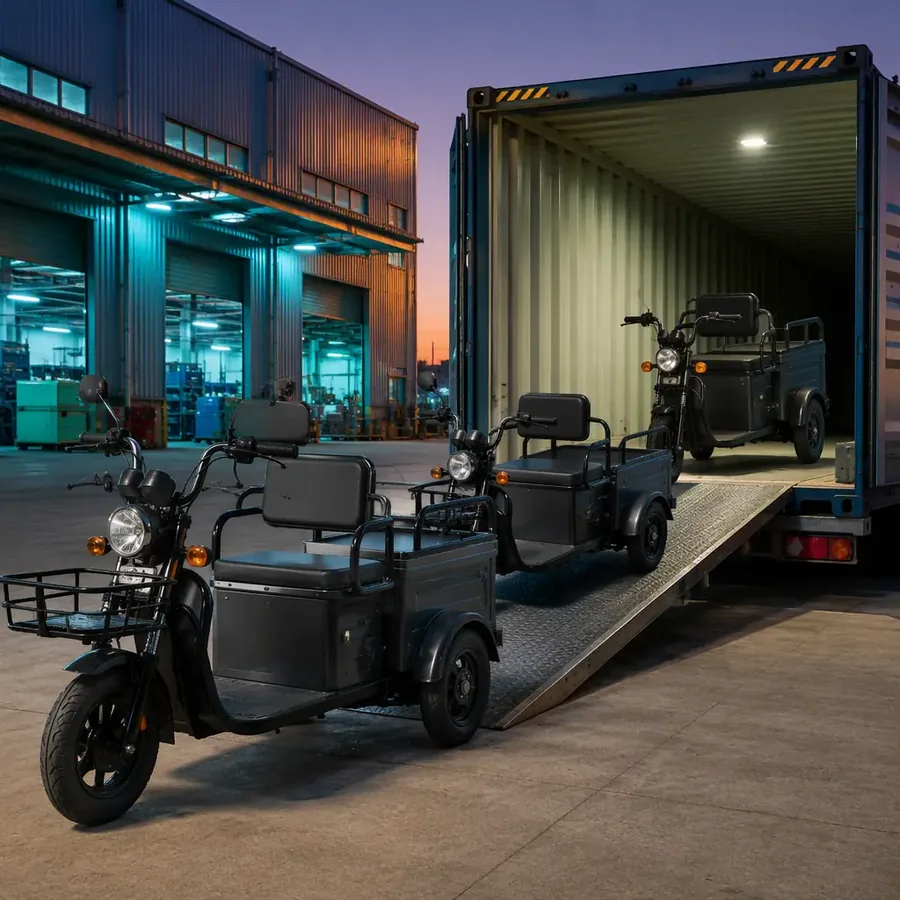
Because the classification determines the entire go-to-market, EMS-EBIKE configures each trike program to its destination market at the factory:
- US market. 750W / 20 mph Class 2 configuration with operable pedals, UL 2849 electrical system, and documentation for the federal low-speed electric bicycle definition; higher-power 800–1200W builds for states and use cases where moped/NEV registration is acceptable.
- EU market. 250W EPAC builds under EN 15194 for the no-license bicycle channel; eMark L1e/L2e type-approved builds for 45 km/h programs.
- UK and other markets, EAPC or UKCA/UNECE type-approved variants to match local law.
The battery chemistry, BMS, and charging infrastructure that sit behind every one of these configurations are covered in our battery technology guide; the commercial terms for a custom program, MOQ 50 units, first samples at 4–6 weeks, are in our OEM buying guide.
Get the Right Legal Classification for Your Market
Tell us your target countries and the speed/power you want to sell, and we will configure the trike, motor class, pedals, battery, certification path, to fit the law, with the certificate documentation included in the sample phase.
