
An open-deck tricycle is a fair-weather vehicle. An enclosed cabin makes the same platform a year-round asset: the rider spends eight hours a day inside a gasketed, glazed, heated box instead of exposed to rain, wind and road spray. On the EMS passenger platform, that cabin is not an aftermarket bolt-on. It is a factory build with a molded ABS roof, acrylic windshield and manual wiper, lockable doors, and a frame that was designed for the added bodywork from the first weld. This guide covers the real cabin specification, the drivetrain and pack sizing that carry the extra mass, the heating power budget, sealed cargo modules for delivery duty, and the OEM checklist for ordering cabins in volume.
Fabric Canopy, Full Enclosure, or Hard-Top Cabin
The word "cabin" covers three different products at three different price and volume tiers, and the first job of a fleet buyer is to know which one the route actually needs:
- Fabric canopy . Steel tube frame powder-coated to match the body color, with a roll-up side curtain on all four sides. This is the standard configuration and the cheapest weather protection. It keeps sun and light rain off the load; it does not seal the rider from wind or cold.
- Full weather enclosure . Zip-down clear vinyl panels over the same canopy frame. This is the volume workhorse: it adds roughly $80–120 per unit at 50+ units and turns a canopy into a genuine rain-proof compartment while keeping the roof removable for summer. Custom color and logo printing across all fabric panels is included at 50+ units, and the canopy frame is powder-coated to the body color.
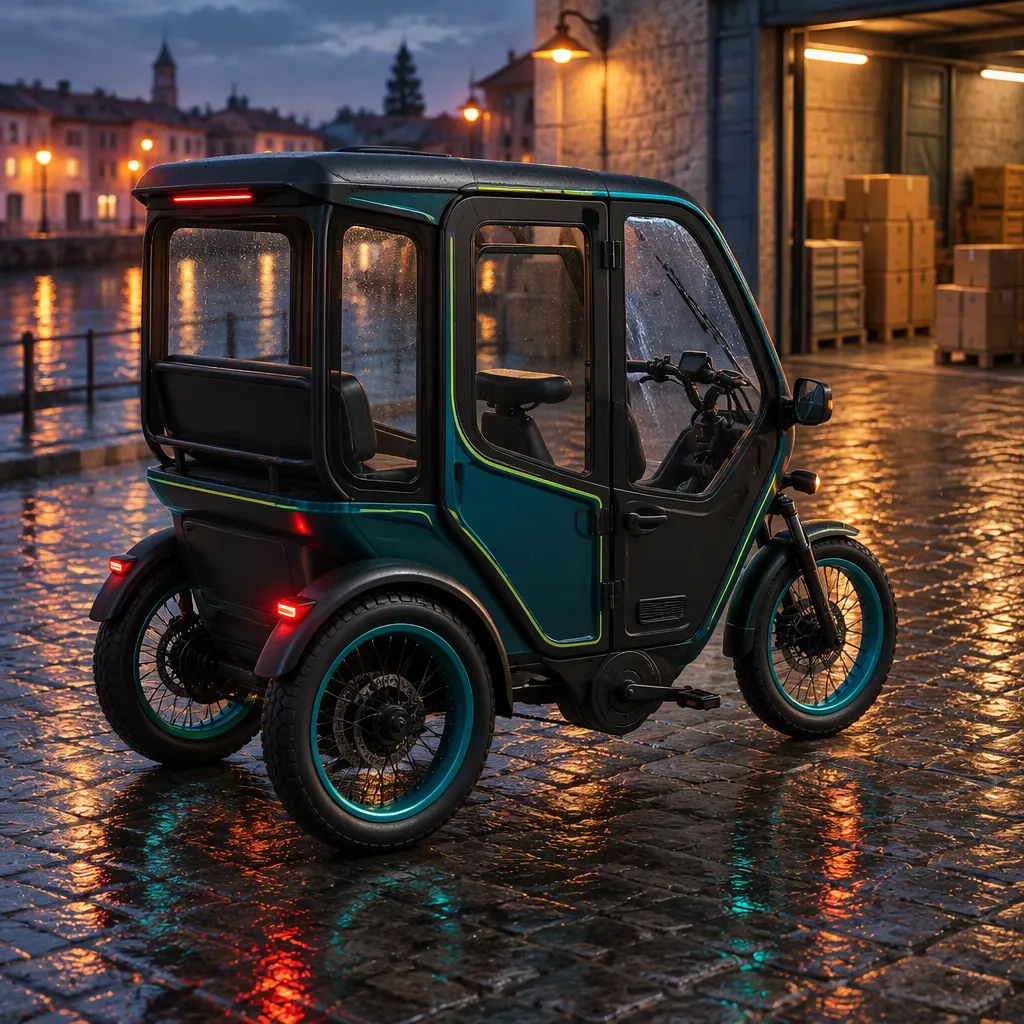
- Taxi-spec hard-top cabin . Molded ABS roof, acrylic windshield, manual wiper and lockable passenger doors. This is the build in the photographs, and it is the one that behaves like a small vehicle rather than an accessory. Because it requires frame mounting point modifications on the production jig, it is available from 100+ units rather than the standard 50-unit MOQ.
All seating and canopy options ship factory-installed, and dealer-fit retrofit kits are available for distributors who want to stock one base chassis and offer several cabin configurations to their own customers. That dealer-kit path is the reason a distributor can carry a single SKU of chassis and still quote three weather tiers. The commercial logic of the dealer channel is covered in our dealer and distributor guide.
What the Hard-Top Cabin Actually Adds
The cabin is a small building on wheels, and the specification is deliberately simple so that it can be serviced with standard parts:
- Roof . Molded ABS rather than sheet metal. It is light, will not rust, and absorbs impact without denting permanently.
- Glazing . Acrylic windshield with a manual wiper. Acrylic is lighter and more impact-tolerant than glass on a vehicle this size, and the wiper keeps it usable in real weather rather than only in drizzle.
- Doors . Lockable side doors. This matters beyond comfort: a cab that locks protects the rider's tools, the day's cash and the vehicle itself when it is parked on a street all day. The locking and anti-theft options that pair with it are covered in our safety features guide, and the insurance and registration consequences in our insurance and registration guide.
- Electrical . Heater and wiper circuits are fused, IP-rated loom items built into the standard harness, not spliced into a lighting circuit on arrival.
- Sealing . Gasketed openings are the single biggest determinant of whether a cabin stays dry through a winter of daily use. Water intrusion testing is a fair question to put to any cabin supplier, and dry electronics are the difference between a working vehicle and a dead one, as our maintenance guide sets out.
The honest engineering trade-off is weight. A hard-top cabin adds body mass and frontal area on top of the base vehicle, which is why the cabin configuration is normally specified on the 800W tier and up rather than on the 500W standard build.
Drivetrain and Pack Sizing for a Cabin Build
The passenger platform that carries the hard-top cabin is specified at 500W or 800W brushless hub motor with a rear differential axle on 60V, with the 800W tier as the practical default once bodywork is fitted. The differential is the important part: on a delta trike (one front wheel, two rear), it keeps drive torque on the loaded rear wheel when the cabin shifts the weight distribution in a corner or on a cambered road.
Battery selection follows the duty, not the badge:
| Configuration | Motor | Battery | Range | Canopy / cabin | Max load | Price (FOB) |
|---|---|---|---|---|---|---|
| Standard 500W | 500W hub, 60V | 60V 20Ah NMC | 40–45 km | Optional fabric | 250 kg | $850–1,050 |
| Comfort 800W | 800W hub, 60V | 60V 20Ah NMC | 45–55 km | Fabric standard | 300 kg | $1,080–1,300 |
| Taxi 800W LFP | 800W hub, 60V | 60V 32Ah LFP | 55–60 km | Hard-top + windshield | 300 kg | $1,250–1,480 |
Read the table as a staircase rather than a menu. The Taxi tier pairs the hard-top cabin with the 60V 32Ah LFP pack for a reason: LFP holds its capacity better in heat and across charge cycles, which is exactly what a cabin vehicle experiences because the bodywork traps heat and the starter pack works harder. For fleets in the Middle East, South Asia or sub-Saharan Africa, where ambient temperatures routinely exceed 40°C, LFP is the default rather than the upgrade. The NMC-versus-LFP decision is worked through in our battery technology guide, and the voltage-tier question in our 60V versus 72V guide.
Baseline vehicle figures for the platform, cabin fitted: top speed 25–35 km/h, charging 6–8 hours, hydraulic disc front brake (180 mm) with dual mechanical drum rear, tires 3.00-12 front and 3.50-12 rear, and an e-coated plus powder-coated steel tube frame with a 300 kg total load rating (driver plus passengers or cargo). Range figures are quoted loaded at moderate speed; treat them as duty-cycle guidance, not a guarantee.
The Heating and Defroster Power Budget
A cabin without heat is a greenhouse in summer and a refrigerator in winter, so the heater is a specification decision rather than a comfort extra. The realistic package is a small resistance heater core blowing onto the windshield base and the footwell:
- Draw . A heater core in the 300–600W class clears frost and keeps the rider functional through a temperate winter. That is drawn from the same pack that moves the vehicle.
- Defroster routing . The duct must target the windshield base, not the cabin volume. A fogged windshield is a safety failure, not an inconvenience.
- Cold derating . Sub-zero temperatures cut usable capacity and the heater draws on top of that. The interaction between heat, range and cold charging protocol is quantified in our winter operation guide; the short version is that a heated cabin duty is a reason to step up to the 32Ah LFP pack and to plan a second swappable pack for full-shift operation.
The swappable-pack option is what makes a heated cabin viable on a long winter shift: the vehicle runs the heated leg on one pack and returns on the other, so it never has to choose between warmth and getting home. The swap logistics are covered in our fleet charging guide.
Sealed Cargo Modules on a Cabin Platform
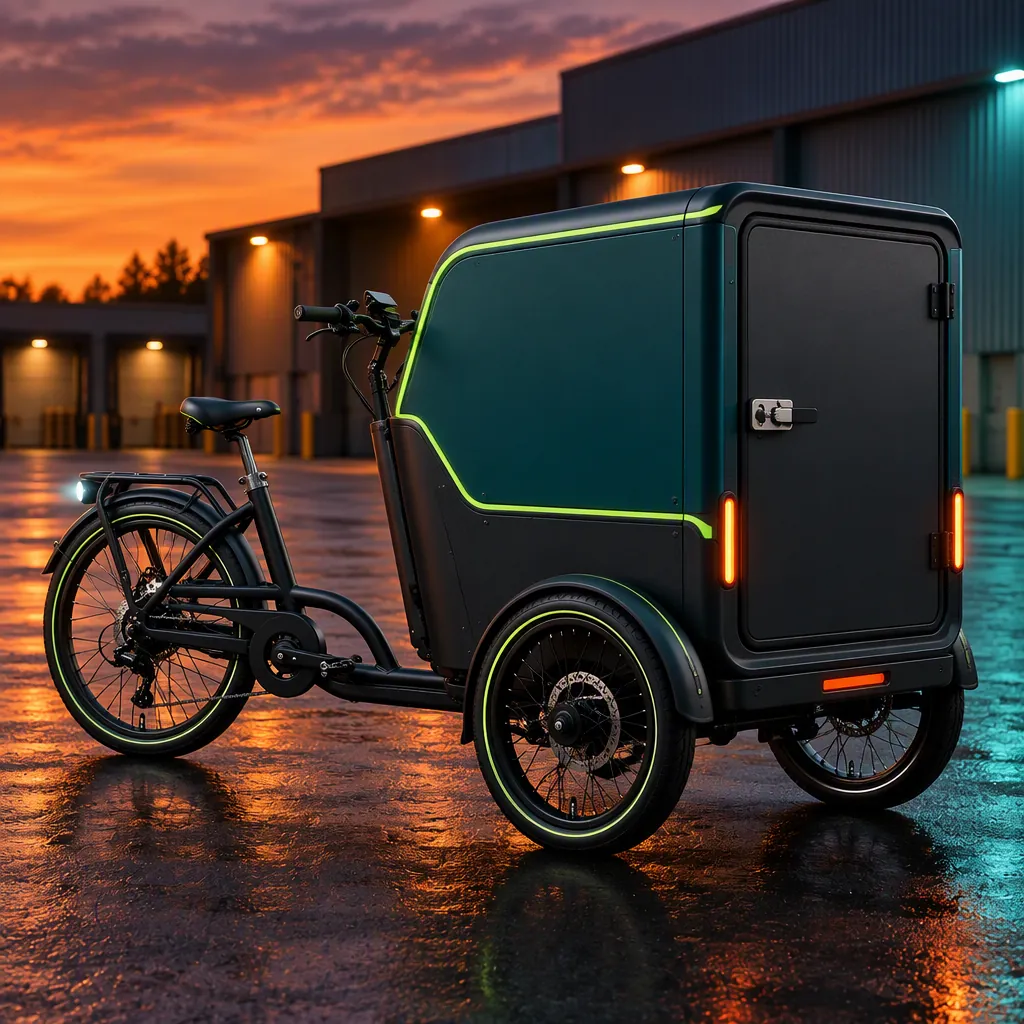
On delivery duty the cabin protects the rider and the cargo module protects the freight, and the two are independent specifications. The same platform that takes the passenger cabin takes an enclosed cargo box with drop-sides and optional insulated lining, ranging from a 150 L light-duty box up to a 500 L module on the heavy-duty build.
Two configurations matter most to fleets:
- Sealed and lockable module . A flat-panel box with a rear or side door and a latch. This is the build for courier parcels, pharmacy runs and e-commerce routes where dry and secure matters more than bulky. A lockable module on a vehicle parked on the street all day is an anti-theft feature first and convenience second.
- Insulated module . The same box with insulated lining for temperature-sensitive loads. It is the natural upgrade path from passive-cooling builds, and the passive-versus-active cooling trade-offs are set out in our cold-chain tricycle guide.
Payload on the cargo platform is 300 kg in the EU configuration and 500 kg in non-EU configurations, with box volume of 150–500 L, on a chassis rated 150–220 kg unladen with dual rear wheels on 3.75-12 reinforced load-rated tires. If the route is exclusively cargo rather than passengers, the dedicated cargo platform is the better starting point, the platform-level comparison is in our cargo versus passenger platform guide.
What a Cabin Changes Legally
Enclosing the rider moves the vehicle closer to light-vehicle regulation, so classification comes before specification:
- US . A 20 mph Class 2 build still qualifies as an e-bike in most states, provided it keeps pedals where the state requires them. Windshield, wiper, mirrors and lights become de facto safety requirements on a cabin build even where the statute is silent. The state-by-state picture is in our US and EU regulation guide.
- EU . A 250W EPAC build stays within EN 15194; faster or passenger-carrying cabin builds move into L2e/L5e territory, which brings eMark type-approval, mirrors and lighting requirements.
- Passenger operations . Carrying paying passengers triggers taxi or shuttle licensing that a cargo build never touches. The for-hire requirements and the seating configurations that drive revenue are covered in our passenger taxi and shuttle guide.
Importers should also confirm that the cabin does not disturb the HS classification or duty treatment: the vehicle is still classified on its platform, not on its bodywork. The container loading and classification steps are in our China import guide.
OEM Checklist for Cabin Orders
Ordering cabins in volume exposes questions that an open-deck order never asks:
- Water intrusion testing . Ask how door and windshield seals are verified before shipment. A cabin that leaks on day one leaks for its whole service life.
- Cabin tier and volume threshold . Confirm in writing which tier is being quoted and at what volume: fabric canopy from 50 units, full weather enclosure at +$80–120 per unit from 50 units, hard-top cabin from 100 units because of the jig modification.
- Weight and load rating . The cabin adds curb weight; confirm the load rating is still quoted at 300 kg with the cabin and seating fitted and that the motor tier matches.
- Harness and fusing . Heater and wiper are custom loom items; confirm they are fused and IP-rated like the rest of the harness, not dealer-spliced.
- Consumables . Wiper blades, seals and glazing are service items with a finite life. The spares pipeline for cabin components is in our after-sales and spare parts guide.
- Factory-installed versus retrofit . All seating and cabin options ship factory-installed; dealer-fit retrofit kits exist for distributors stocking one base chassis. Decide which model you are buying before the order, not after.
The full OEM process, tooling, sample build, third-party inspection and deposit structure, is documented in our cargo trike OEM guide.
Specifying a Year-Round Cabin Trike
A working specification for a cold-climate delivery or shuttle duty comes out of the real option list: the 800W tier with rear differential on 60V, the 60V 32Ah LFP pack with a second swappable pack, the hard-top cabin with acrylic windshield and manual wiper, a heater core routed to the windshield base, and either a 2–3 person bench with backrest and armrest for passenger duty or a 200–400 L sealed module for cargo duty. That vehicle works every day of the year on short urban routes at a fraction of the purchase and running cost of a van, the cost comparison is in our trike versus pickup cost guide.
Tell us the route climate, whether the duty is passenger or cargo, and the operating hours per shift. We will quote the correct cabin tier, the pack size and chemistry for your ambient temperature, the heater and defroster package, and the module volume for your load profile.
Spec an Enclosed Cabin Trike
Tell us your route climate, cargo or passenger duty, and operating hours. We will spec the cabin build, heating and defroster package, sealed box, and drivetrain for year-round operation.
