
Winter is where electric tricycles earn their reputation, or lose it. A trike that delivers flawlessly at 20°C can lose a third of its range at −10°C, refuse to charge in an unheated shed, and corrode quietly from road salt. None of this is a defect: it is the physics of lithium cells, rubber, and steel in the cold. The operators who run trikes profitably through northern winters treat cold weather as an operating regime with its own protocols, not as an inconvenience. This guide covers the numbers (how much range you really lose), the charging rules that protect both battery and warranty, the traction and tire decisions, salt and corrosion defense, and the storage protocol for vehicles parked for weeks. It is the winter companion to our maintenance guide and our 60V vs 72V battery guide.
What Cold Actually Does to Range: The 70% Rule
Range loss in winter comes from two sources that stack:
- Chemistry . Lithium cells lose usable capacity below 0°C because ionic conductivity drops. At −10°C a pack can deliver 20–30% less usable energy than at 20°C. LFP (the 72V 40Ah option) holds capacity better in cold than NMC but starts with lower energy density; the full chemistry comparison is in our 60V vs 72V guide.
- Physics . Cold air is denser, snow and slush add rolling resistance, and cold tires are stiffer (more rolling loss). Cold tire pressure alone can cost 5% of range if the weekly pressure check is skipped.
The practical planning number: plan winter routes at 70% of the rated range. A trike rated 50–80 km at 20°C becomes a 35–55 km vehicle at −10°C with the same battery and load. A 200 kg load on a 60V 32Ah pack at 25 km/h average, the duty cycle in our motor power guide . Typically lands near the bottom of that band in deep cold.
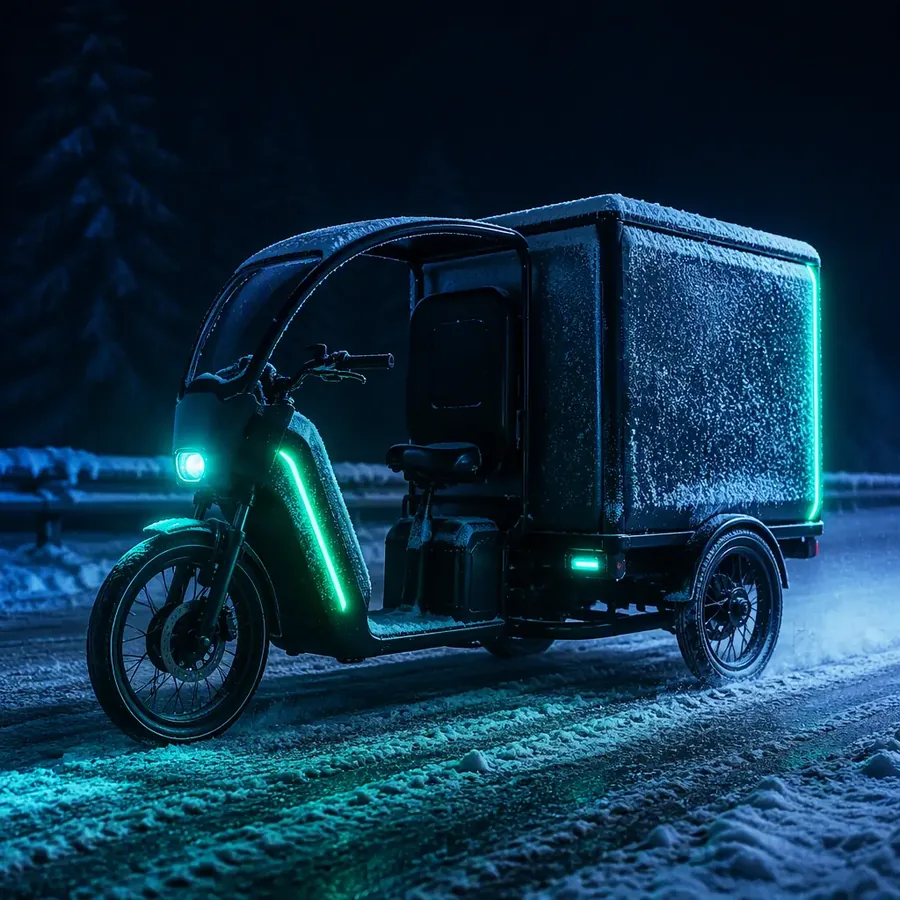
Charging Below Freezing: The Non-Negotiable Protocol
Charging a frozen lithium pack is how batteries die early, and it is the most common winter mistake. The rules:
- Never charge a frozen pack . Lithium plating occurs when cells are charged below 0°C, permanently reducing capacity and creating internal short-circuit risk. The BMS on EMS-EBIKE 60V/72V packs enforces a low-temperature charge cutoff. The charge simply will not start until the pack warms.
- Warm the pack before charging . Ride the trike a few minutes to warm cells internally, or bring the pack (and trike) into a heated space. Let it sit 30 minutes at room temperature before plugging in.
- Charge indoors when possible . A heated depot or indoor outlet is the single best winter battery investment. The canopy and weather enclosure guidance in our canopy guide covers protecting the battery compartment on outdoor-parked trikes.
- Expect longer charge times . A cold pack charges slower even above the cutoff. The rated 6–10 hours (5A charger) is a warm-battery number; winter charging runs to the long end.
For fleets, a rotation rule works: bring the packs of tomorrow's first-shift trikes inside overnight, charge at room temperature, and install them in the morning. This doubles as a range strategy, a warm pack delivers more usable energy on the first cold-start shift.
Traction: Tires, Pressure, and the Dual-Rear Advantage
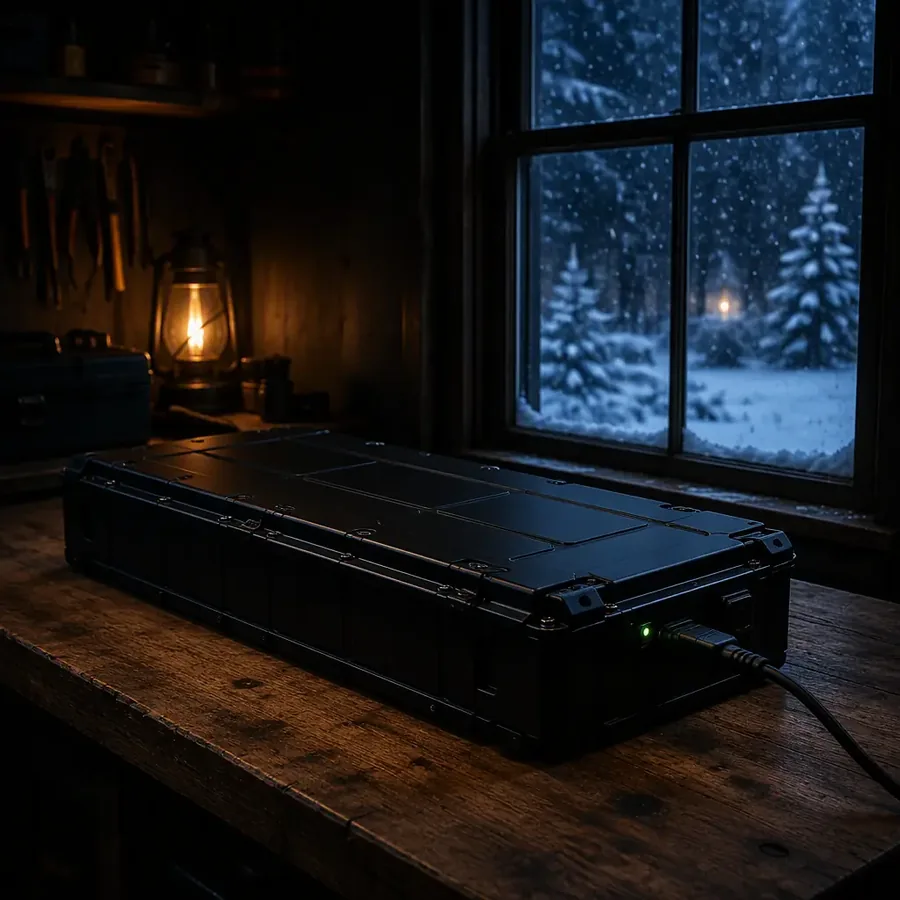
Three wheels change winter handling in your favor, if the tires are right:
- Check pressure weekly, in the cold . Pressure drops roughly 1 psi per 5°C. A trike set at 40 psi in autumn reads ~35 psi in January, and under-inflated tires lose grip and range simultaneously. The pressure schedule is in our cargo tricycle tires guide.
- Winter or all-terrain tread for snow routes . Deep-lug or studded options exist for 12-inch utility rims. On packed snow, a hybrid tread with sipes beats a street semi-slick every time; the tread selection logic by surface is in the same guide.
- The dual-rear advantage . Two driven rear wheels give the trike its best winter attribute: if one rear tire loses grip on ice, the other still drives. Combined with a low center of gravity and the stability of the delta layout (the same architecture discussed in our passenger e-tricycle guide), a loaded cargo trike is typically more sure-footed in snow than a two-wheeled cargo bike.
- Brake earlier . The hydraulic front disc + dual rear drum set is strong, but grip is the limit on ice. Leave extra distance; the stopping physics under load are covered in our trailer guide.
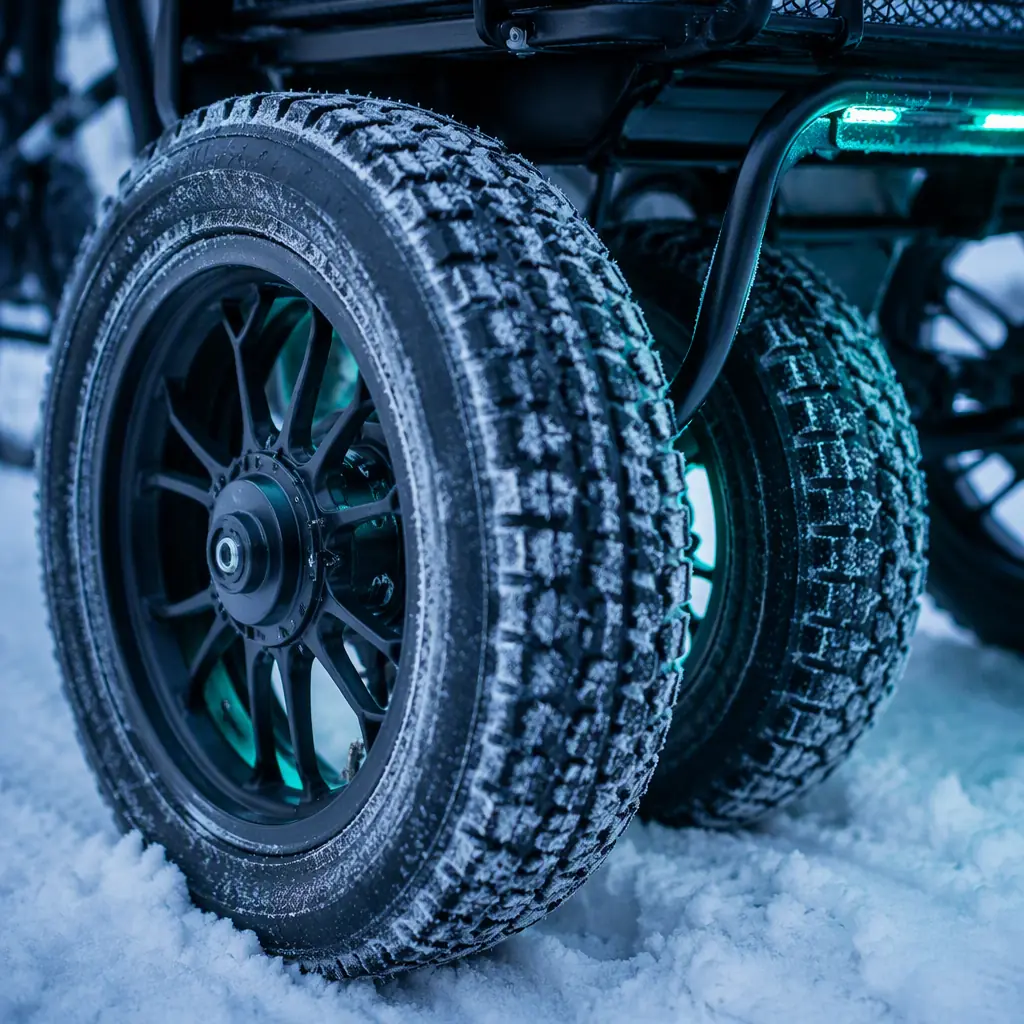
Salt, Corrosion, and the Winter Wash
Road salt is the trike's second winter enemy, it attacks the frame, connectors, and brake hardware invisibly until spring. The defense protocol:
- Weekly rinse . A low-pressure rinse of the undercarriage and cargo box mounts removes the salt slurry before it does damage. Avoid high-pressure washing into the motor hub and battery tray seals.
- Protect connectors . Dielectric grease on the battery, motor, and controller connectors before winter starts; reapply at mid-season. Corroded connectors are the #1 electrical failure mode on winter trikes.
- Brake care . Salt corrodes disc rotors and drum adjusters. Wipe the front disc after wet rides; check drum adjuster travel at the weekly inspection. The service schedule is in our maintenance guide.
- Frame touch-up . Stone chips from winter gravel become rust spots by spring. Touch up chips as they appear, especially on the rear axle mounts and box brackets (the structural weld points listed in our used trike buying guide).
Cold-Start Riding: Controller Derating and Regen
Two behaviors confuse first-winter operators:
- Power derating . The controller limits current when the pack is cold to protect the cells. A cold trike accelerates more gently for the first minutes; this is protection, not a fault. The warmer the pack at start, the shorter the derating window, another argument for indoor overnight charging.
- Regen behavior . Regenerative braking may be reduced or disabled below freezing (regen charges the pack, and charging a cold pack is exactly what the BMS cuts off). Expect less regen and more reliance on the mechanical brakes in deep cold.
Neither behavior needs fixing, both are the BMS doing its job. Plan routes accordingly: the first 10 minutes are the least efficient, so order stops from warm pack to cold, not the reverse.
Storage: Parked for Weeks in Sub-Zero
For trikes parked for the season, farm units, seasonal vending rigs, backup fleet vehicles, follow the storage protocol:
- Charge to 50–80% for storage . A full pack stored in the cold ages fastest; a nearly empty one risks deep-discharge damage. 50–80% is the storage sweet spot (the battery chemistry reasoning is in our battery technology guide).
- Disconnect or remove the battery . If the pack is removable, store it indoors at room temperature. If not, disconnect the main lead to stop the BMS standby draw.
- Recharge monthly . A parked pack self-discharges a few percent per month; a 60-day top-up keeps it out of the deep-discharge danger zone.
- Tires . Inflate to the maximum rated pressure to prevent flat-spotting, and chock the trike so it is not resting on the tires under full load all winter. Rotate the rear pair before storage so the differential does not sit in one position for months.
- Cover the trike . A cover or tarp prevents snow-loading and reduces condensation; a canopy-equipped trike (see our canopy guide) stores better outdoors than an open one.
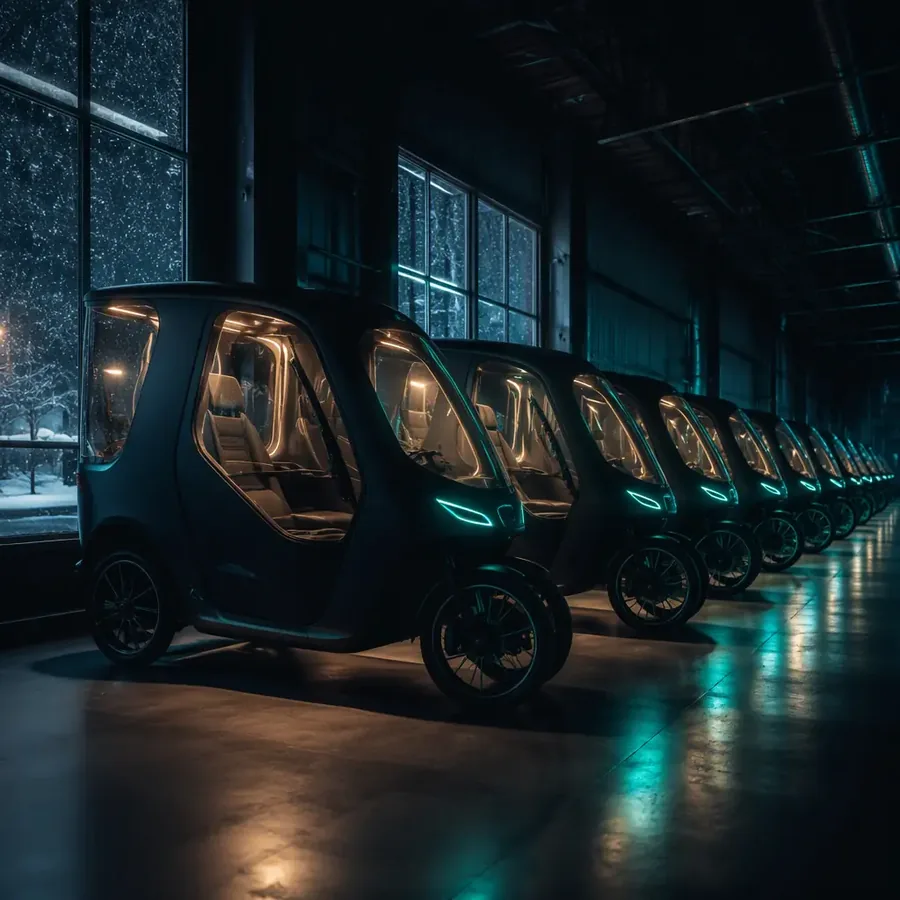
The Winter Fleet SOP
For operators running trikes through winter, codify these five rules:
- Plan routes at 70% of rated range; keep a reserve for detours and cold snap days.
- Charge indoors; never charge a frozen pack; rotate packs for first-shift warmth.
- Weekly: cold tire pressure check, undercarriage salt rinse, brake and connector inspection.
- Fit winter or all-terrain tread on the dual rear wheels for snow routes.
- Storage: 50–80% charge, battery indoors, monthly top-up, tires at max pressure.
Run these and a cargo trike fleet keeps its economics through the season, the route-level cost math is in our cargo delivery fleet guide, and the rural winter case (including charging without a depot) is in our rural last-mile guide.
Spec a Winter-Ready Cargo Trike
Tell us your operating climate and winter duty cycle. We will spec the battery chemistry (LFP vs NMC), cold-charge BMS behavior, winter tire fit, and any enclosure options, with cold-weather range data from the sample phase.
