
Golf carts have been the default short-range vehicle for retirement communities, resorts, campuses and gated neighborhoods for decades. They are also one of the most overpriced vehicles in the mobility market: a new electric golf cart lists at $8,000–$15,000, and a street-legal low-speed vehicle (LSV) conversion pushes that toward $18,000. An electric cargo tricycle from our production program ships FOB China at $1,250–$1,550 with a 300–500 kg payload, a 150–500 L cargo box, and a top speed of 25–35 km/h, the same duty envelope most communities actually use their golf carts for. This guide compares the two vehicles head-to-head on purchase price, operating cost, payload, legality and maintenance, and explains why property managers and fleet buyers are increasingly replacing golf carts with three-wheeled electric trikes.
Why Golf Carts Are the Incumbent, and Where They Cost Too Much
Golf carts won the short-range utility niche because they are simple, quiet and easy for non-drivers to operate. But the incumbent position hides three structural cost problems that a fleet buyer discovers only after purchase:
- Purchase price . A new 4-passenger electric golf cart from a major brand runs $8,000–$15,000 depending on trim, batteries and dealer setup. Even a bare 2-seat fleet model rarely lands under $6,000 delivered.
- Battery replacement . The standard flooded lead-acid pack in an electric cart costs $1,200–$2,500 to replace every 3–5 years. Lithium conversions add $2,500–$4,500 on top.
- Limited cargo . A golf cart carries people, not payload. There is no integrated cargo box; hauling maintenance equipment, groceries or mail requires a separate trailer or an aftermarket box that voids the dealer warranty.
The purchase decision math for a property manager is simple: a cart that costs $10,000+ and carries no cargo versus a trike that costs a fraction and carries 300–500 kg. The full price-per-kilogram comparison against pickup trucks is covered in our cargo e-tricycle vs pickup truck analysis, and the wider US demand story behind the category is in our why Americans are buying Chinese three-wheelers article.
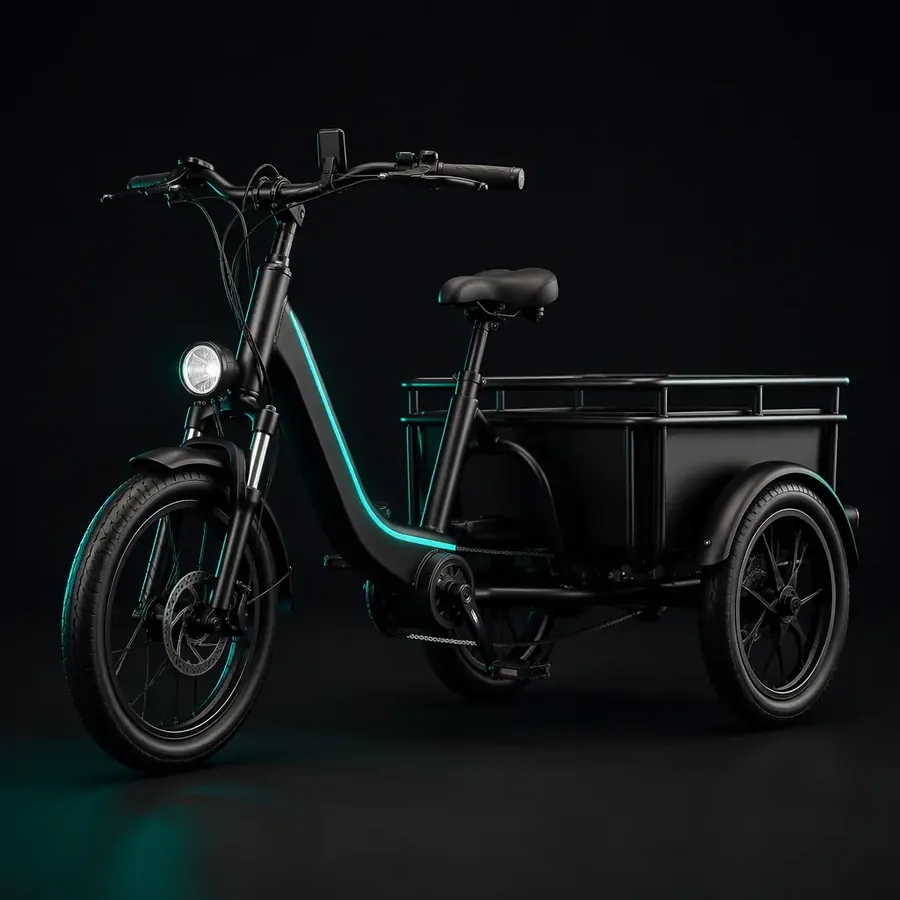
Spec-by-Spec Comparison: Trike vs Golf Cart
| Spec | Golf Cart (electric) | EMS-EBIKE Cargo Tricycle |
|---|---|---|
| New purchase price | $8,000–$15,000 | $1,250–$1,550 FOB |
| Top speed | 19–24 km/h (25 mph with LSV kit) | 25–35 km/h |
| Payload | 300–400 kg (people only) | 300 kg (EU) / 500 kg (non-EU) |
| Cargo box | None (trailer or aftermarket) | 150–500 L, drop-side option |
| Seating | 2–6 passengers | 2 (bench) + cargo |
| Motor | 1.5–4 kW AC/DC | 800W / 1000W / 1200W + differential |
| Battery | Lead-acid 48V standard | 60V 32Ah NMC / 72V 40Ah LFP, swappable |
| Range | 35–60 km | 50–80 km (200 kg load) |
| Turning radius | 4.5–5.5 m | ~3 m (bike-scale) |
| Licensing (most US states) | None on course; LSV class for roads | None (Class 2 / UL 2849 path) |
Two numbers in that table deserve emphasis. First, top speed: a standard golf cart is governed to 19–24 km/h, while our trike runs 25–35 km/h, meaningfully faster on the same community roads. Second, turning radius: a trike steers with bicycle-scale geometry and can U-turn in a corridor a golf cart cannot enter, which matters for maintenance crews and delivery runs in tight community layouts. The stability and handling differences between three-wheeled and two-wheeled electric vehicles are explained in our tricycle vs e-bike stability comparison.
The 5-Year Total Cost of Ownership
Purchase price is only half the story. Here is the realistic 5-year cost model for a 4-unit community fleet, using a $10,000 cart and a $1,400 FOB trike (plus freight, import duties and dealer margin, both assumed at ~40% landed markup):
| Cost Item (per unit, 5 years) | Golf Cart | E-Tricycle |
|---|---|---|
| Landed purchase | $14,000 | $2,000 |
| Battery replacement | $1,500 (year 4, lead-acid) | $0 (lithium rated 2 yrs / 500 cycles; swap-in $450–$800) |
| Maintenance (brakes, tires, service) | $1,200 | $600 |
| Electricity (0.15 kWh/km, 15 km/day) | $410 | $410 |
| 5-year total | $17,110 | $3,010–$3,810 |
The 5-year gap is roughly $13,000 per vehicle. A 10-unit fleet that replaces carts with trikes frees $130,000 of capital budget. The service schedule that keeps those costs low, hydraulic discs up front, drums at the rear, quarterly checks, is detailed in our tricycle maintenance guide.
Where Trikes Beat Carts: Payload and Utility Work
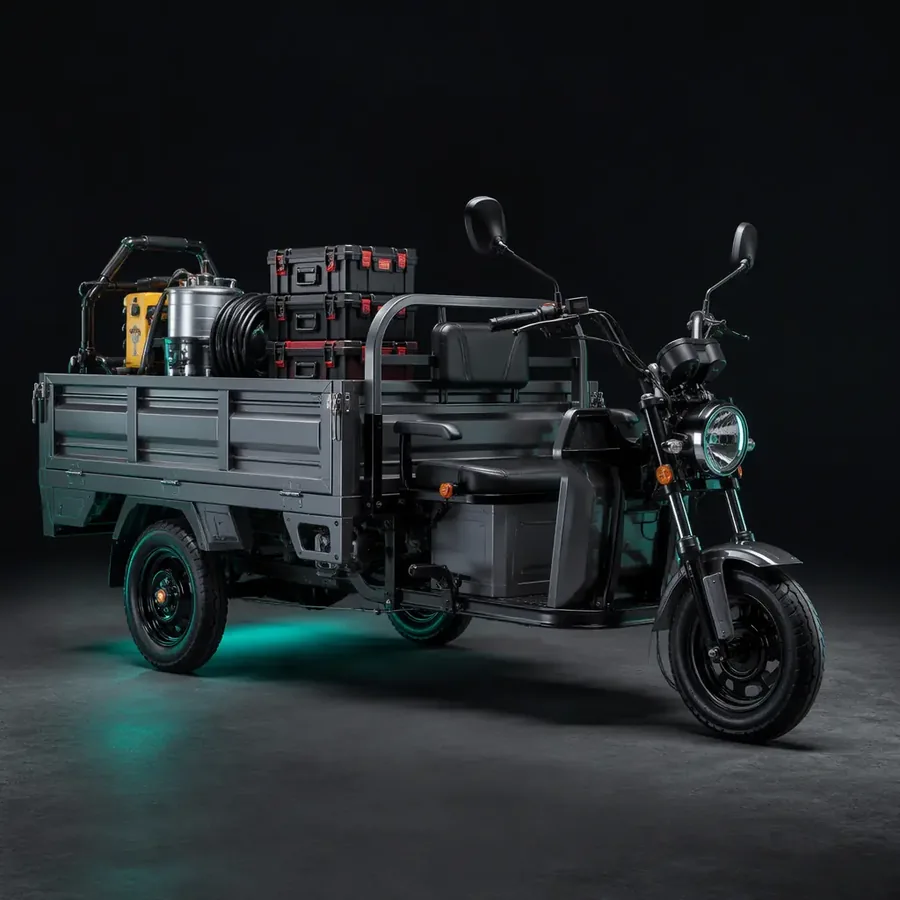
Community and resort fleets do more than shuttle residents; they move maintenance gear, pool chemicals, event furniture, guest luggage and deliveries. This is the trike’s home turf:
- Maintenance crews . A 300–500 kg payload with a 150–500 L drop-side box carries ladders, mowers parts, bags of mulch and repair kits. A golf cart carries a cooler.
- Delivery staff . Front-desk and facilities teams run packages and food between buildings. The cargo box keeps loads covered and secure, and the reverse gear (F/N/R three-position shifter on our LCD console) makes backing into loading docks safe.
- Food and beverage . Resorts use trikes to restock pool bars and beach cabanas; the insulated-box food-delivery setups we build are covered in our food delivery trike guide.
- Grounds and golf operations . Where a course still wants carts for players, a trike becomes the utility vehicle that hauls range balls, tools and turf care equipment.
For OEM buyers who want to sell these trikes to resorts and communities under their own brand, the factory spec options (motor, battery, box family, LCD, LED lighting) are described in our cargo tricycle OEM guide.
Legality: When a Trike Needs No License and a Cart Does
The licensing question is where trikes win the community argument outright:
- Golf carts . Legal on golf courses and private property without registration. The moment they touch public roads, most states require them to meet LSV rules (top speed 20–25 mph, VIN, lights, seat belts, insurance) or be classified as mopeds.
- Class 2 e-tricycles (US) . A 750W, 20 mph throttle trike falls under the federal consumer product class, needs no license, no registration and no insurance in the majority of states, exactly like a Class 2 e-bike. Our cargo trikes ship with the UL 2849 certification path for this class.
- EU . A 250W pedal-assist trike is an EPAC under EN 15194 with no license or plate; faster versions enter L1e/L2e vehicle categories with eMark approval and an AM/B license.
State-by-state and EU rules change frequently, and the distinctions between Class 2, NEV and moped treatment are covered in depth in our US & EU e-tricycle legality guide and our certification comparison.
Charging and Power Infrastructure
Communities already built charging infrastructure for golf carts (110V outlets in garages and cart barns), and trikes use the same grid:
- On-board charger . A 5A charger takes 6–10 hours from empty to full on a 60V 32Ah or 72V 40Ah pack, an overnight charge, identical to a cart.
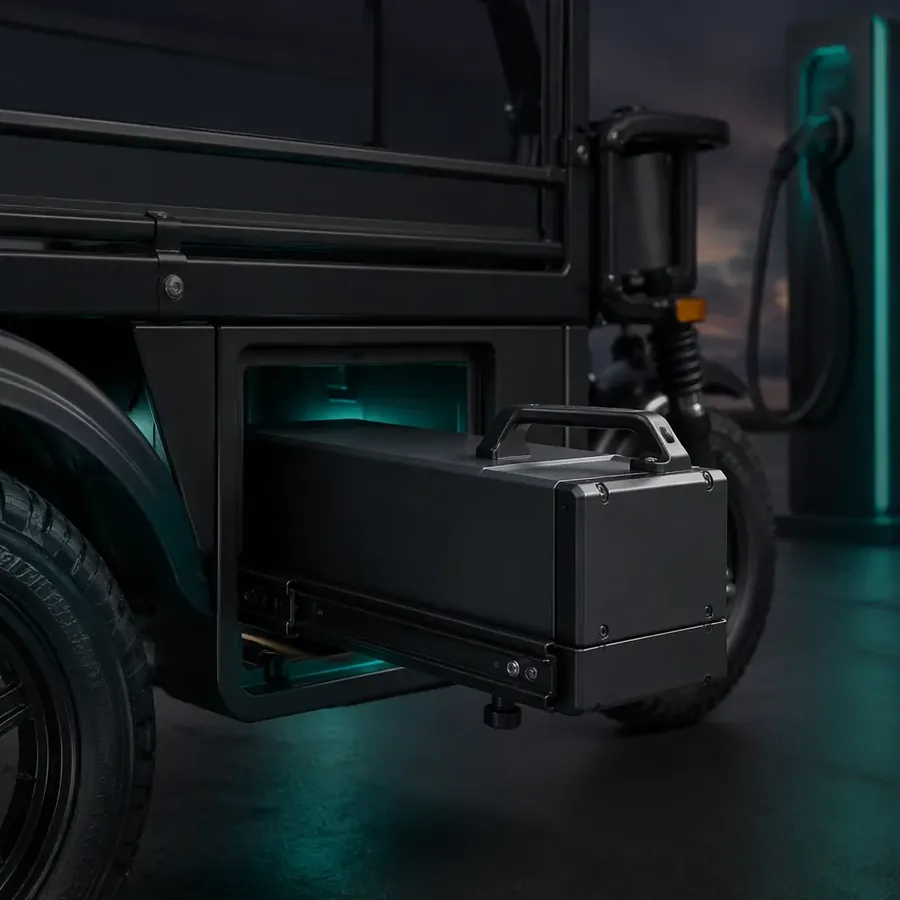
- Swappable packs . Unlike a cart’s fixed lead-acid bank, a trike battery slides out (kept under 25 kg with a carry handle) so a double-shift facility can swap packs instead of waiting on charge.
- Low-temp operation . Lithium packs with low-temperature charge cutoff keep winter fleets alive where lead-acid carts lose 30–40% of range; the cold-weather discipline is covered in our battery technology guide.
When a Golf Cart Still Makes Sense
To be fair to the incumbent: golf carts remain the right choice when seating capacity is the job. If you are moving four to six people per trip, tournament groups, tour parties, resort shuttles with passengers in the back, a cart’s bench rows win, and our passenger e-tricycle guide explains the two-seat trike alternative for those routes. The rule of thumb for fleet planners:
- People-only, 4+ seats, on-course or private road only → golf cart
- People + cargo, 1–2 staff, public-road capable, budget-sensitive → cargo tricycle
- Mixed duty with delivery, maintenance and event logistics → tricycle with drop-side box
What to Spec When Replacing Carts with Trikes
If the cost math above has you planning a cart-to-trike conversion, these are the specs to put in the RFP:
- Motor, 1000W or 1200W hub motor with differential for community terrain; 800W only for flat, paved communities.
- Battery, 72V 40Ah LFP for heavy daily duty; 60V 32Ah NMC for standard routes. The voltage trade-off is explained in our 60V vs 72V battery guide.
- Brakes . Hydraulic disc front + dual drum rear + parking brake, verified stopping distance at full payload.
- Box, 150–500 L with drop sides for maintenance and delivery work.
- Certification, UL 2849 for the US Class 2 path, EN 15194 for the EU EPAC path, documented per unit.
MOQ for a community-branded program starts at 50 units with custom colors and decals; the procurement structure and negotiation points are covered in our OEM buying guide.
Replace Your Golf Carts with Cargo Trikes
Tell us your routes, payload needs and community layout. We will spec the motor, battery, box and certification path, with a landed-cost estimate for your fleet size.
