
The two-wheeler vs three-wheeler decision is the first fork in every e-mobility product line, and it is not a style choice. It is an engineering decision with different physics, different regulations, and a different buyer. Electric bikes win on speed, agility, and price per unit. Electric tricycles win on stability, payload, and the ability to carry a load without the rider holding the vehicle upright. With the US three-wheeler boom pushing cargo and passenger trikes into mainstream retail, distributors that ignored the category are now adding it. This guide compares the two platforms the way an OEM buyer should: stability, speed class, cargo capacity, operating cost, and the buyers each platform actually serves.
Where the Three-Wheel Advantage Actually Shows
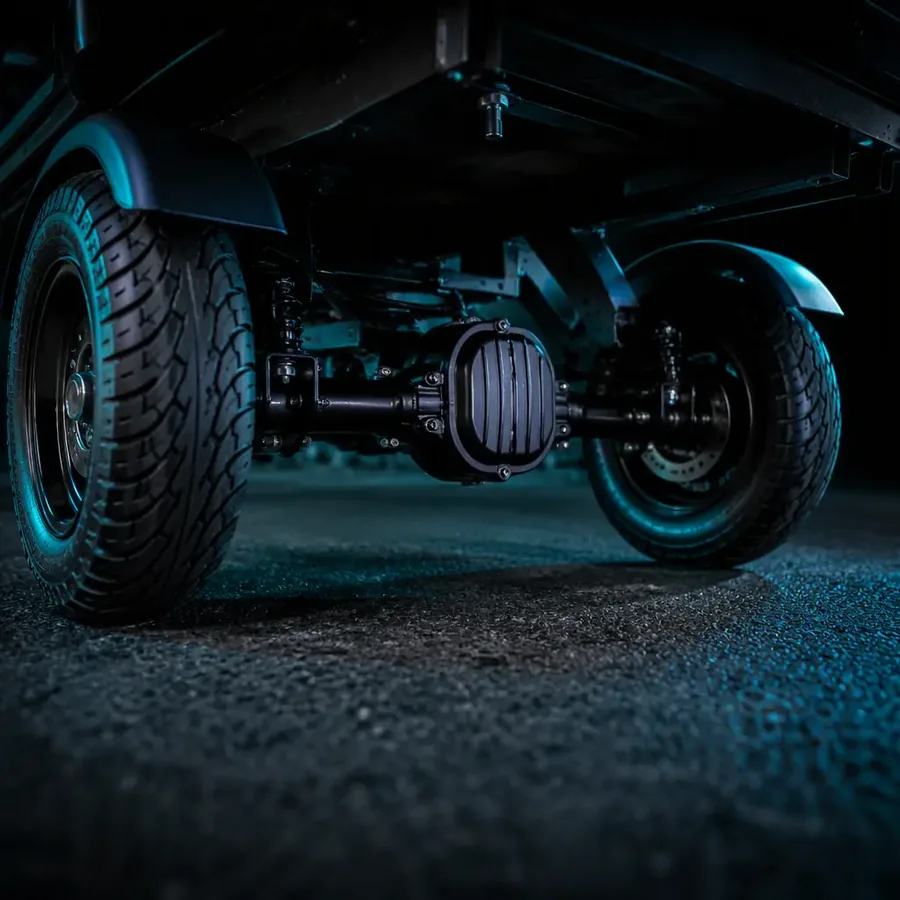
A tricycle stands on its own. That single fact changes the riding experience more than any spec sheet suggests. On a two-wheeler, the rider is the stability system: at every stop, the rider must put a foot down and hold 20–30 kg of bicycle upright. On a delta-layout trike (two rear wheels, one front), the vehicle is stable at rest and the rider's legs are free, which matters for three groups: senior riders, delivery riders carrying 200+ kg of freight, and vendors working from the vehicle all day. The stability engineering, track width, wheelbase, low center of gravity, differential, is detailed in our passenger e-tricycle guide, where the same architecture serves senior mobility.
The measurable difference is low-speed and zero-speed stability. A loaded cargo trike at 300 kg gross weight does not tip when the rider dismounts to unlock a door or hand over a parcel; a loaded cargo bike needs a kickstand careful loading discipline. For fleet and vending use cases, that is not a convenience. It is the difference between a 60-second stop and a 5-minute stop, repeated a hundred times a day.
Speed and Class: The Regulation Fork
Platform choice determines which legal class the product lands in, and the class determines market access. The two-wheeler's default is the pedelec class. 250W / 25 km/h in the EU under EN 15194, or Class 1–3 at 750W / 20 mph in the US. Tricycles can live in those same classes, but heavier cargo and passenger trikes often cross into L-category vehicle territory (L1e/L2e in the EU, NEV or state moped rules in the US), which requires eMark approval and in some cases a license. The full class-by-market map, including which trike configs stay license-free, is in our electric tricycle laws guide for the US and EU. The motor power logic that decides whether 250W, 750W, or 1200W fits a given trike weight is covered in our e-bike motor power guide.
| Dimension | Electric Bike | Electric Tricycle |
|---|---|---|
| Wheels | 2 | 3 (delta: 2 rear + 1 front) |
| Stability at rest | Rider must hold upright | Self-stable, no kickstand needed |
| Typical payload | 20–60 kg (bike + rider support) | 150–500 kg cargo box capacity |
| Speed class (typical) | 25 km/h EU / 20 mph US | 25–35 km/h; up to 45 km/h L2e |
| Motor (trike spec) | 250W–750W | 800W–1200W hub + differential |
| Battery (trike spec) | 36V–48V | 60V / 72V, 32–40Ah |
| Price point (FOB) | $350–$900 | $1,250–$1,550 |
Cargo: Payload Math on Three Wheels vs Two
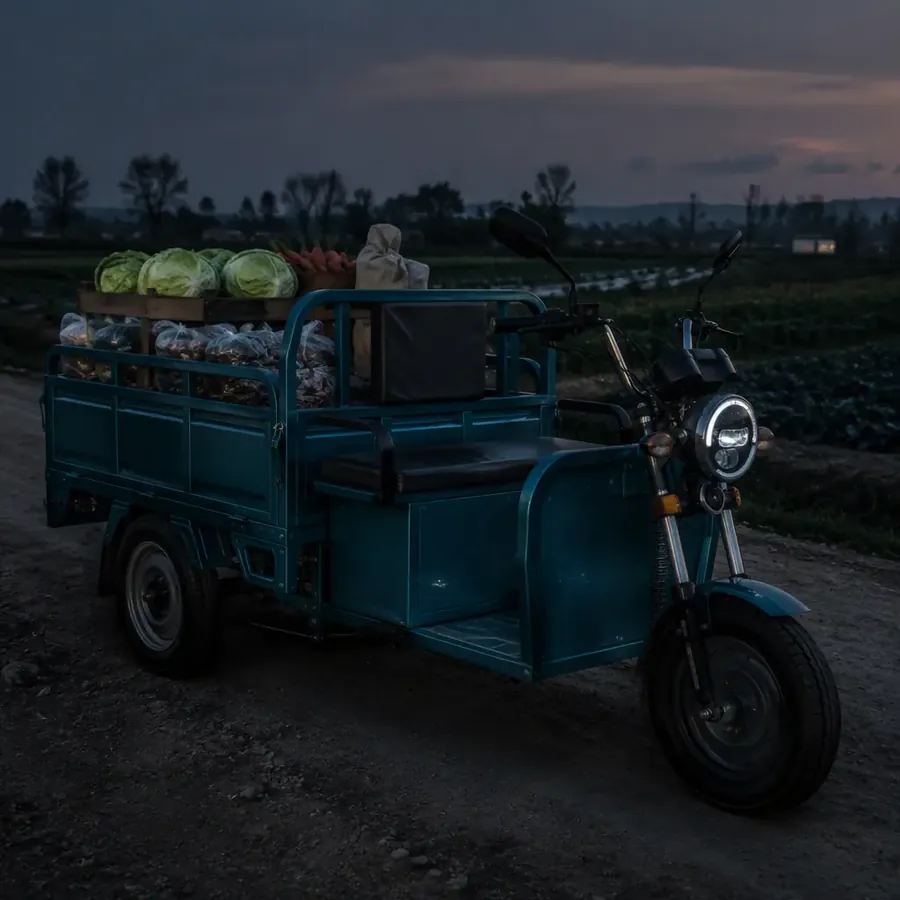
Payload is where the platforms stop competing. A cargo e-bike realistically carries 60–100 kg in a front box; a cargo tricycle with a 150–500 L drop-side box carries 300 kg (EU spec) to 500 kg (non-EU spec), roughly a van's per-trip volume at a bicycle's operating cost. The full cost comparison against a pickup truck, including the five-year total cost of ownership math, is in our cargo trike vs pickup truck comparison, and the fleet economics for last-mile operators are in our cargo delivery fleet guide.
For OEM buyers the payload spec drives everything downstream: frame reinforcement, motor torque, brake sizing, and tire rating (3.00-12 front, 3.75-12 rear dual). A 500 kg-rated trike is a different vehicle from a 300 kg one. Verify the rated payload is tested at the gross vehicle weight, not at empty weight. This is the single most common spec-sheet discrepancy in trike sourcing.
Where a Two-Wheeler Still Wins
The trike is not universally better, and a product line that drops two-wheelers loses sales. The two-wheeler wins on: speed (an e-bike at 25–32 km/h feels faster and leans through corners), agility (narrow lanes, bike racks, stairs, elevators), price ($350–900 FOB vs $1,250+ for a trike), and weight (a 25 kg e-bike vs a 150–220 kg trike. The trike needs a ramp or lift for transport). Commuter buyers, enthusiasts, and urban apartment dwellers remain two-wheeler buyers. The trike's buyers are cargo operators, mobility users, vendors, and anyone who needs to stop and stay stopped.
Cost Comparison: Purchase and Operation
On paper the trike costs 2–3× the e-bike. On total cost per useful load, the trike wins: the payload per trip is 3–5× higher, and the service bill is nearly identical, one hub motor, one controller, three wheels, hydraulic disc front brake, dual drum rear brakes. The annual maintenance range for a trike is USD 150–250 including a tire replacement, versus USD 100–200 for a two-wheeler. When payload per trip is divided into cost, the cargo trike's cost per kilogram delivered is typically a third of a cargo bike's. The battery decision (60V/72V pack sizing and chemistry) follows the same discipline as any e-mobility platform, see our battery technology guide for the 2027 EU Battery Passport requirements that now apply to trike packs.
Which Should Your Line Carry?
Use the buyer profile, not the product, to decide:
- Commuters, enthusiasts, rental fleets . E-bikes; speed and price win.
- Last-mile delivery, grocery, beverage, freight . Cargo trikes; payload and self-stability win.
- Senior mobility, accessibility . Passenger trikes; see our passenger trike guide.
- Vendors, farmers, small business . Cargo trikes with box configs; see the mobile vending economics below.
Most successful distributors carry both and sell by use case. The motor architecture choice within each platform is a separate decision, hub vs mid-drive is covered in our hub vs mid-drive guide.
Spec a Trike or E-Bike Line for Your Market
Tell us your target buyers and use cases (commuter, cargo, vending, mobility). We will recommend the platform, motor class, battery, and certification path, with payload and brake test data included in the sample phase.
