
The city commuter e-bike is the volume engine of the entire electric mobility industry. While trail bikes and mopeds generate the headlines, commuter e-bikes generate the production runs: they are the category where European subsidy programs, US municipal incentive schemes, and corporate fleet programs all converge on the same product shape. The buyers, DTC brands, bike shop chains, corporate mobility managers, and public incentive programs, order in thousands of units, and they order the same bike every season with small revisions. That repeatability is exactly what makes the commuter category the most forgiving entry point for a new OEM program, and also the most competitive: margins are thinner than in trail or cargo, so the spec sheet and the cost-down engineering have to be right from the first sample.
The Commuter Market: The Volume Leader
Commuter e-bikes sell through five channels with different volume and spec profiles:
- DTC brands . The largest online channel. DTC buyers order 1000–5000 units per model year, ship partially assembled in cartons, and need a bike that a customer can finish assembling in 20 minutes with basic tools.
- Bike shop chains and dealers . The trust channel in Germany, France, and the Benelux. Dealers demand service documentation, spare-parts stock, and a warranty program; they will not stock a bike they cannot service.
- Corporate and government commuting programs . Bike-to-work subsidy schemes (notably the French and German programs) route millions of units through employers. These buyers need invoice-compliant documentation and incentive-eligible certification.
- Sharing and micro-mobility operators . A smaller but growing channel for docked commuter fleets; the vehicle-hardening requirements overlap with our shared fleet guide.
- Last-mile delivery . Courier companies running commuter-class bikes for short urban drops; the payload and shift-battery math is covered in our cargo delivery fleet guide.
The unifying demand across all five channels: a bike that requires no mechanical aptitude to own. The commuter customer will not tune a derailleur or bleed brakes; every component spec below is chosen for zero-maintenance operation.
Frame Formats: Step-Over vs Step-Through
The first decision on a commuter line is the frame format, and it is a market decision as much as an engineering one:
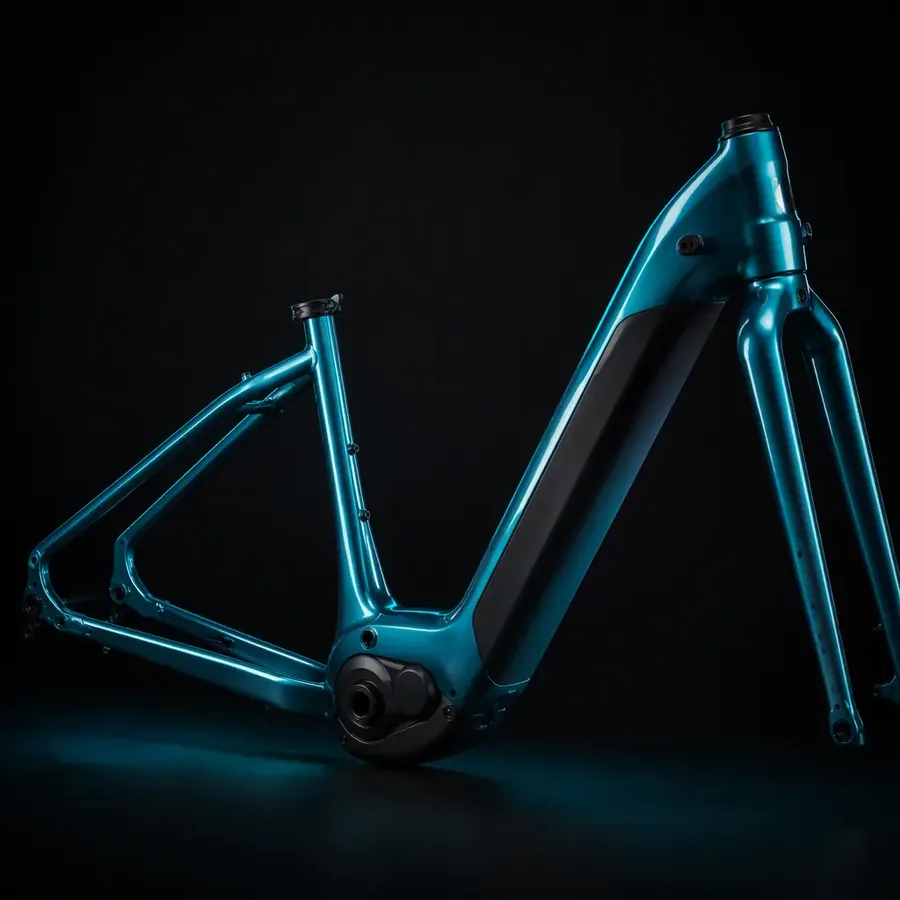
- Step-through (low-step) frames . The dominant format in the Netherlands, Belgium, and increasingly Germany. Step-through sells to older riders, urban professionals in work clothes, and the largest demographic of all: riders who simply do not want to swing a leg over a top tube. A low step-over height (under 400 mm) is the spec that decides the sale.
- Step-over (diamond) frames . Still the default in North America and for sportier commuters. The step-over frame is stiffer and lighter for the same material, and it reads as "a real bike" to US buyers.
- Frame material, 6061 aluminum dominates commuter OEM lines for cost and corrosion resistance; steel (chromoly) appears on premium city lines for ride comfort. Carbon is rare in commuter volume production.
Many OEM commuter programs run both formats on one platform: same motor, battery, and wheel package, different frame. The platform approach cuts your certification cost in half because the electrical system is identical, the certification logic is in our EU vs US certification guide. If a folding variant is part of the plan, the hinge and wheel-size decisions are in our folding e-bike OEM guide.
Motor Specs for Stop-and-Go Urban Duty
Commuter motors are judged on smoothness and silence, not peak power:
- 250W nominal is the EU volume spec . The EN 15194 class tops out at 250W continuous and 25 km/h assist, and that is where the European volume lives. US-bound lines step up to 500–750W for Class 2/3. The market-by-market power logic is in our motor power class guide.
- Front or rear hub vs mid-drive . Hub motors dominate commuter volume for cost and simplicity; mid-drive appears on premium commuter lines for weight balance and hill performance. The architecture trade-off, including the BOM cost delta, is in our hub vs mid-drive comparison.
- Torque sensor over cadence sensor . A torque sensor (40–70 Nm typical for commuter mid-drives, 35–50 Nm equivalent for hubs) delivers power proportional to pedaling effort, which is what makes a commuter bike feel natural in stop-and-go traffic. Cadence-only sensors cause the surging on/off feel that tops commuter demo-ride complaints.
- Quiet operation . Gear noise is a dealbreaker in the commuter category. The motor's noise rating (dB at 15 km/h) should be in the spec sheet; buyers in dense European cities test for it.
For hill cities (Lisbon, San Francisco, Bristol), spec the motor for torque, not speed: a 250W motor with 50 Nm+ and a wide gear ratio will outperform a nominally larger motor with weak gearing on a 10% grade.
Battery and Range: The Daily Commute Math
The commuter battery decision is a range-per-day calculation:
- 36V vs 48V, 36V packs (typically 10–15Ah, 360–540Wh) cover the flat-city commuter with 40–70 km of real range; 48V packs (10–17.5Ah, 480–840Wh) suit hill cities, heavier riders, and riders who want a weekly charge instead of a daily one. The sweet spot for the European mass market is a 48V 13–15Ah pack with 50–80 km of real-world range.
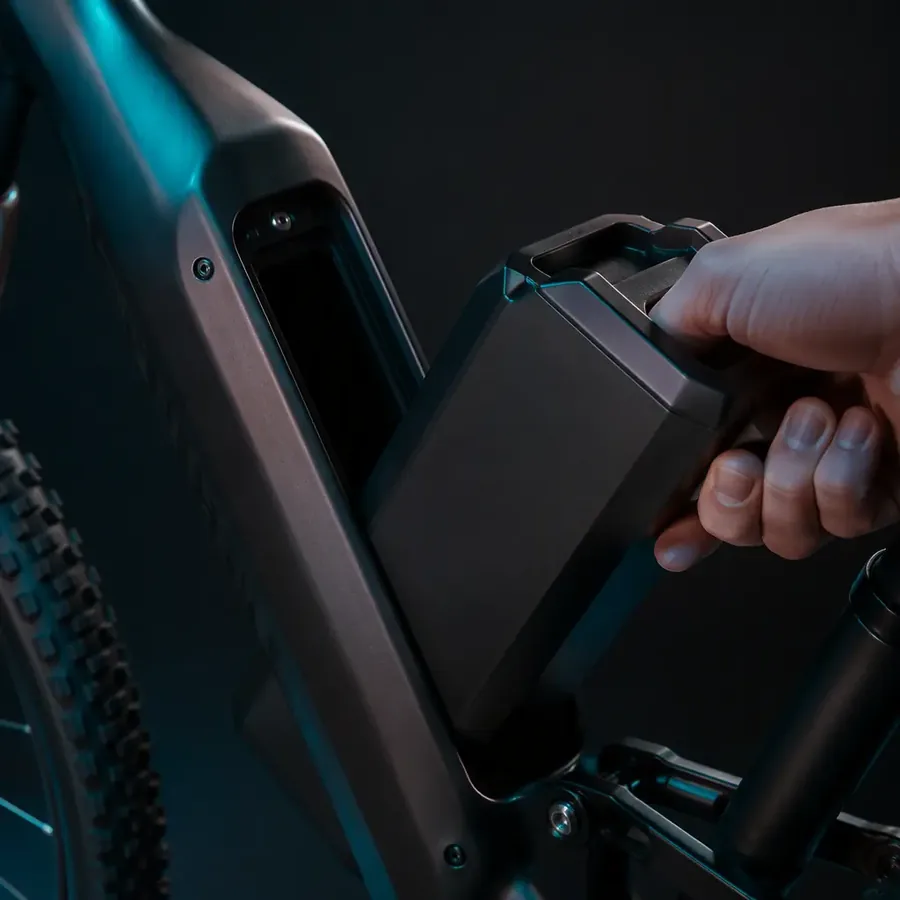
- Removable packs win the channel . Apartment dwellers and office commuters need to charge the battery at a desk or in a kitchen. A slide-out pack under 4.5 kg with an integrated carry handle is the spec that removes the "where do I charge it?" objection. The removal mechanism must survive 10,000+ cycles. It is the most-used mechanical part on the bike.
- Charging time . A 2–4 hour full charge with a 2A–4A charger is the commuter expectation; a standard 2A charger on a 48V 14Ah pack delivers roughly 4–5 hours, which fits an overnight charge. The BMS and cell chemistry decisions, including cold-weather behavior for northern markets, are covered in our battery technology guide.
One warranty trap specific to commuters: the daily partial-charge pattern. Commuters top up every night, so the BMS must handle thousands of shallow cycles without drift. The cell-grade and BMS spec should be written for cycle life (800+ cycles to 80% capacity), not just capacity.
Connectivity, Security, and Lighting
Integrated electronics are now the differentiator in the commuter category:
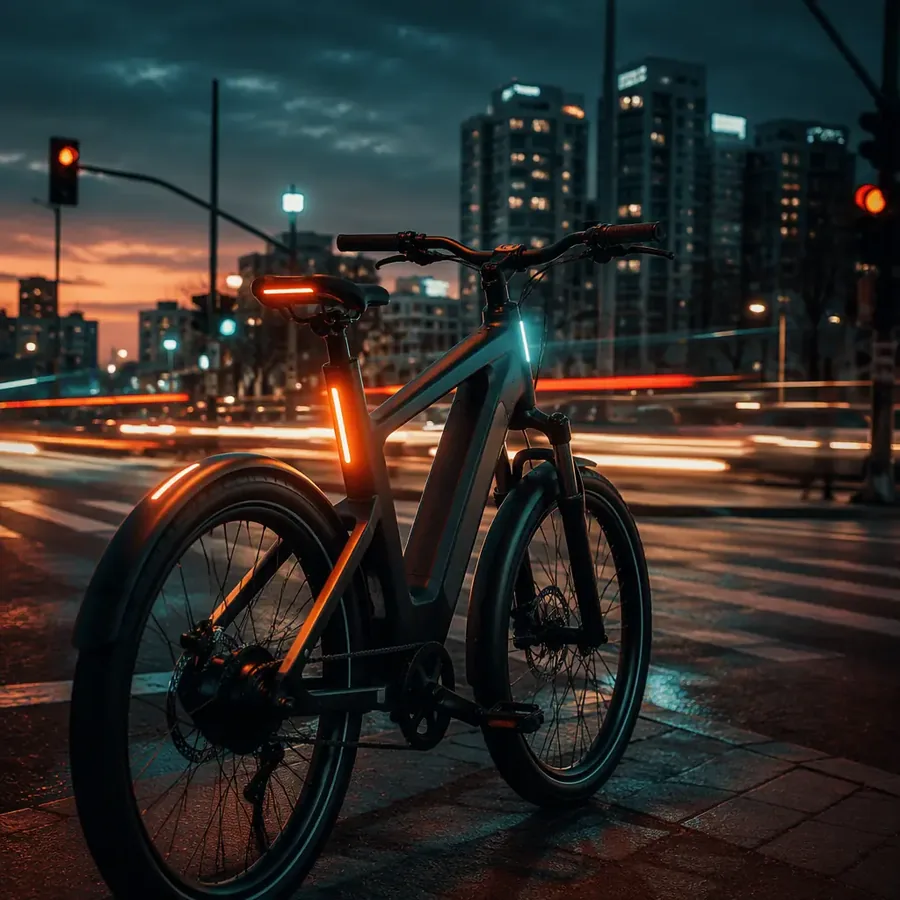
- Integrated lighting . Always-on headlight (30+ lux) and taillight powered by the main battery, with automatic activation. Bolt-on lights get stolen; integrated lights sell the bike. The wiring harness must be in the BOM from day one, retrofitting integrated lighting later is a frame-level change.
- App connectivity and GPS . A basic app layer (lock/unlock, ride stats, theft alert) is now expected on commuter lines. For the volume segment, keep the electronics simple: an IoT module with GPS and a cellular or BLE bridge, with the data plan cost built into the retail price. The telematics-hardening lessons from shared fleets apply here, see our shared fleet guide.
- Security hardware . A frame-integrated lock point and a wheel-locking feature (motor lock or disc lock) reduce theft insurance costs for the buyer and are increasingly required by corporate fleet programs.
- Display . A simple handlebar display (speed, battery, assist level) with a USB-C charge port for the rider's phone. Theft of displays is a real cost in the category; a tool-free quick-release display mount doubles as an anti-theft feature.
Comfort and Practicality: The Zero-Maintenance Spec
Commuter bikes are sold on comfort and bought back on reliability:
- Fenders and chainguard . Full coverage fenders (not clip-on) and a full chainguard are non-negotiable in the European commuter market; a commuter without fenders is a weekend bike.
- Rear rack . A rated rear rack (25–27 kg load) is standard; the rack mount points must be part of the frame spec, not an afterthought.
- Puncture-resistant tires, 700c x 40–50 mm or 27.5 x 2.0–2.2 with a puncture belt. Flat tires are the #1 reason commuters stop riding; tire spec is a retention feature.
- Suspension seatpost and ergonomic grips . A suspension seatpost (30–50 mm travel) and ergonomic grips cost the BOM almost nothing and change the ride feel dramatically on rough city pavement.
- Kickstand . A rear-mounted double-leg kickstand is the standard for loaded commuter bikes; single-leg stands tip under rack load.
These items are not accessories to be added by the dealer. In the commuter category, the fully equipped bike is the product. A line that ships bare frames loses to a competitor with the same motor and fenders included.
Compliance and Incentive Eligibility
In the commuter category, certification is a sales feature:
- EN 15194 (EU) . The standard for pedal-assist cycles: 250W continuous, 25 km/h assist, and the electrical-system requirements. Almost every EU commuter subsidy program requires EN 15194 documentation at the point of sale.
- UL 2849 (US) . The electrical-system safety standard that US retailers and incentive programs increasingly require; the scope and cost comparison with EN 15194 is in our certification guide.
- Incentive-program paperwork, French, German, Austrian, and several US state programs require specific documentation (declaration of conformity, battery test certificates, and in some cases local assembly or repair-network requirements). An OEM line that ships with the paperwork pre-prepared sells faster in every subsidized market.
- UKCA and other markets . The UK continues to require UKCA or CE marking for e-bikes; Australia and New Zealand follow EN 15194 closely. The multi-market path is covered in our EU vs US guide.
OEM Checklist for Commuter Programs
When evaluating factories for a commuter line, verify these five items:
- Removable battery cycle test . Documented test data for the battery slide-out mechanism at 10,000+ cycles; this is the highest-wear mechanical part on the bike.
- Water and dust sealing . The motor, display, and battery connectors should carry IP65+ sealing, tested, not assumed; commuters live outdoors in the rain.
- Assembly documentation . A DTC commuter arrives 80% assembled; the factory must supply 20-minute assembly documentation with torque specs for the remaining fasteners.
- Spare-parts and service support . Confirm the factory stocks wear items (brakes, tires, battery, controllers) and supplies service documentation in the target market's language; dealer channels will not stock an unsupported bike.
- Production capacity and QC . Commuter volume runs are large (1000+ units); confirm the factory's line capacity and inspection checkpoints. Our 4 parallel assembly lines run under one quality chain with 100% pre-shipment inspection and third-party inspection available (SGS/BV), the QC checkpoint structure is detailed in our OEM buying guide.
On MOQ and lead time: commuter lines typically start at 100 units for a custom color and decal package, with production at 15–30 days after sample approval. The fastest turnaround of any e-bike category because the platform is standardized.
Spec a City Commuter Line for Your Market
Tell us your target market, frame format (step-through or step-over), and distribution channel. We will spec the motor, battery, integrated lighting, and incentive-eligible certification, with sample units in 4–6 weeks.
