
The step from e-bike to e-moped is the step from a bicycle regulation to a vehicle regulation, and it changes every part of the sourcing conversation. An e-moped is not a bigger e-bike; it is a type-approved road vehicle with a vehicle identification number, a homologation file, and a liability chain that runs from the factory to the importer to the rider. For OEM buyers, the rewards are real: e-mopeds and e-motorcycles carry higher price points, lower price erosion, and a faster-growing export category than e-bikes. This guide maps the L-category classes, the eMark type-approval process, the powertrain specs that define each class, and the factory checkpoints that separate a homologated program from a compliance accident.
L1e and L3e: The Legal Classes That Define the Product
The EU's L-category framework is the reference for most of the world's powered two-wheeler regulation. Three classes matter for exporters:
| Class | Max Speed | Max Power | Rider Requirements | Typical Product |
|---|---|---|---|---|
| L1e-A (powered cycle) | 25 km/h | 1 kW (1,000W) | None (some states 14+) | E-moped / speed pedelec-lite |
| L1e-B (two-wheel moped) | 45 km/h | 4 kW | AM license, no plate in some states | City e-moped |
| L3e (motorcycle) | >45 km/h | No cap | A1/A2/A license, plate, insurance | E-motorcycle, e-dirt bike |
The class decision is a licensing decision for your end buyer. An L1e-A product can be sold to riders with no license in many markets, the largest addressable pool. An L3e product requires a motorcycle license, which shrinks the market but supports a 3–5x higher price point. Most importers entering the category start with L1e-B (45 km/h, AM license) because it splits the difference: a real vehicle spec with a low licensing barrier. The relationship between these power classes and the e-bike classes below them, where 250W EU and 750W US ceilings apply, is covered in our motor power class guide.
eMark Type Approval: What It Actually Covers
eMark is not a single certificate, it is a whole-vehicle type approval assembled from UN ECE regulations, each with its own test scope. The regulations that dominate an electric two-wheeler homologation file:
- UN ECE R10 . Electromagnetic compatibility. The vehicle's electronics must not interfere with other systems and must survive external interference. For e-mopeds with smart controllers and telematics, R10 is where most first-time approval failures happen.
- UN ECE R136 / R100 . Electric powertrain safety: battery, BMS, high-voltage isolation, and thermal runaway protection. R136 is the newer regulation that covers the full electric drivetrain; R100 covers the rechargeable energy storage system.
- UN ECE R47 or R41 . Noise. Electric two-wheelers are quiet, which sounds like an advantage. But some regulators now require a minimum audible warning sound, and R41/R47 noise measurement is still a mandatory test step.
- R60/R78, R53/R168 . Controls, brakes, and lighting. The homologation file must show compliance across the vehicle, not just the drivetrain.
The practical consequence for OEM buyers: the factory's homologation experience is the product. Type approval is a documentation and testing process that takes 3–6 months for a new model and costs $30,000–80,000 depending on the test house and the class. A factory that has already homologated similar models can leverage existing component-level approvals; a factory starting from zero will charge you for the learning curve. Ask for the factory's existing approval list (type-approval numbers for R10, R136, R47) before you discuss pricing. The list tells you whether they have done this before.
Powertrain Specs That Define Each Class
Within a class, the powertrain is engineered to a target, not a ceiling. The working specs for L1e-B and L3e programs:
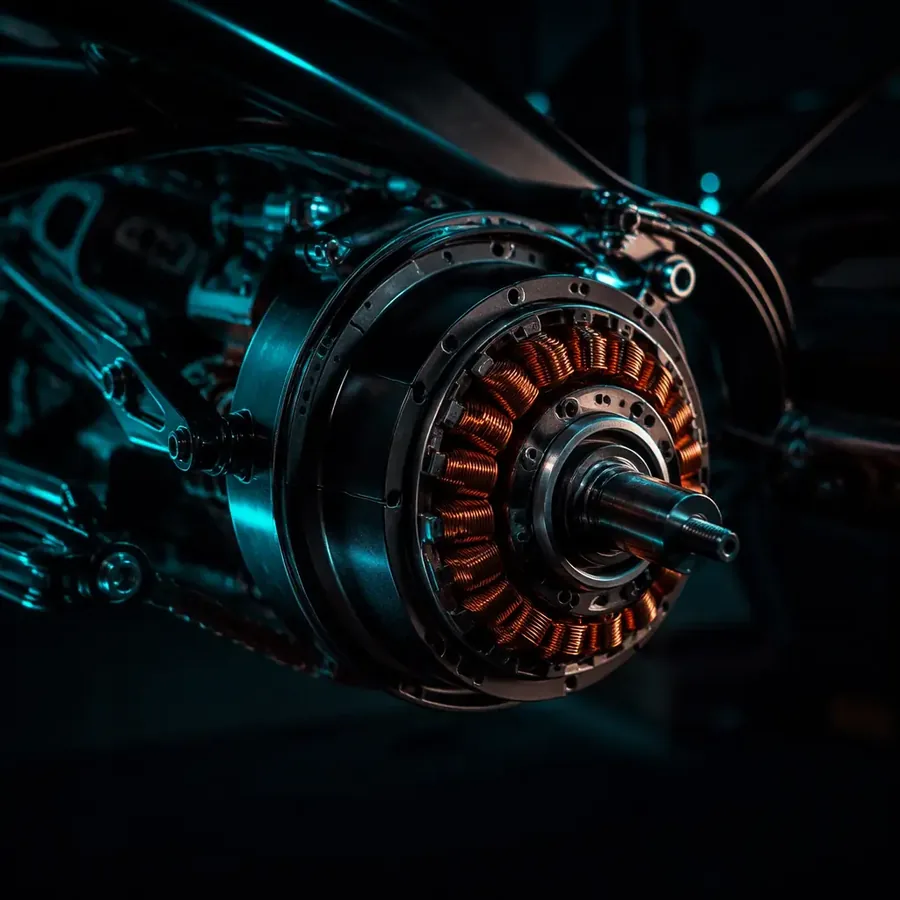
- L1e-B (45 km/h) . A 1,500–2,500W brushless hub motor or a 1,500–3,000W mid-drive, paired with a 48V or 60V pack. Real-world requirement: sustain 45 km/h on flat ground and hold 30 km/h up a 5% grade. A 48V 20Ah pack with a 30A controller delivers this with roughly 50–70 km of range; a 60V system adds headroom for hills and rider weight.
- L3e (motorcycle class), 3,000–8,000W+ motors with 72V packs and 60A+ continuous controller discharge. The battery becomes the dominant BOM item. A 72V 40Ah NMC pack at this discharge rate is a $600–900 component. Torque targets for urban e-motorcycles run 120–180 Nm at the wheel.
- Controller and CAN bus. L-category vehicles increasingly run a CAN bus linking the controller, BMS, dashboard, and telematics. A CAN-bus architecture costs more to develop but is nearly mandatory for the R10 and R136 approval process and for fleet telematics later.
The high-discharge battery engineering behind these builds, chemistry choice, continuous C-rate, BMS topology, and the UN 38.3 transport tests, is the same discipline covered in depth in our battery technology guide. Do not spec the motor before the battery: at moped-class discharge rates, the pack defines the vehicle.
The US Market: NEV and State-by-State Classification
The US has no federal L-category equivalent, which makes the market simultaneously more open and more fragmented:
- Low-speed electric bikes and NEVs . Many e-moped-style products are sold as low-speed vehicles or under state moped statutes. The federal Low-Speed Vehicle (LSV) category (25 mph max, FMVSS 500 compliance) covers some three- and four-wheel products, while two-wheelers fall under state moped laws that vary from 20–30 mph and 1–3 hp.
- DOT compliance for on-road use . Any vehicle ridden on US public roads needs DOT-approved tires, lighting, and reflectors, and states enforce their own equipment and licensing rules. The same 45 km/h e-moped that is a type-approved L1e-B in the EU may be unclassifiable in some US states, verify the target state's statute before committing to a US-only program.
- Off-road workaround . E-dirt bikes and off-road e-motorcycles avoid road-vehicle classification entirely and are sold as off-highway vehicles. This is the cleanest US entry for high-power product, with the trade-off that the sales channel excludes on-road commuters.
The certification comparison for the lower-power tiers, where UL 2849 and EN 15194 govern instead of eMark, is in our EU vs US certification guide, which covers the same market-splitting logic one category down.
Factory Sourcing Checkpoints for Homologated Programs
Sourcing a type-approved vehicle is different from sourcing an e-bike. Add these checkpoints to your audit:
- Existing type approvals . Request the factory's current approval list (R10, R136, R47, and any whole-vehicle approvals). Validate the numbers on the UNECE database; a factory that misrepresents approvals is a hard stop.
- Homologation ownership . Confirm who owns the approval file. In some arrangements the importer must hold the type approval (approval in the name of the importer), which changes your paperwork burden and your legal liability for the vehicle.
- Component traceability . Type approval binds the vehicle to its component specs. A factory that quietly swaps controller firmware or battery cells after approval voids the certificate. The contract must freeze approved components and require change-notification.
- VIN and marking . Confirm the factory can stamp VINs and produce the required compliance plates and labels. This is a production-line capability, not a paperwork one.
- After-sales parts commitment . Homologated vehicles carry longer liability windows. Confirm the factory commits to spare parts for the battery, controller, and motor for a defined period (industry standard: 5+ years for the battery platform).
Budgeting, MOQ, and sample strategy for a homologated program, where samples must include the approval-relevant components, follow the same negotiation structure as other OEM engagements, with longer lead times; our OEM buying guide covers the MOQ and payment mechanics, and the fleet-scale version of this decision for rental and delivery operators is in our shared fleet guide.
Market Entry Strategy: Start With One Class
The most common failure pattern in e-moped importing is launching two classes at once. An L1e-B and an L3e are different products with different approvals, different distribution, and different buyers. The more reliable entry sequence:
- Launch one L1e-B model with the factory's existing approvals, targeting the markets where AM-license adoption is highest (France, Spain, Italy, Benelux).
- Use the same platform for an L1e-A variant (software-limited to 25 km/h / 1 kW) to reach the no-license segment, the same hardware, an additional approval file, and a second price tier.
- Add L3e only when the distribution and service network can support it, since motorcycle-class buyers expect dealer service, parts availability, and insurance support.
This staged approach keeps the homologation budget linear with revenue instead of front-loading it. The powertrain-class logic behind these decisions, and where 1,000W+ machines fit relative to the 250W/500W/750W tiers, is the full subject of our motor power class guide, while the scooter-side equivalent of this market map is in our electric scooter OEM guide.
Source a Homologated E-Moped or E-Motorcycle
Tell us the target class (L1e-A, L1e-B, or L3e), your markets, and volume. We will match you to a factory with existing type approvals, freeze the approved component list, and walk the homologation file with you from sample to first container.
