
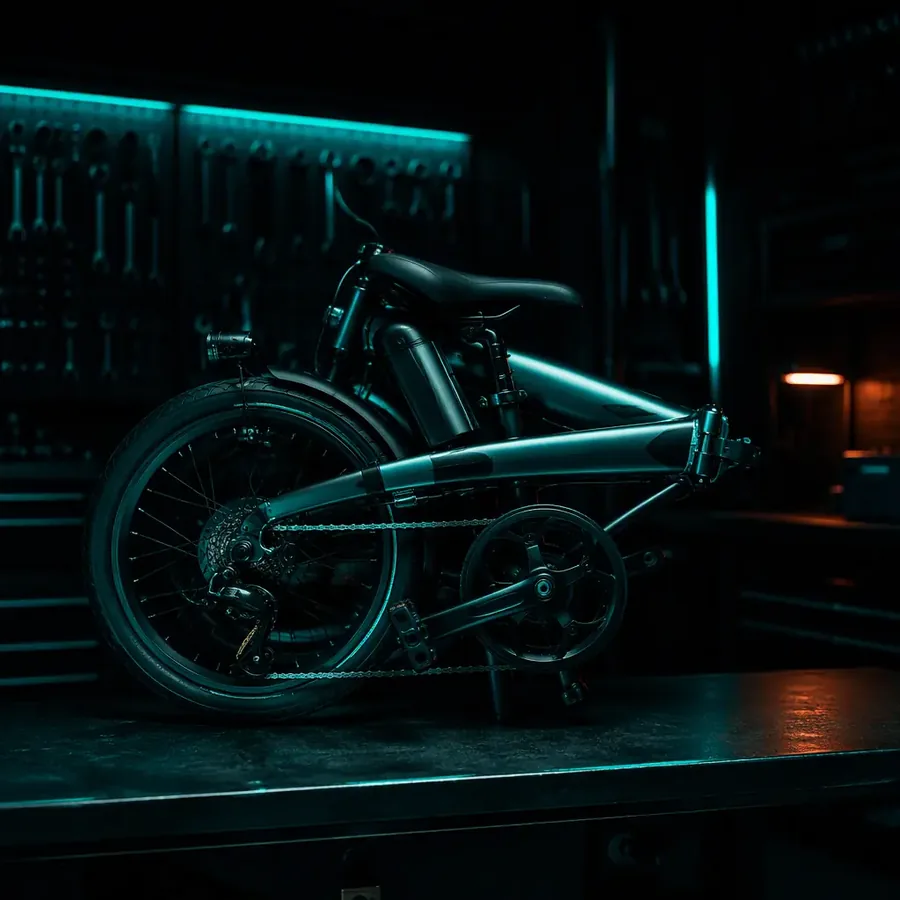
The folding e-bike is the only e-bike category where the frame itself is the product. A commuter e-bike is judged by its motor and battery; a folding e-bike is judged by its hinge, its folded volume, and whether the fold survives 10,000 cycles without developing play. That mechanical reality changes the OEM conversation completely, hinge quality becomes a specification you write into the contract, and wheel size becomes a market decision rather than a component choice. This guide breaks down the folding e-bike bill of materials the way an importing brand actually evaluates it: fold geometry, hinge engineering, wheel size, powertrain integration, and EU compliance.
Where Folding E-Bikes Actually Sell
Folding e-bikes are a multimodal commuter product, not a leisure product. The three volume markets tell the story:
- Japan . Train-first commuting makes folding e-bikes the natural fit for the last mile. Japanese brands prioritize low folded weight (under 18 kg), compact folded dimensions for station lockers, and 250W assist capped at 24 km/h under national regulation.
- Germany and the Nordics . The 250W pedelec class dominates, and buyers combine train commutes with cycling. The German market rewards hinge refinement and EN 15194 compliance; price competition is less brutal than in the UK.
- UK . The largest volume market for budget-to-mid folding e-bikes. UK importers move tens of thousands of units per year at 250W, and the category is price-sensitive. Which is exactly where hinge quality gets quietly downgraded in cheaper production runs.
The through-line: in every volume market, the product must fold quickly and repeatedly. A hinge that develops play after 500 cycles turns a 1,200 EUR commuter product into a warranty claim. That is why the hinge, not the motor, is the first thing an experienced importer audits in a factory.
Frame Fold Geometry: Mid-Fold vs Vertical-Fold vs Triangle
Three fold architectures dominate production e-bikes, and each changes the frame cost and the riding feel:
- Mid-fold . The frame hinges at the main tube midpoint, folding the bike in half. Simplest to manufacture, lowest frame cost, and the most common architecture for 16-inch and 20-inch commuters. The trade-off is a less stiff ride: the hinge point sits under load in the middle of the frame triangle.
- Vertical-fold . The rear wheel folds under the frame, keeping the main triangle intact. Better stiffness, cleaner fold, but a more complex rear linkage that adds $15–30 to frame BOM and demands tighter manufacturing tolerances.
- Triangle fold . The front triangle rotates around the bottom bracket. Common on premium city folders; stiffest ride, but the fold geometry is the hardest to engineer and the folded package is longer.
For a first OEM program, mid-fold is the pragmatic starting point: it is the architecture your factory has the most production data on, and it keeps the frame price competitive. The stiffness gap matters most on 20-inch wheels at 25 km/h+. At EU assist speeds the difference is marginal for 90% of riders. The motor architecture you pair with the frame, hub versus mid-drive, changes the fold design as well, because a mid-drive motor occupies the bottom bracket where the triangle hinge lives; our hub motor vs mid-drive comparison covers that interaction in detail.
The Hinge Is the Product: Engineering Specs That Matter
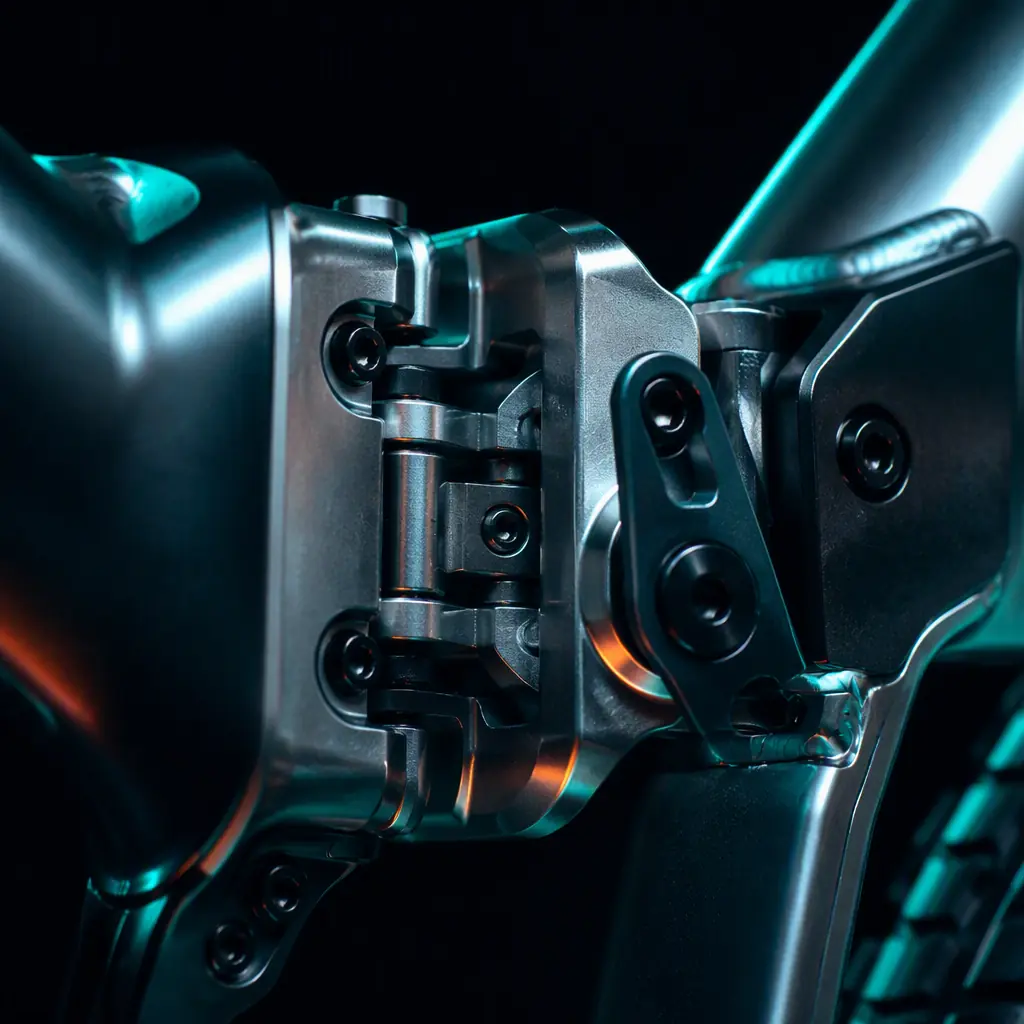
A folding e-bike hinge is a fatigue component, not a convenience fitting. The specifications that separate a 500-cycle hinge from a 50,000-cycle hinge:
- Material . Forged or CNC-machined 6061-T6 aluminum is the baseline for the hinge bodies and the clamp plates. Zinc-alloy castings are cheaper but develop play fast under repeated load; reject them for any program with a warranty longer than 12 months.
- Clamping . A cam-lever clamp with a steel bolt of at least M6 grade 8.8, torqued to a documented spec (typically 8–12 Nm at the lever). The clamp must produce a repeatable, audible lock; riders judge hinge quality by the feel of that lever.
- Bearing surface . The hinge pin should ride on a bushing or cartridge bearing, not bare aluminum-on-aluminum. A 10 mm hardened steel pin with a replaceable bushing is the standard that survives years of daily folding.
- Fatigue validation . The hinge assembly should pass 10,000 fold–unfold cycles with less than 0.5 mm of measurable play at the joint, and the frame should pass the EN 15194 static load tests with the hinge in the locked position. Ask for the test report; a factory that cannot produce one is asking you to be its R&D department.
In practice, hinge quality is the single biggest differentiator between a 900 EUR folding e-bike and a 2,000 EUR one. The delta is roughly $20–35 in frame BOM. And it is the difference between a product that survives its warranty period and one that does not. When you compare quotes, ask each factory for the hinge fatigue test method and the play measurement after cycling; the answers tell you more than the frame price does.
16-Inch vs 20-Inch Wheels: The OEM Decision
Wheel size determines the folded package, the ride, and the tire ecosystem. The trade-offs for a folding platform:
| Factor | 16-inch | 20-inch |
|---|---|---|
| Folded package | Smallest, fits car trunks and station lockers | Still compact; larger folded height |
| Ride quality | Harsher over rough surfaces; nimble | Noticeably smoother; closer to a full-size bike |
| Weight target | 14–17 kg achievable | 16–20 kg typical |
| Hub motor fit | Smaller motor diameter; 250–350W typical | Full range 250–750W, better gearbox options |
| Best markets | Japan, urban multimodal | EU, UK, US commuters |
For most first programs, 20-inch is the safer default: it rides well enough to be a primary bike, and the motor and tire supply chain is broader. The 16-inch category is a specialist play for the Japanese and station-locker segments. Note that 20-inch folding tires are a different ecosystem from the 26/27.5/29-inch standards. The tire width and casing choices for high-volume commuter builds are covered in our fat-tire e-bike OEM guide, which explains how tire spec cascades through the wheel build.
Motor and Battery Integration for a Folding Platform
The folding frame constrains the powertrain in three specific ways:
- Motor placement . A rear hub motor keeps the frame simple and preserves the fold geometry, which is why the vast majority of folding e-bikes use rear hubs. Mid-drive folders exist but require a triangle-fold or modified geometry to clear the bottom bracket; expect a $150–250 cost premium and a longer development cycle.
- Battery integration . Frame-integrated (in-tube) batteries are the folding standard for aesthetics and theft deterrence, but the folded frame makes cable routing and connector access harder. A removable down-tube pack with a locking mount is the serviceable choice; the pack must clear the fold path when removed. The chemistry, BMS, and EU Battery Passport requirements for in-tube packs are detailed in our battery technology guide.
- Weight budget . A folding e-bike must stay under roughly 20 kg to remain a credible commuter product. A 250W rear hub adds 3.5–4.5 kg, a 36V 10.4Ah in-tube pack adds 2.5–3.5 kg, and the frame with hinge lands at 11–13 kg. The weight math works only if every component is spec'd with grams in mind.
For the EU, the powertrain ceiling is fixed: 250W continuous, 25 km/h assist, EN 15194. Within that ceiling, the choice between a 250W geared hub and a 250W mid-drive, and the torque tuning that makes a 250W folder feel strong, is exactly the territory covered in our motor power class guide. For the US market, the same frame can carry a 500–750W rear hub for Class 1/2/3 compliance, the certification path differences are in our EU vs US certification guide.

EU Compliance Specifics for Folding E-Bikes
Folding e-bikes carry two compliance risks that rigid-frame bikes do not:
- The folding lock under load, EN 15194 and the Machinery Directive require that the frame, including the locking mechanism, withstand the static load tests without releasing. Some budget factories pass the load test on a welded frame but ship a hinge that releases under a hard bump. Specify the test with the hinge in the locked position and the clamp at production torque.
- Cable and connector pinch points . The fold path can pinch brake cables, motor cables, or battery wiring. A pinched motor cable is a safety issue under EN 15194 electrical requirements, and it is the most common field failure on cheap folders. Inspect the fold path clearance on the production line, not just on the sample.
Neither issue is hard to engineer around, they are hard to verify without checking the actual production units. That is why the compliance conversation with your factory should include a fold-cycle test on the assembly line, not just a certificate. The full EN 15194 versus UL 2849 testing scope and costs are compared in our certification comparison.
OEM Factory Checkpoints for Folding Programs
When you audit a factory for a folding e-bike program, add these five checks to the standard sourcing list:
- Hinge fatigue test rig . Does the factory have a fold-cycle test machine, and what is its documented cycle count? A factory without one has never validated its own hinge.
- Torque documentation . Is the hinge clamp bolt torque specified and measured on the line? Uncontrolled clamp torque is the #1 cause of hinge play claims.
- Folded-dimension measurement . Does the factory measure and guarantee the folded package (length × height × width)? Folded size is a marketing spec and a train-station reality.
- Weld inspection on hinge plates . Hinge attachment welds should be covered by the same inspection standard as the main frame welds, not treated as secondary.
- Spare hinge parts . Hinge assemblies are wear items. Confirm the factory stocks hinge kits (pin, bushing, clamp) for after-sales support; a folding e-bike without hinge spares is a disposable product.
Budgeting and lead-time expectations for these programs: including the MOQ implications of a hinge-tooling investment, follow the same structure as any OEM engagement; our OEM buying guide walks through MOQ, samples, and payment terms from first contact to container load.
Spec Your Folding E-Bike With a Factory That Tests Hinges
Tell us your target markets, wheel size preference, and volume. We will spec the fold geometry, hinge grade, powertrain, and certification path (EN 15194, UL 2849), with the hinge fatigue test report included in the sample phase.
