
Every cargo e-tricycle spec sheet lists a load figure, 300 kg for EU-market builds, 500 kg for the rest of the world on our cargo platform. But the number that decides whether a trike works on your route is not the headline rating. It is the payload your tires, brakes, frame, motor and battery can actually carry together, without collapsing your range. A buyer who orders on headline payload alone often lands a trike that bogs down on the first loaded hill, or wobbles and fades under a full box. This guide breaks down what payload capacity really means, the four engineering limits that set it, what extra kilos cost in motor and battery, and how to specify a payload-rated cargo trike as an OEM program.
The platform that anchors this discussion, an 800W / 1000W / 1200W brushless hub motor with differential on a 60V/72V pack . Carries the load figures below. The same vehicle is rated differently per market because regulation, not physics, is the first ceiling: the axle and vehicle-class limits that decide your allowed payload are governed by the local standard, as our EU vs US certification guide and electric tricycle laws guide set out.
What "Payload Capacity" Actually Means
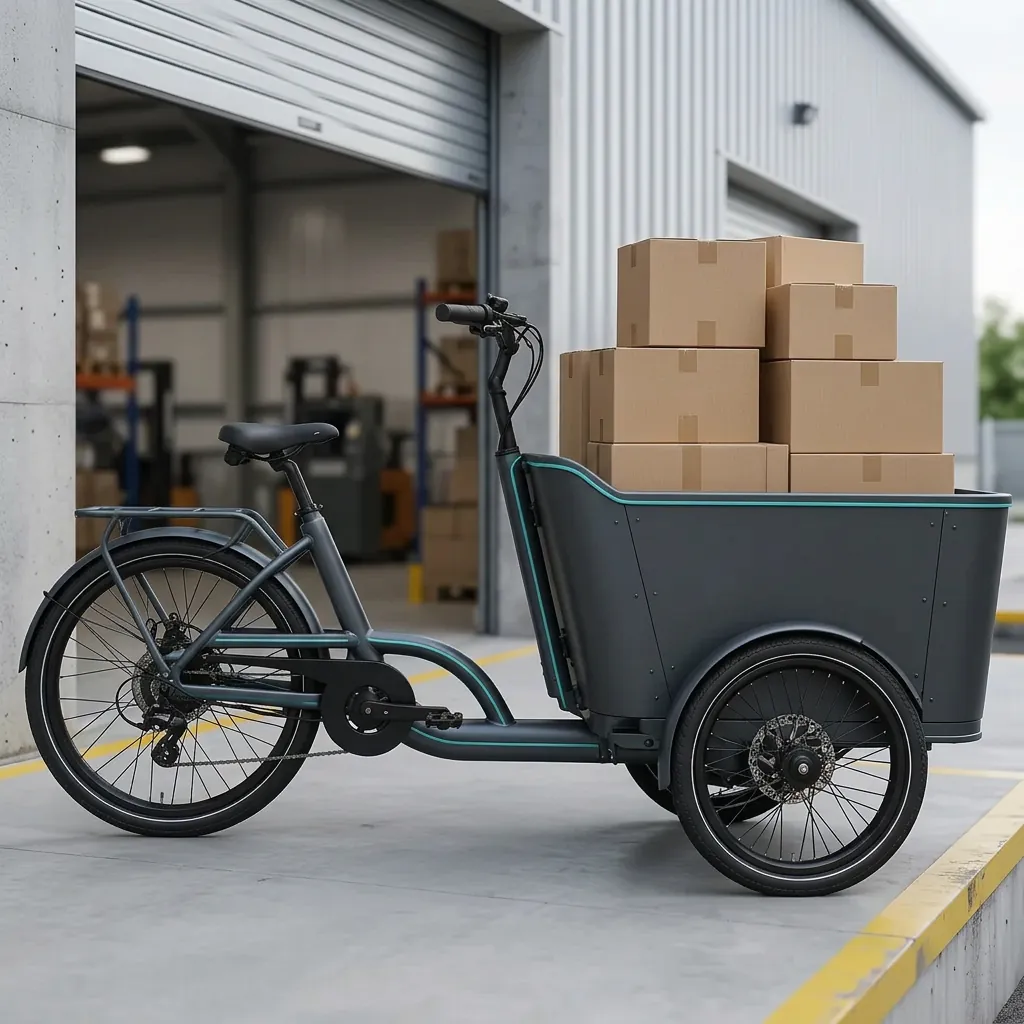
Three numbers get mixed up on spec sheets, and only one is the amount you can load. Gross vehicle weight is the fully loaded trike; curb weight is the empty vehicle. A cargo trike without its box typically comes in at 150–220 kg; payload is probably what you care about: the difference, or the maximum load you can add. Our cargo platform is rated at 300 kg (EU) / 500 kg (non-EU), and its box swallows 150–500 L, which is why volume usually stops a load before weight does.
The reason the same trike is rated differently by market is the legal axle and vehicle-class limits that decide how much you are permitted to carry on a road, not the hardware. That is the first thing to pin down before you talk payload; the route and the by-region speed classes are covered in our electric tricycle laws guide.
Four Limits That Set Your Max Carry
Payload is a system answer, not a single label. Four components each impose their own ceiling, and the weakest link sets the real number. Below is what to check on each before you trust a rated load.
| Limit | What It Controls | Spec to Check |
|---|---|---|
| Tires | Load index and inflation; the true margin under a live box | 3.00-12 front / 3.75-12 rear (dual), load-rated |
| Brakes | Stopping distance at full payload; brake fade on long downhills | Hydraulic disc front + dual drum rear + parking brake |
| Frame & rear axle | Chassis rigidity and payload-supporting geometry | Steel tube chassis, e-coat + powder coat, leaf-spring rear |
| Motor torque | Acceleration and hill-climb; the difference between 800W and 1200W | 800W flat urban / 1200W hill-climb, differential hub |
| Cargo box | Volume ceiling; weight often maxes before the box is full | 150–500 L, aluminum / steel drop-side, insulated option |
Tires are the first thing to verify because they carry the whole load through a tiny contact patch. The dual rear set is sized to spread weight, and the load index and pressure are the real margin, as our tires guide explains. Brakes are the second limit: a hydraulic disc front with dual drum rear and a parking brake is the architecture that holds a loaded trike on a slope and stops it predictably at full payload, a point our brake systems guide develops. The frame and rear axle set how far you can push without fatigue, and the suspension, a leaf-spring rear . Trades comfort against how much the chassis can carry, which is the trade-off we walk through in the suspension guide. Motor torque decides whether a loaded trike moves smoothly from a stop; that marginal rating is covered in the motor power guide.
Payload vs Range: The Trade-Off Every Buyer Underestimates
Range is always quoted at a reference load, for this platform, 50–80 km at a 200 kg load on flat terrain. That is the honest number to plan around, because every extra kilogram and every slope shortens it. The two variables a buyer controls are battery capacity and how hard the motor works. A 60V 32Ah pack suits a lighter, flatter route; a 72V 40Ah pack buys range and headroom for heavier boxes. The voltage and watt-hour decision, and the honest range metric behind it, is set out in our 60V vs 72V guide.
On the vehicle side, the Forward / Neutral / Reverse 3-speed selector and the LCD load indicator let a rider balance a heavy box against range in real time, and the option of a solar-panel roof that trickle-charges the auxiliary battery adds roughly 8–12 km a day . Worth having if a route runs full all shift. The battery chemistry also bites here: in hot, dusty markets, an LFP pack beats the default NMC on lifespan under thermal stress even though it costs range per kilo. The A-to-B comparisons that decide whether a trike or a van wins on your specific routes are modelled in our cargo e-tricycle vs pickup truck and fleet guide.
What Payload Costs: Motor, Battery and Budget
Payload is never free. Adding load capacity moves the build up the range: more motor, more battery, heavier frame and running gear, and all three push the FOB price and the order size. This platform starts at 50 units per model (a 15–30 day standard lead time, or 30–45 days for a custom-branded first run), and the motor, battery and box are the levers that scale cost with load. Pre-production samples ship before mass production so a buyer can validate the rated payload on their own route. How those specs scale into a total cost of ownership and a first container are covered in our cargo e-tricycle OEM guide and importing from China guide.
Loading a Trike Safely (and Legally)
The safest payload is a low, centred one. Distributing weight evenly and keeping the heavy items over the rear axle prevents the front wheel from lifting and keeps cornering stable; a trike that is back-heavy at the limit will tip before its tires give out. The reverse gear and 3-speed selector are there to inch a loaded trike out of a tight spot, and the parking brake holds it on a slope while you unload. Overloading past the rating costs you three ways at once: brake fade, tire wear and a collapsed range. The safety package that mitigates this on a cargo platform is covered in our electric tricycle safety features guide.
Specify a Payload-Rated Cargo Trike as an OEM Program
When you put a payload-rated trike in an RFQ, ask the factory to show the load working, not just print it. Specifically: request the verified payload rating for your market (EU vs non-EU), the tire load index and recommended pressure for the loaded weight, a brake test at full payload with the stopping distance, the motor rating for your grades (flat 800W vs hilly 1200W), and the battery chemistry for your climate, LFP for tropical or desert routes. Then specify the box to match the load you actually move, fixed flatbed with stake sides, a three-way drop-side body that converts to a flatbed in seconds, or an insulated sandwich panel for cold-chain work with a 12V compressor holding a 2–8 °C chain.
Confirm the MOQ . Typically 50 assembled units per model . And insist on a pre-production sample fitted to your box configuration, run on a real route at the payload you intend to ship, before you commit the full order. Load the sample to the rating, drive the worst hill on your route, and verify it holds speed, stops straight and keeps a safe margin of range. The full buyer's checklist for a first order is in our OEM buying guide. If payload is the whole reason you are looking at a trike, start from the rated load and work backwards. The components that carry it are the ones you need to specify with numbers.
Spec a Payload-Rated Cargo E-Tricycle
Tell us your payload in kg, your route profile and whether you need LFP, a drop-side or insulated box. We will quote the cargo platform with a motor and battery sized to your load, FOB China.
