
Buyers chase range, load and price on an e-tricycle, but the component that quietly decides whether a pack lasts two seasons or five is the charger. It is easy to treat as an afterthought, "just send a charger", and then discover swollen cells, a range that falls off a cliff, or a fleet of 40 trikes spending half a shift tethered to wall sockets. On this platform the pack is a 60V 32Ah NMC or 72V 40Ah LFP unit, and the charger is drawn from a 2A–10A smart lineup covering 36V–84V output at 84–840W with >90% conversion efficiency and universal AC 100–240V input. This guide sets out how amps and voltage actually fit the pack, why the connector matters more than the power rating, and what to put on a charger in an OEM order.
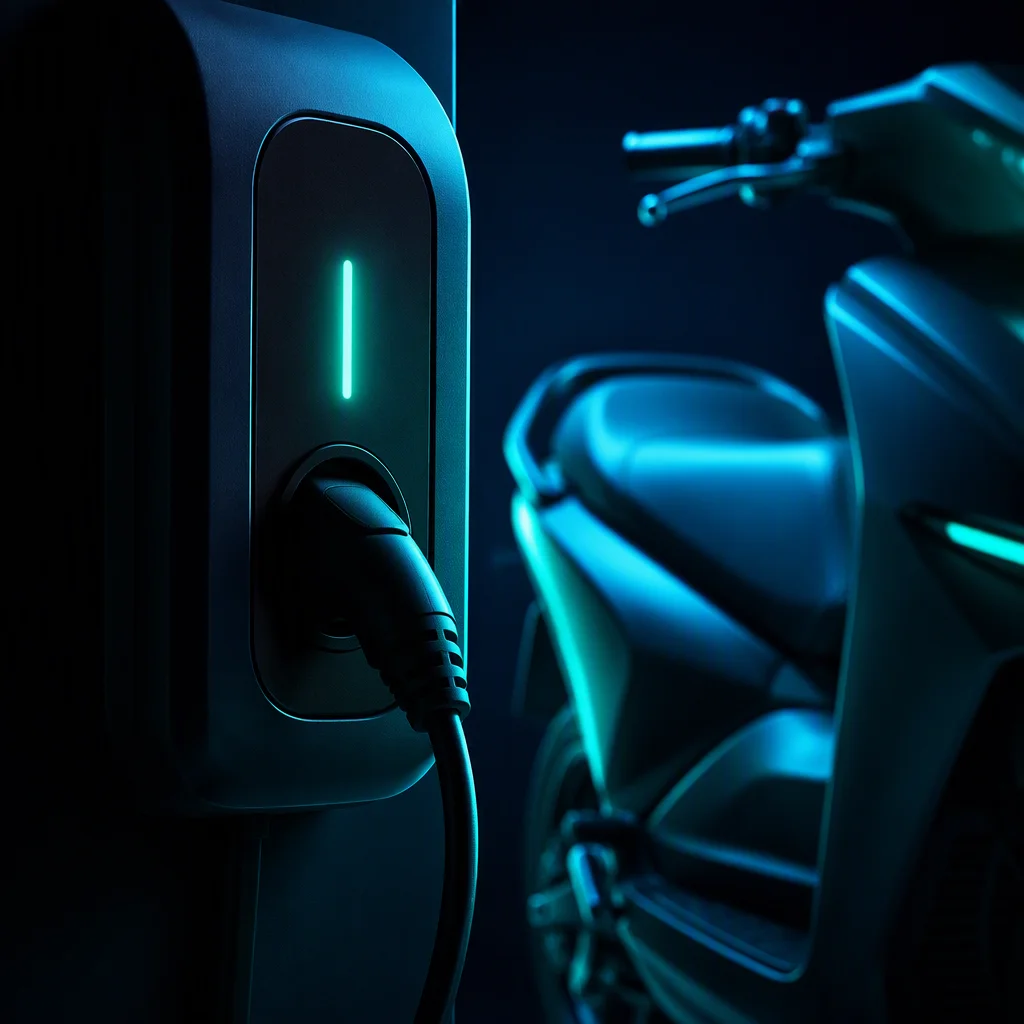
Voltage Is Set by the Pack, Not by Preference
The first rule of charger selection is that output voltage follows the battery, never the other way round. A lithium pack is not a 12V lead-acid bucket: the constant-voltage (CV) stage has to sit just above the pack's full-charge voltage to push the last few percent of energy in. That is why the charger lineup is listed by pack size rather than by a single number, 36V / 42V / 48V / 54.6V / 60V / 67.2V / 72V / 84V . With each output matched to the nominal pack above. A 60V nominal lithium pack is topped off at 67.2V, and a 72V pack at 84V.
Pick the wrong voltage and the failure is predictable. Too low, and the pack never reaches full charge, so the BMS never balances and capacity quietly creeps down. Too high, and the cells are pushed past their limit, swelling, a BMS cutoff, and in the worst case a thermal event. That is why a "universal" auto-range charger is a risk on a pack you have to trust for years, not a convenience. The 60V vs 72V choice is covered separately, but the charger voltage must be locked to whichever pack you settle on.
Amps Decide Charge Time and Cell Stress
Amp set how quickly energy moves and how much heat the cells and the charger have to shed. Charge time is simple arithmetic. A 60V 32Ah pack stores 1.92kWh; a 72V 40Ah pack stores 2.88kWh. At the standard 5A that is roughly 6.4 hours and 8 hours respectively, which is why this platform quotes 6–10 hours for a full charge. Step up to a 10A fast/smart charger and the same packs come back in about 3.2 hours and 4 hours.
But faster is not automatically better. A high-amp charge pushes more current into the cells and more heat into the pack and the charger; the charger compensates with active fan cooling at 8–10A versus passive aluminium housing at 2–5A. So the real decision is turnaround need: if a fleet has 40 minutes between shifts, 8–10A is justified; if a pack sits overnight, 2–5A is kinder to the cells and cheaper to buy. The depot energy math for going fast, and how big the charging load really is, is worked through in our fleet charging guide.
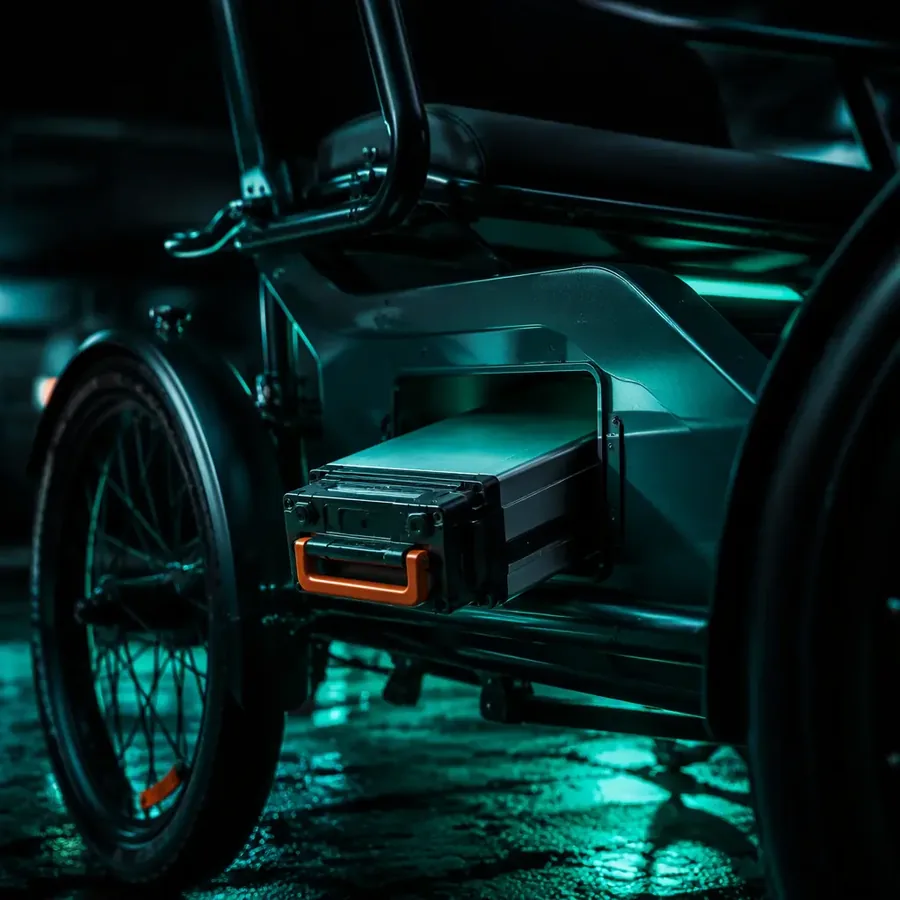
The Connector Is Where Orders Go Wrong
Charger power rating gets all the attention, but the most common cause of field failure is the plug. The lineup carries DC 5.5×2.1mm, 5.5×2.5mm barrel, XLR 3-pin, GX16 and aviation connectors. The two barrel sizes differ by just 0.4mm and are not interchangeable; XLR 3-pin is a common fit for European-market compliance; GX16 is a screw-locking aviation plug that will not shake loose over a potholed route. When you specify a charger, name the mating connector on the vehicle's battery port and confirm the pinout, not just the physical plug shape.
Protections and Certification Make the Safety Case
A charger is a mains-to-DC converter, and it earns its safety marks. Every unit carries over-voltage, over-current, short-circuit, reverse-polarity and over-temperature protection, and ships against the marks your destination market requires: CE, UL 1012/UL 1310, ETL, FCC, UKCA, SAA, PSE and RoHS. The distinction is practical, UL 1012/UL 1310 is the North American power-supply standard, PSE the Japanese one, UKCA the British. So a US fleet and a European fleet often need different builds. Units are burn-in tested before dispatch: on this line a 48-hour burn-in and seven quality gates from PCB placement to high-pot (HiPot) dielectric testing. On a charger the difference between a certified and an unmarked unit is a liability, not a price.
Smart Charging Is the Only Kind Worth Specifying
"Smart" sounds like marketing until you price a battery. A smart charger auto-off at full stops the CV stage from dripping current into a pack that is already charged, and a maintenance trickle holds a stored pack at top charge without overworking it. On the LCD models you get live voltage, current and state of charge . Which is how a fleet knows a pack is genuinely full rather than just "looking full" on the handlebar gauge. LFP is the forgiving chemistry here: it accepts partial charging without memory effect, so a 20–30 minute top-up during a driver's break is genuinely usable. Whether that is enough for your route is a pack-chemistry and BMS question, which is what our battery technology guide walks through.
What a Charger Costs in an OEM Order
The charger is a per-vehicle line item, and it is one of the cheapest ways to either protect or undermine the battery you already paid for. On this platform a charger is ordered with a 50-unit MOQ per configuration and a 15–30 day standard lead time (30–45 days for a first custom-branded run), with the OEM options you would expect: output plug type, cable length (1m / 1.5m / 2m), housing colour and finish, LED indicator pattern, LCD display, fan versus passive cooling, input plug (US / EU / UK / AU), silk-screen branding and plain or retail packaging. Where a fleet runs two batteries at once, a multi-port charger that tops up both packs together is available. For the wider cost picture, what the whole build costs and where the charger sits against the motor, battery and frame, our cost breakdown guide is the reference.
Where Charging Fits a Fleet
For a single trike the charger question is simple; for a fleet it becomes an infrastructure decision before it is a charger decision. Charging is a parking-layout and electrical-load problem first, and the 60V/72V choice changes the pack energy you have to replenish every night. The interplay between charger spec, depot capacity, battery swap and the energy cost per kilometre is the subject of our fleet charging guide, and the voltage trade-off itself is in the 60V vs 72V guide.
What to Put on a Charger in an OEM Order
Put the spec in writing and stop surprises before they ship. A compact checklist that has caught more than one mis-order:
- Output voltage: state the pack nominal and confirm the CV top-off value, 67.2V for a 60V pack, 84V for a 72V pack.
- Output current and cooling: 2–5A for overnight, 8–10A for shift turnaround, with passive or active cooling to match.
- Connector and pinout: barrel / XLR / GX16 / aviation, and confirm the mating arrangement on the vehicle port.
- IP rating: IP20 indoor versus IP54 weather-resistant for an outdoor depot or a shared-fleet station.
- Certification: list the destination market, UL, CE, UKCA, SAA or PSE, and ask for the test reports for your own regulatory filing.
- QC and samples: confirm the burn-in and the quality gates on the pre-production sample before mass production.
- Spares: order the charger in the same quantity class as battery spares and keep the connector type common across the fleet.
The full preventive care for the pack side, how to store, charge and protect the battery and charger over the life of the vehicle, is in our maintenance guide, and keeping a charger and battery as a matched, warrantied pair is covered in the after-sales & spare parts guide.
Match a Charger to Your Pack
Tell us the pack voltage, your turnaround time and the destination market, and we will send a charger recommendation with the connector, certification and lead time. So you can price the whole power train before you commit.
