
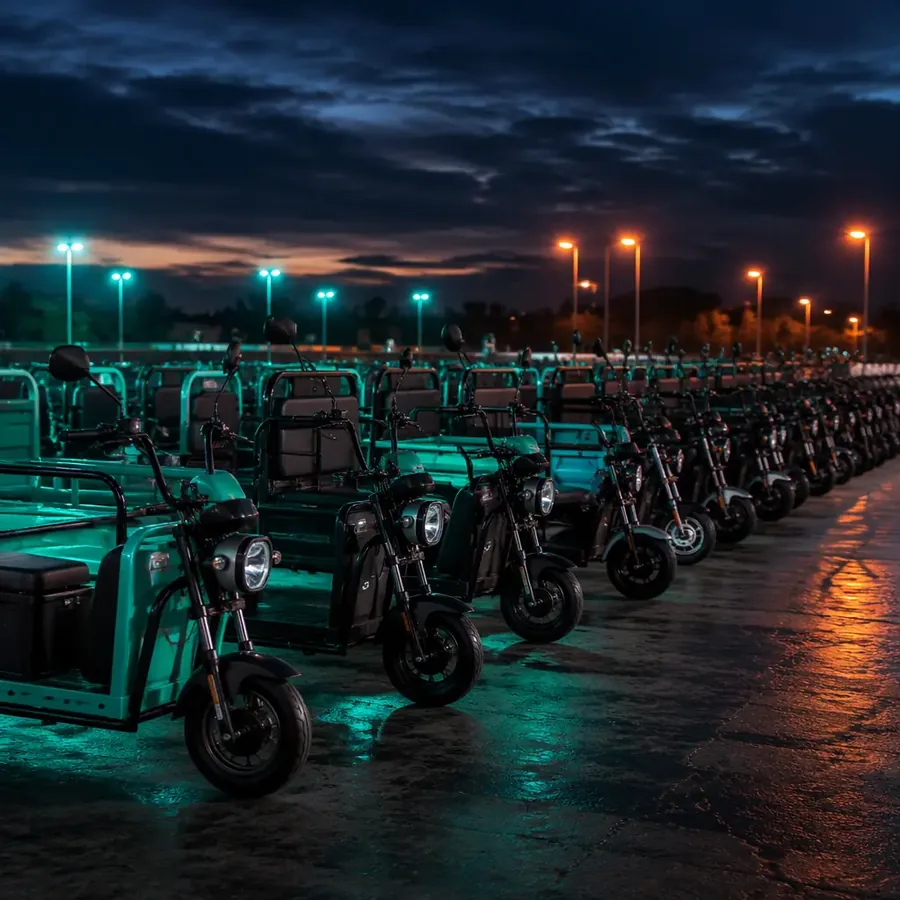
The used electric tricycle market is growing for a simple reason: the 2023–2025 wave of imported cargo and passenger trikes is reaching its first resale cycle, and a used trike at $600–$1,200 looks irresistible next to $1,450+ for a new one FOB China. The catch is that an electric tricycle is a battery with a vehicle attached. And the battery can be 40% of the total value, degrading invisibly until it fails. This guide is the inspection protocol we would run before paying for a used unit: battery health tests that take minutes, frame weld checks that find crash damage, drivetrain tests that expose a dying differential, the wear-item budget you should assume, and the paperwork that separates a legal import from a problem. It is written for dealers, fleet operators, and farmers buying their first used unit, not for flippers.
Why the Used Market Exists, and What It Means for You
Three forces created the used trike supply:
- First owners upgrading . The earliest buyers of China-imported trikes bought 800W units with smaller boxes; many are now trading up to 1200W / 72V builds with bigger payloads. Their old units enter the market with moderate miles and unknown maintenance histories.
- Failed businesses selling assets . Food-delivery and vending operators who overextended are liquidating trikes at steep discounts. These units are often the best value (low mileage) and the highest risk (maintenance shortcuts).
- Fleet rotation . Larger operators rotate vehicles at 12–18 months for reliability reasons. These units have documented service histories but real wear. The fleet economics that drive these decisions are in our cargo delivery fleet guide.
The opportunity: a well-inspected used trike delivers most of the utility of a new one at 50–70% of the landed cost. The trap: the battery, which you cannot judge by looking at it, decides whether the deal is a bargain or a $600 paperweight.
Battery Health: The 30-Minute Test That Decides the Deal
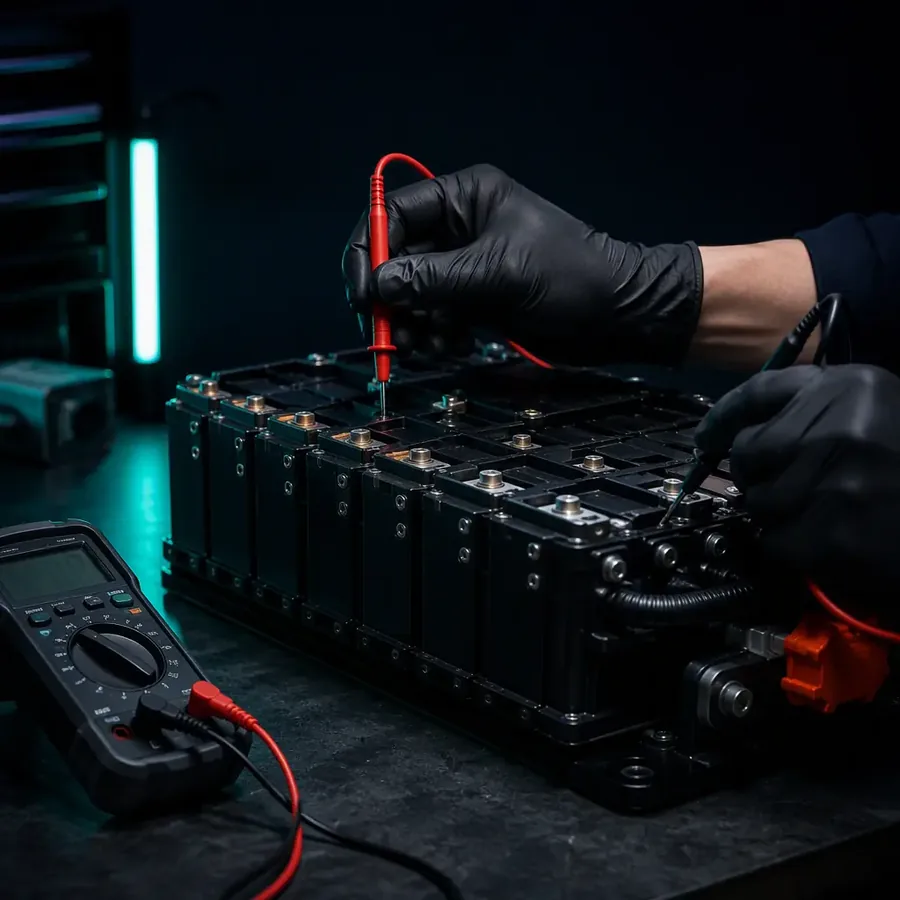
Never buy a used electric tricycle without testing the battery. The test protocol:
- Read the voltage cold . A 60V pack should sit at 60–67V when charged (3.0–3.35V per cell for NMC); a 72V LFP pack at 72–79V. A pack that reads full voltage but dies under load is the classic worn-pack signature.
- Full-charge capacity check . Charge to 100% on the stock charger and note the charge time and energy. A 60V 32Ah pack that takes 30% less time than the rated 6–10 hours has lost roughly that much capacity, the charger finishes early because the pack cannot hold what it used to.
- Load test . The decisive one: ride a known 2–3 km hill or acceleration loop and watch the voltage sag on the LCD. A healthy pack sags a few volts under load and recovers at rest. A worn pack drops 10+ volts, triggers the low-voltage cutoff, and recovers slowly. That is a replacement battery, and replacement costs $400–$800 for a 60V/72V pack.
- Check the BMS and charge port . A pack that will not balance, or a swollen/deformed case, is a safety write-off. Swelling is non-negotiable: walk away.
The chemistry background that lets you interpret what you see, LFP vs NMC aging curves, cycle life, and the BMS protections that matter, is in our e-bike and e-tricycle battery technology guide. The simple rule: budget a replacement battery into the price unless the load test is clean, and negotiate accordingly.
Frame and Welds: What Cracks on a Cargo Trike
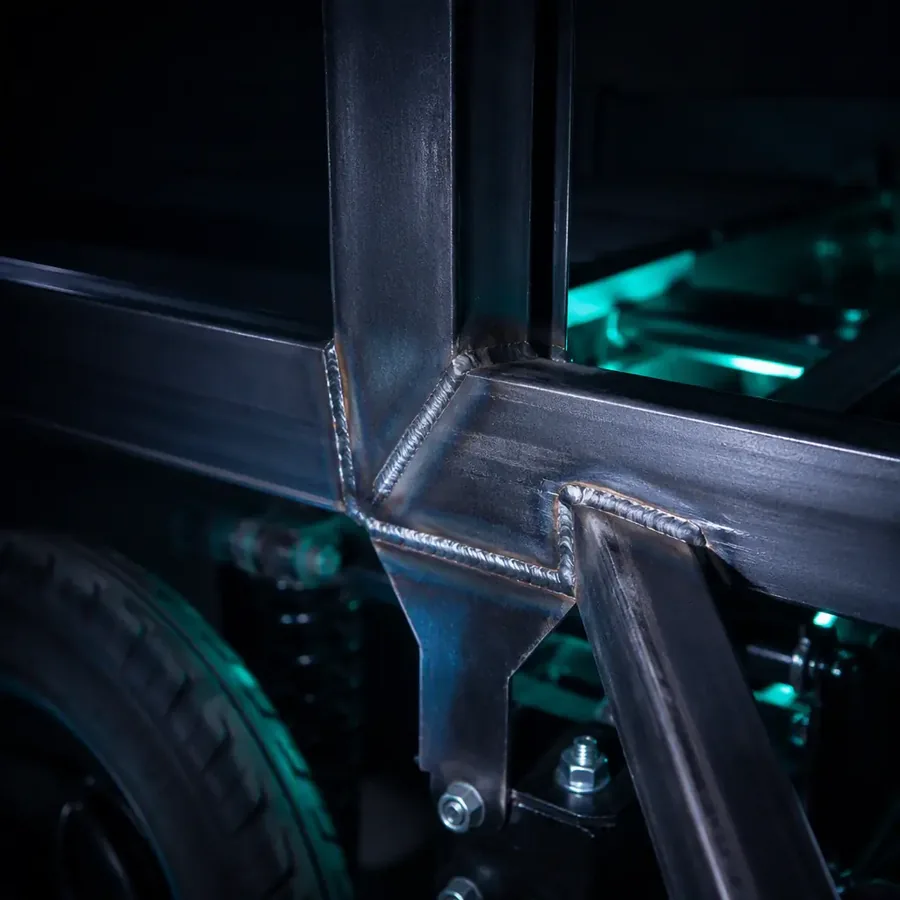
A cargo trike frame works harder than any e-bike frame: more mass, more torque, and three load paths instead of two. Inspection points, in priority order:
- Head tube and steering welds . A crack here is terminal. Look for paint cracks radiating from welds, which are the first sign of metal fatigue.
- Rear axle mounts . The rear axle on a dual-wheel trike carries most of the load. Check both mounting brackets for hairline cracks and check that the axle is straight (spin the wheels and watch for wobble).
- Cargo box mounts . The box brackets take the full payload bounce. Broken or re-welded mounts indicate a heavily overloaded history.
- Rust . Surface rust is cosmetic; rust flaking at welds or around the battery tray is structural. A trike that lived outdoors in a wet climate needs extra scrutiny (the salt-corrosion specifics are covered in our winter guide).
Bring a flashlight and look at the underside. Sellers rarely clean the frame bottom, and crash damage, bent lower tubes, replaced forks, mismatched paint, is most visible where nobody bothers to polish.
Drivetrain: Differential, Motor, and Controller
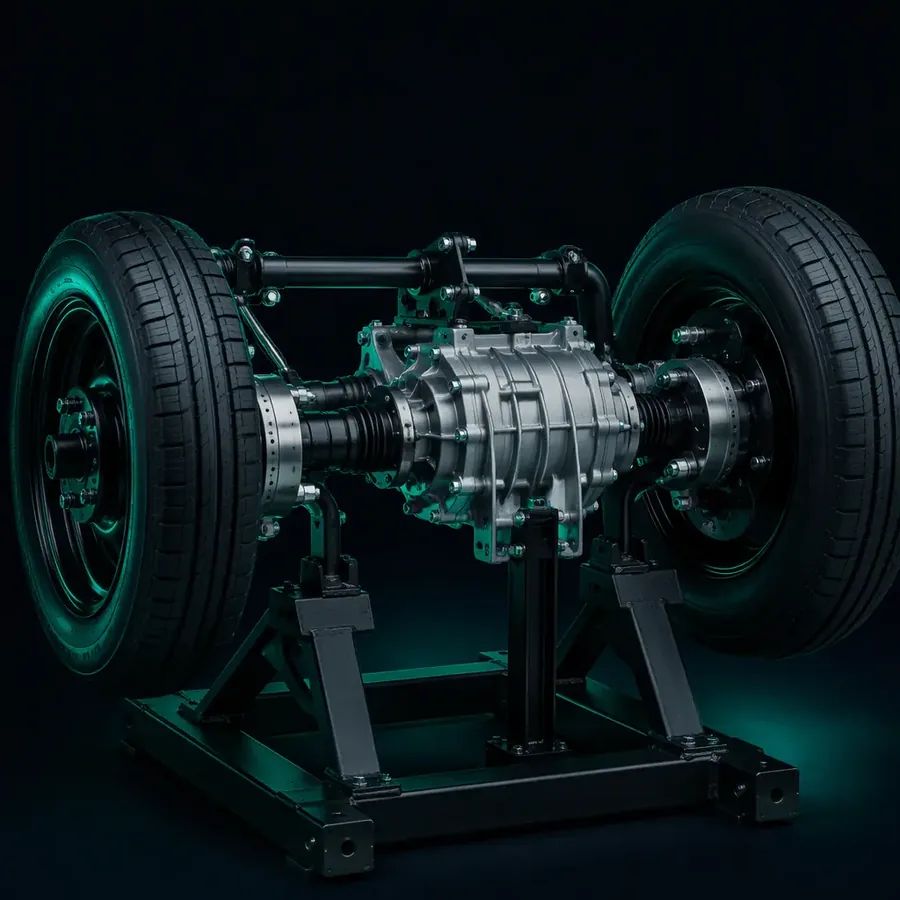
The drivetrain test separates a $700 fix from a $200 fix:
- Differential / rear axle . With the trike on a stand, spin both rear wheels by hand. The wheels should turn freely with the motor disengaged; grinding, clicking, or one wheel dragging signals a worn differential or bearings, a $150–$300 repair.
- Motor . Run the motor off the ground through the full throttle range. Listen for grinding (bearing failure) and feel for excessive heat after 2 minutes. An 800W–1200W hub motor that runs hot to the touch has an internal problem, not a load problem.
- Controller . Cycle through the LCD modes: speed, battery, and, on EMS-EBIKE-class trikes, the reverse gear and load display. Error codes that will not clear, or a throttle with dead spots, point to a controller replacement (~$80–$150).
- Regen and brakes together . Brake hard from 25 km/h: the hydraulic front disc should bite smoothly, the dual rear drums should hold, and the parking brake should hold the trike on an incline. The full brake service schedule for trikes is in our maintenance guide.
The motor power and torque expectations for the load class you intend, and whether an 800W unit is even the right starting point for your use, are covered in our cargo tricycle motor power guide.
Brakes, Tires, and the Wear-Item Budget
Assume the used trike needs a wear-item refresh, and price it in:
| Item | Inspection | Replacement cost (parts) |
|---|---|---|
| Front disc pads | Pad thickness < 2 mm = replace | $15–$30 |
| Rear drum shoes (pair) | Adjuster at max travel = replace | $25–$45 |
| Tires (3.00-12 / 3.75-12) | Wear bar visible or sidewall cracking | $60–$120 per set |
| Chain / final drive (if mid-drive) | Stretch test, rust | $30–$60 |
| Battery (60V 32Ah / 72V 40Ah) | Load test (see above) | $400–$800 |
Add these numbers to the asking price before you compare against new. A $700 trike with $500 of wear items and a questionable battery is a $1,200 problem; a $1,000 trike with a clean load test and fresh consumables is the actual bargain. The tire side of this math, what a used tire set tells you about the previous owner's maintenance, is in our cargo tricycle tires guide.
Paperwork: The Documents That Make It Legal
A used electric tricycle is only worth buying if you can own, register, and operate it. Demand, in writing:
- Certificate of origin and import paperwork . For imported units, the customs entry and the seller's right to sell. A trike without a clear import trail is a seizure risk at the border or at resale.
- Battery UN 38.3 / MSDS documents . Required to ship or register the pack; also the first sign a seller actually imported the unit properly. The full compliance checklist for imports is in our China import guide.
- Certification papers. UL 2849 (US) or EN 15194 (EU) documents if the unit was sold as compliant. Note that a used trike's legal class can differ from the original. The classification rules and state-by-state differences are in our electric tricycle laws guide.
- Title or bill of sale with VIN/serial . Match the number on the paperwork to the number stamped on the frame. Mismatched serials are the #1 red flag for stolen units.
If the seller cannot produce the battery and import documents, treat the price as a parts value, not a vehicle value.
Price Benchmarks: What a Used Trike Is Actually Worth
Realistic 2026 reference points for the common classes (US market, used, in running condition):
| Class | Typical used price | Condition expectation |
|---|---|---|
| 250W passenger trike (EU-style) | $400–$800 | Light use; battery often near end of life |
| 800W cargo trike, 300 kg class | $600–$1,000 | 1–2 seasons of delivery duty |
| 1000–1200W cargo trike, 500 kg class | $900–$1,600 | Fleet rotation units with service history |
| 72V / LFP builds | $1,200–$2,000 | Premium spec; verify LFP cold and cycle claims |
Compare these against the landed cost of a new unit. The full cost model, including container freight and duties, is in our import cost guide. The decision rule: buy used when the battery passes the load test and the frame is clean; buy new when you need warranty, predictable wear budgets, or an OEM-specified build . The argument for new in fleet contexts is made in our cargo e-tricycle OEM guide.
The 20-Minute Field Checklist
Print this and take it to every viewing:
- Cold battery voltage vs spec, then full charge time.
- 2–3 km loaded hill loop, watch voltage sag and cutoff.
- Frame welds: head tube, rear axle mounts, box mounts, underside rust.
- Wheels off the ground: free spin, differential noise, tire wobble.
- Full throttle off-ground run: motor noise and heat.
- Brake test from 25 km/h + parking brake on an incline.
- LCD modes, reverse gear, horn, lights, and wiring at the headset.
- Paperwork: origin, battery docs, certifications, VIN match.
- Wear-item budget math: pads, shoes, tires, chain, battery.
- Walk away if: swollen battery, cracked head-tube weld, or no documents.
Compare Against a New Cargo Trike Build
If the used market math does not add up, get a new-unit quote with full warranty, fresh 60V/72V battery, and documented load testing. Tell us your payload class and budget. We will send specs and FOB pricing for a comparable new build.
