
The last mile is the most expensive part of logistics, and in rural areas it is the worst. Parcel density is low, stops are 3–10 km apart, and the vans that serve city routes are oversized, expensive and fragile on village roads. Rural operators are finding what farmers and village merchants have known for a decade: the three-wheeler. An e-tricycle with a 300–500 kg payload covers 40–80 km of gravel, mud and pavement for cents of electricity, carries produce one way and parcels the other, and costs less than a single month of van payments. This guide covers the rural route economics, the terrain engineering, the charging reality outside the depot, and the regulatory picture for village deliveries.
The Rural Last-Mile Problem
Rural routes fail for structural reasons that no amount of route software fixes:
- Low stop density, 15–25 stops per day in a rural round vs 80–120 in a city. Fixed costs (insurance, payments, driver wage) spread over fewer stops push the cost per stop through the roof.
- Long deadheads . The return leg is often empty, and in a van it burns the same fuel as the loaded leg.
- Road condition . Gravel, washboard and seasonal mud punish van suspensions and tires; rural fleets budget 2× the tire spend of urban fleets.
- Van overcapacity . A 1,000 kg van carrying 150 kg of parcels is the industry norm on village rounds.
The trike removes the fixed-cost burden: no insurance class, no commercial plates in most states, and a $1,250–1,550 vehicle that pays for itself in months rather than years. The cost math against pickup trucks, the other rural workhorse, is in our trike vs pickup comparison.
Payload Math: Produce, Parcels and Supplies
A rural delivery trike earns its keep with three load types:
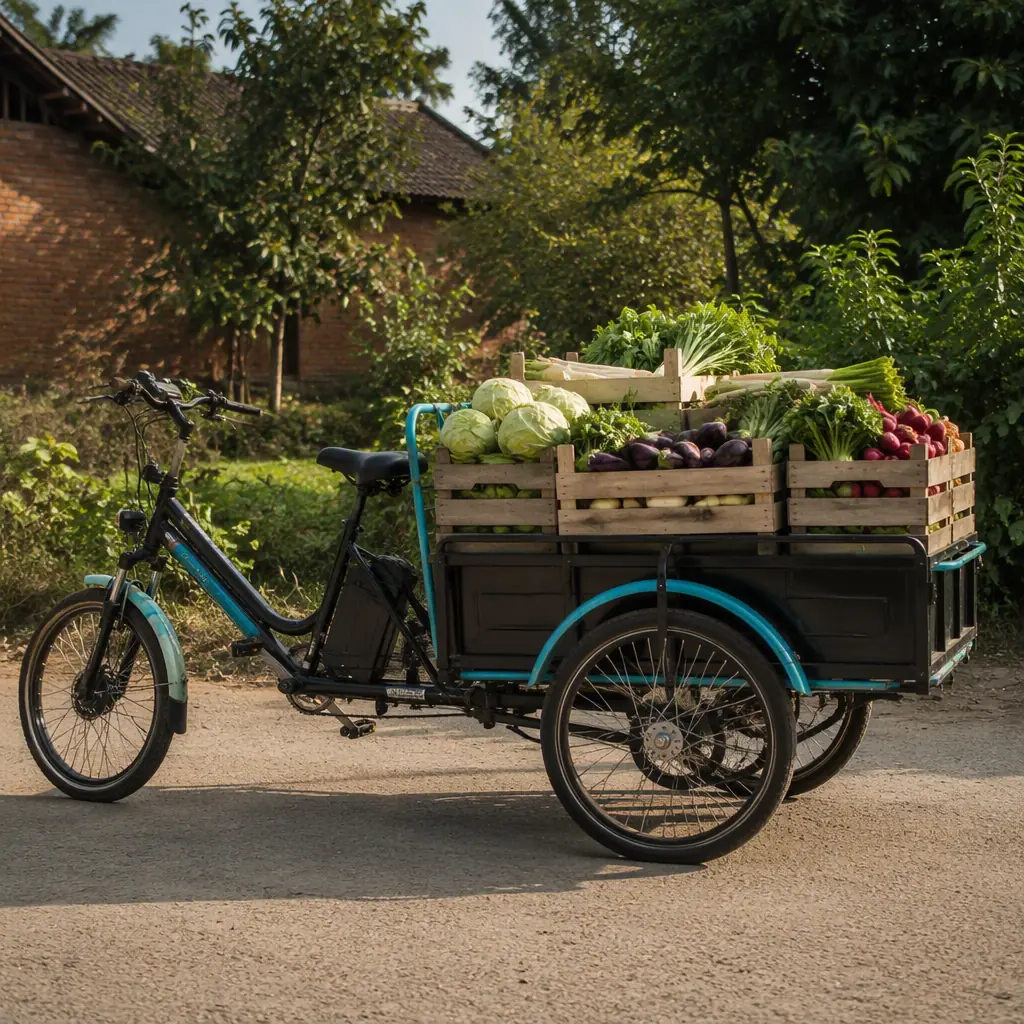
- Produce runs, 8–12 standard 25 kg crates fit the 300–500 L drop-side box, with the sides folded flat for bulk loading. A 400 kg load of produce is roughly €600–1,200 of farm-gate value moving per trip.
- Parcel rounds. 60–80 small parcels per trip in the fixed 250–300 L box with a lockable lid; the box keeps packages dry and secure while the rider is on the next stop.
- Shop and supply runs . Feed bags, hardware, fuel cans and village-store restock, the mixed-load case where the flatbed with stake sides shines.
The load cases on a farm are different again, fencing, feed and harvest loads, and we cover those separately in our farm and ranch guide, along with the solar-charging setups rural operators use.
Gravel, Gradients and Mud: Terrain Engineering
Rural routes are where cheap trikes fail and the export platform is built differently:
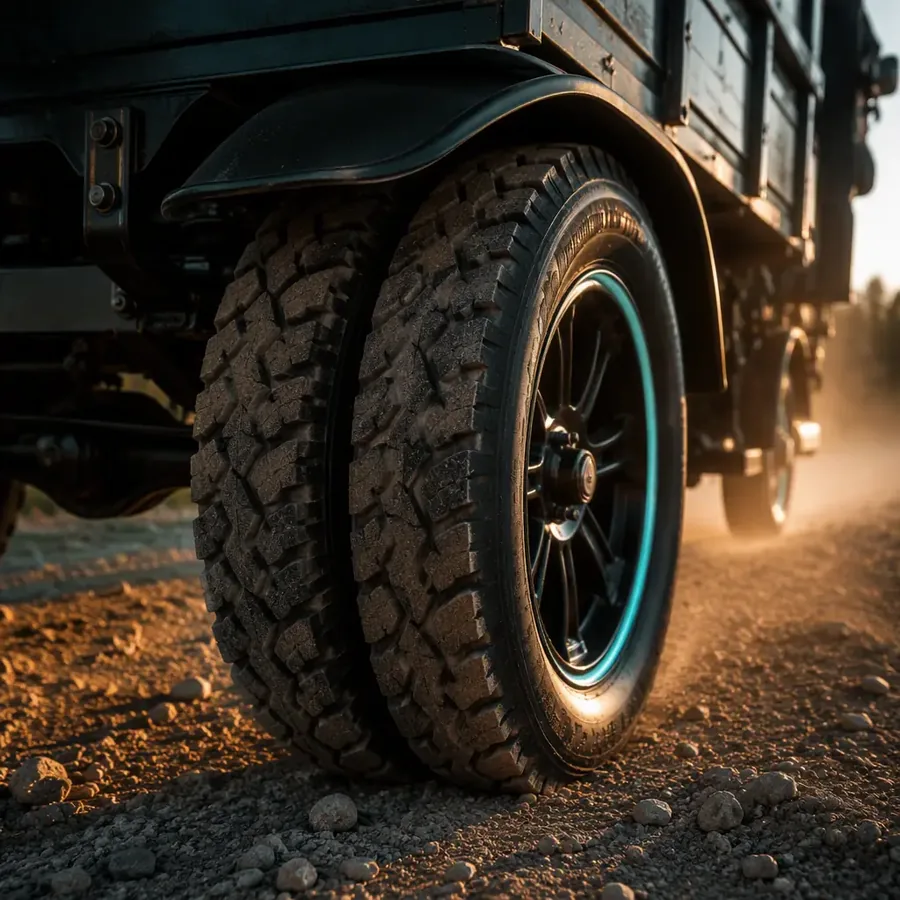
- Dual rear tires (3.75-12) . Two driven rear wheels spread the load and keep traction on gravel; the differential lets them work without dragging in corners.
- 1200W / 72V option for grades . Sustained 8–10° climbs at 500 kg need torque, not speed; the 1200W hub holds grade at full load where an 800W unit would sag.
- Hydraulic disc front + dual drum rear . Loaded trikes on downhill gravel need braking you can trust; drums are also nearly immune to mud ingress.
- Ground clearance . The platform clears 150 mm loaded, which handles rutted track and curb cuts; deep-mud work is the one case where we tell buyers to wait for the 4×4 utility vehicle instead.
Charging Without a Depot
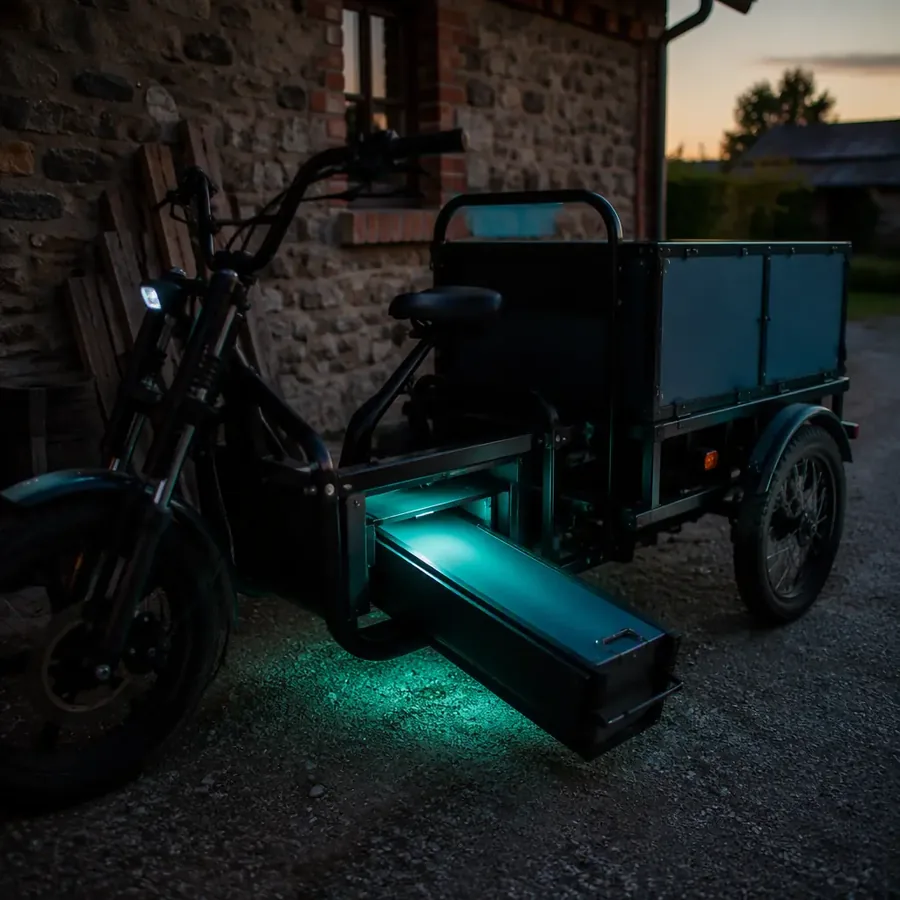
Rural operators rarely have a depot with a charging wall. The platform answers with swappable packs and a standard 5A charger:
- Swappable 60V 32Ah / 72V 40Ah packs . The lock-and-slide tray swaps in under a minute, so the rider charges at home, at the co-op, or at a farm outlet between rounds.
- Standard wall charging, 6–10 hours overnight from any 110/220V socket; no three-phase, no EVSE, no electrician.
- Solar-friendly . A 600W panel array with a basic charge controller covers a daily 2–3 kWh consumption in most climates; the setup is documented in our farm guide.
- Range reserve . The 72V pack’s 65–80 km at 200 kg payload covers a full rural round plus a 20% safety margin, which is the margin you want when the nearest socket is 15 km back.
The battery chemistry and cold-weather behavior that determine whether a pack survives five rural winters are in our battery technology guide.
The Rural Route Economics
For a 50 km village round, 6 days a week, the numbers separate cleanly:
| Cost line | E-tricycle | Diesel van |
|---|---|---|
| Vehicle (delivered) | $1,400 | $28,000 |
| Energy / fuel per year | $75 | $4,800 |
| Insurance per year | $150 | $1,900 |
| Service + tires per year | $220 | $2,600 |
| Cost per km | $0.02 | $0.42 |
At 15–25 rural stops per day, the trike’s per-stop cost is roughly a tenth of the van’s. The full TCO model behind these numbers: including the 5-year picture with battery replacement, is in our TCO comparison.
Regulations on Rural Roads
The rural regulatory picture is simpler than the urban one, but it still needs checking:
- Class 2 / 20 mph configurations . No license, no plate, no insurance in most US states, which is exactly why village operators prefer them; the state-by-state map is in our laws guide.
- EU village routes . The 800W/300 kg-rated configuration stays within the lighter vehicle envelope; the certification scope for faster classes is in our EU vs US certification guide.
- Farm-to-market crossings . Some counties require lights and a slow-vehicle triangle for crossing state highways; the export platform’s full LED package and optional warning-light bar cover the common requirements.
Sourcing for Rural Operators
Rural buyers usually start with one or two units and grow. The commercial baseline works for both: MOQ 50 at $1,250–1,550 FOB for container importers and dealers, while smaller operators typically buy through a local dealer who consolidates orders. The import path, HS code classification, container loading (48–54 knocked-down trikes per 40′ HQ) and landed cost, is in our import guide, and the story of why American buyers are importing these three-wheelers at all is in our three-wheeler boom analysis.
Spec a Rural Delivery Tricycle
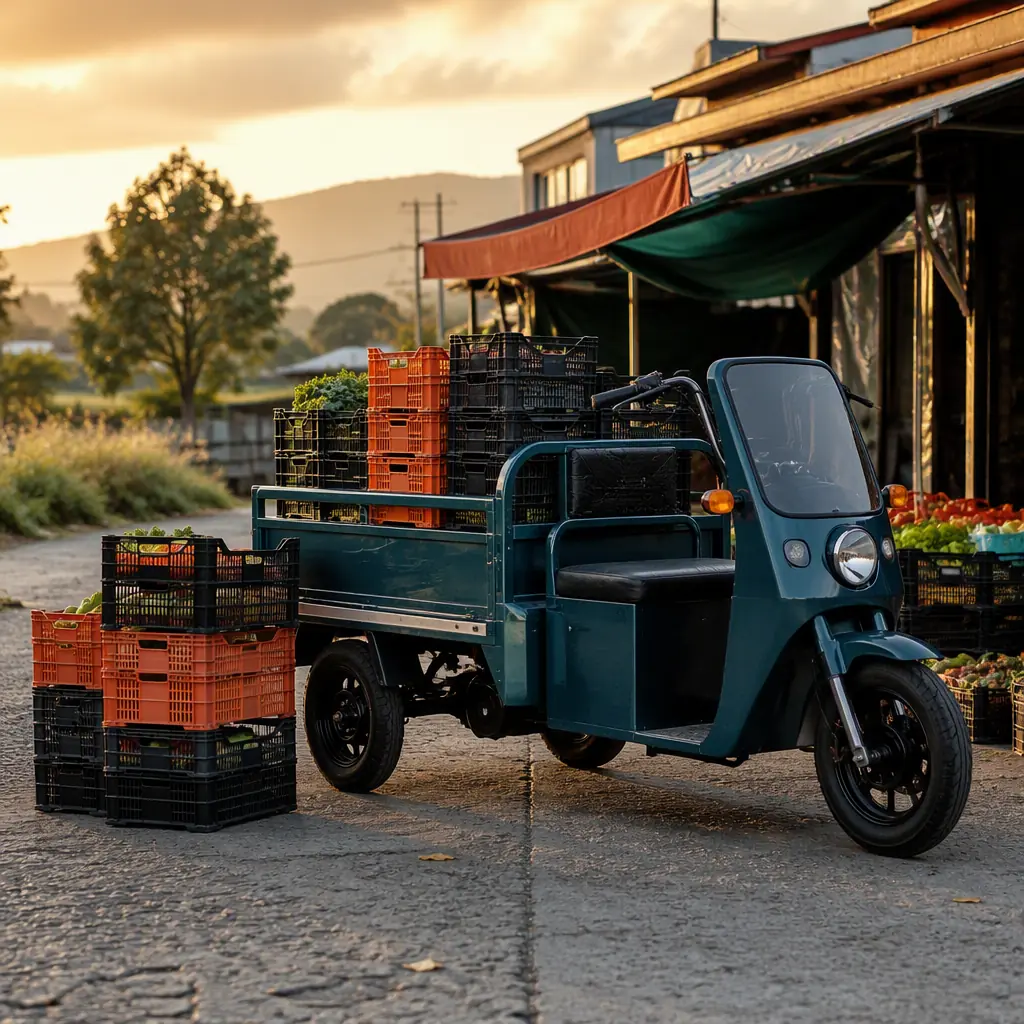
Tell us your route type (gravel, market runs, parcel rounds), typical loads and charging situation, and we will spec the motor, dual-rear-tire package, box and battery, with grade-climb and range data included in the sample phase.
