
There is a specific slice of the pet-care economy that a van cannot serve efficiently and a car cannot serve at all. Mobile pet groomers, veterinary house-call teams, animal rescue groups and rural livestock owners all move the same thing every day: an animal, its equipment, and a great deal of distance between stops, including often in neighborhoods, farm tracks and estate grounds where a full-size vehicle is overkill. An electric cargo tricycle answers the needs of this group better than any other vehicle in its price band. This guide covers how the category is used, what a pet-care operator actually needs to spec, and the OEM configuration that keeps a trike working through a full service day.
Why Pet Care Operators Are Switching to Three Wheels
The economics of pet care favor small, frequent, low-speed trips. A mobile groomer might run six house calls in a day across a suburb; a rescue group might move crates, feed and bedding between a foster network every afternoon; a veterinary clinic might need a second vehicle just for sample drop-offs and urgent supply runs. The common thread is that most of these trips are under 10 km and the cargo is light to moderate, precisely the operating window where an electric tricycle outruns a van on cost and a car on practicality.
- Purchase and running cost. A cargo e-tricycle lands around $1,350–1,700 FOB China, versus $40,000+ for a gutted delivery van. Energy is $0.30–0.60 per 100 km versus $9–14 of fuel. For a single-operator business, the difference is the profit margin.
- Ride quality the animal notices. Three wheels mean you never put a foot down and never balance a crate on a tilted two-wheeler. A low step-over lets a groomer load a 30 kg dog crate without lifting over a frame.
- Space where you need it. A tricycle slips down a driveway past parked cars and into a tight estate courtyard, then parks in a space a van cannot use. That shrinks every stop, so you fit more clients per shift.
The Three Jobs: Grooming, Veterinary, and Rescue Transport
Each pet-care segment configures the same platform differently. Understanding the split is what lets you buy one trike that covers two jobs, or order a fleet where each unit is purpose-built.
Mobile Grooming: The Box Is the Studio
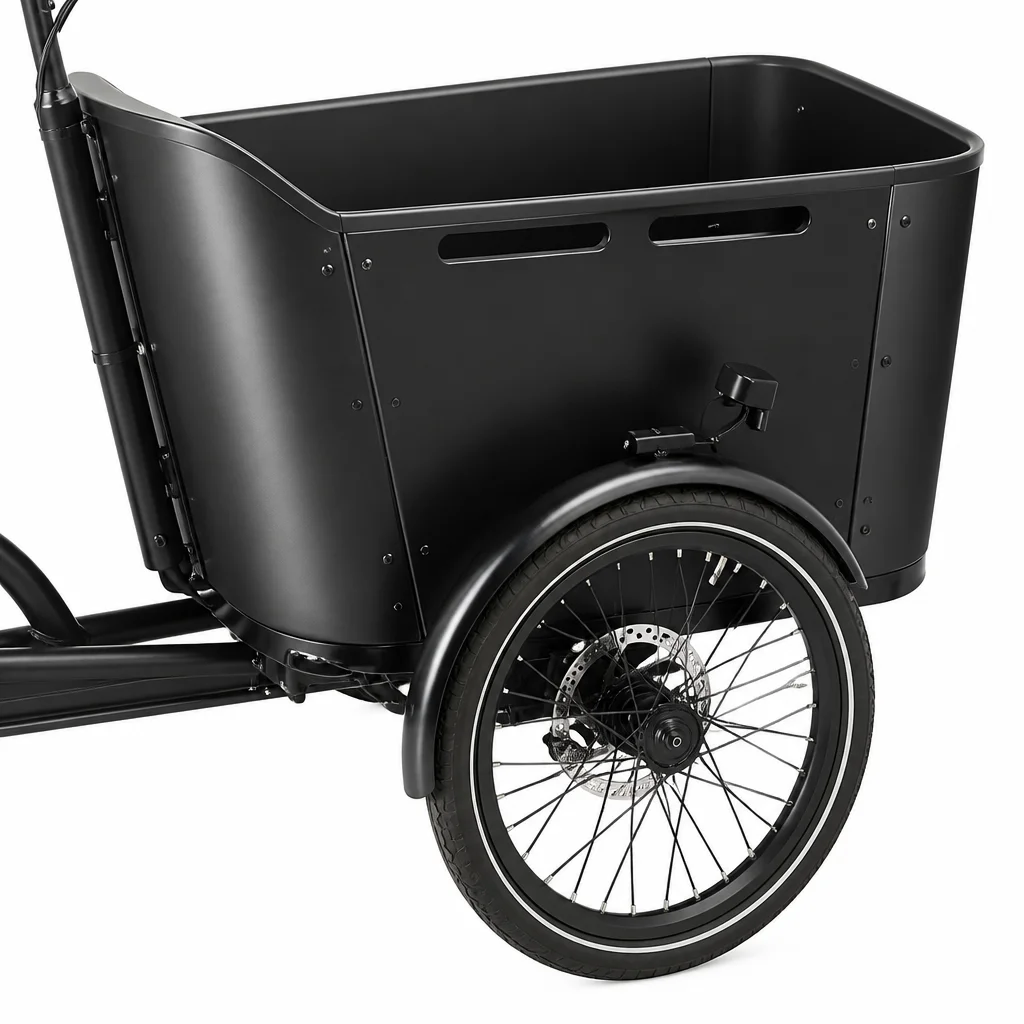
A mobile groomer's work happens at the tailgate. The optimum build is a mid-size cargo box with a flat, easy-to-clean bed, a fold-down ramp, and secure tie-downs for a crated dog, a water tank and a folding table. The 300 kg payload rating on an EU-classified unit handles a full van-equivalent kit: crate, dryer, clippers, shampoo, two 20 L water jugs, and a generator-free battery for the equipment. Power matters less than a smooth, vibration-free platform, so the suspension and tire spec matter more than raw watts. The ride-quality trade-offs of a three-wheeler are covered in our suspension guide.
Veterinary House Calls: Sample Runs and Emergency Kit
A vet house-call trike is essentially a mobile exam station. It needs a clean hard floor, a lockable cabinet for samples and sharps, a temperature-stable compartment, and the ability to hold a 40 kg patient crate on a grooved floor that cannot slide in a corner. Because clinics run multi-shift days, the battery and charging spec is the same discipline as any operating fleet, the full depot-charging layout is in our fleet charging guide.
Rescue and Shelter Transport: Volume and Security
Rescue groups carry the most awkward cargo: crates of varying sizes, feed bags, bedding, and sometimes a litter or an injured animal that must be kept flat and calm. The volume seller is a 150–500 L drop-side box with internal dividers, and the security requirement is the one feature that cannot be skipped, a lockable cargo cage. A trike left outside a shelter while a group does intake work will sit unattended; a lockable box and a parking brake are what stop a loaded trike from walking off or rolling. Brake and security duty is covered in our brake systems guide.
Spec Sheet: What a Pet-Care Trike Actually Needs
The right specification is tuned to a duty cycle of many short stops, frequent load and unload, and a live animal in the box. Here is the configuration that survives the job:
| Spec | Recommended | Why It Matters for Pet Care |
|---|---|---|
| Motor | 800W–1200W brushless hub | Torque to start from a stop fully loaded; an 800W entry keeps weight and cost down |
| Battery | 60V 32Ah NMC / 72V 40Ah LFP | 50–80 km loaded range covers a full service day without a midday charge |
| Payload | 300 kg (EU) / 500 kg (non-EU) | Crate, water, kit and a large animal together stay under the limit |
| Box | 150–500 L drop-side, flat bed | A folding ramp and flat floor turn the box into a washable work surface |
| Floor | Grooved, non-slip, sealed | Holds a crate in corners; wipes clean after an accident |
| Brakes | Hydraulic disc front + dual drum rear + parking lock | The parking brake is what keeps a loaded trike safe while you are inside |
| Security | Lockable cargo cage / box latch | Protects equipment and animals when parked outside |
| Ramp | Fold-down, 300 kg-rated | Lets one person load a heavy crate without a second pair of hands |
Motor sizing detail, the difference between an 800W and a 1200W unit on a loaded route, is explained in our cargo tricycle motor power guide, and battery chemistry for this duty is in the battery technology guide.
Stopping Safely With an Animal On Board
Pet-care routes are full of the most unpredictable stops: a dog bolting from a door, a cat turning on a driveway, a client's gate opening right into your path. Braking and stability are therefore not optional specs. They are the safety delta between a normal day and an incident. On a three-wheeler, stability comes from tracked wheels and a low center of gravity rather than balance, which is why the platform suits a distracting load with a live animal moving around inside it. The geometry and certification detail for this is covered in our safety features guide.
Certification and License Class for Pet-Care Trikes
Because pet-care routes cross residential streets and municipal roads, the legal class is decided the same way as any cargo trike: by speed and power. A 750W / 20 mph (32 km/h) throttle unit falls into Class 2 e-bike or local low-speed rules in most states, no license, no registration, no insurance. The US certification is UL 2849; the EU path is EN 15194 plus EN 50604 for the battery and UN 38.3 for transport. The full comparison of both markets is in our EU vs US certification guide.
How to Buy the Right Pet-Care Trike as an OEM Program
Whether you are a distributor supplying mobile groomers or a shelter fleet operator buying direct, the buying discipline is the same as any vehicle program. Confirm the MOQ . Typically 50 units assembled or 100 with full OEM color and decal work, then validate a sample on a real duty cycle before committing a container. The negotiation structure, sample strategy and lead-time expectations are the standard terms covered in our OEM buying guide.
The most useful two-week sample test for a pet-care trike is simple but frank: load the heaviest crate you actually carry, run a full day of stops, and watch three things. Whether the parking brake holds on a grade with a loaded box, whether the box floor wobbles a heavy crate sideways, and whether the range survives an unplanned detour. Spec your trike to pass those three checks and you have a vehicle your crew will actually use.
Spec a Pet-Care Cargo Tricycle
Tell us your route, box configuration and payload needs. We will quote the 800W–1200W cargo tricycle line with UL 2849 documentation, box and ramp options, and container pricing, FOB China.
