
Most cargo bike procurement problems do not start with the vehicle. They start with the supplier. A fleet that buys twenty trikes from a trading company with no test bench, no traceability records and no certification file will discover the gap months later — when a warranty claim arrives, an insurer asks for an EN 15194 or UL 2849 declaration, or a second batch arrives with a different battery pack than the sample.
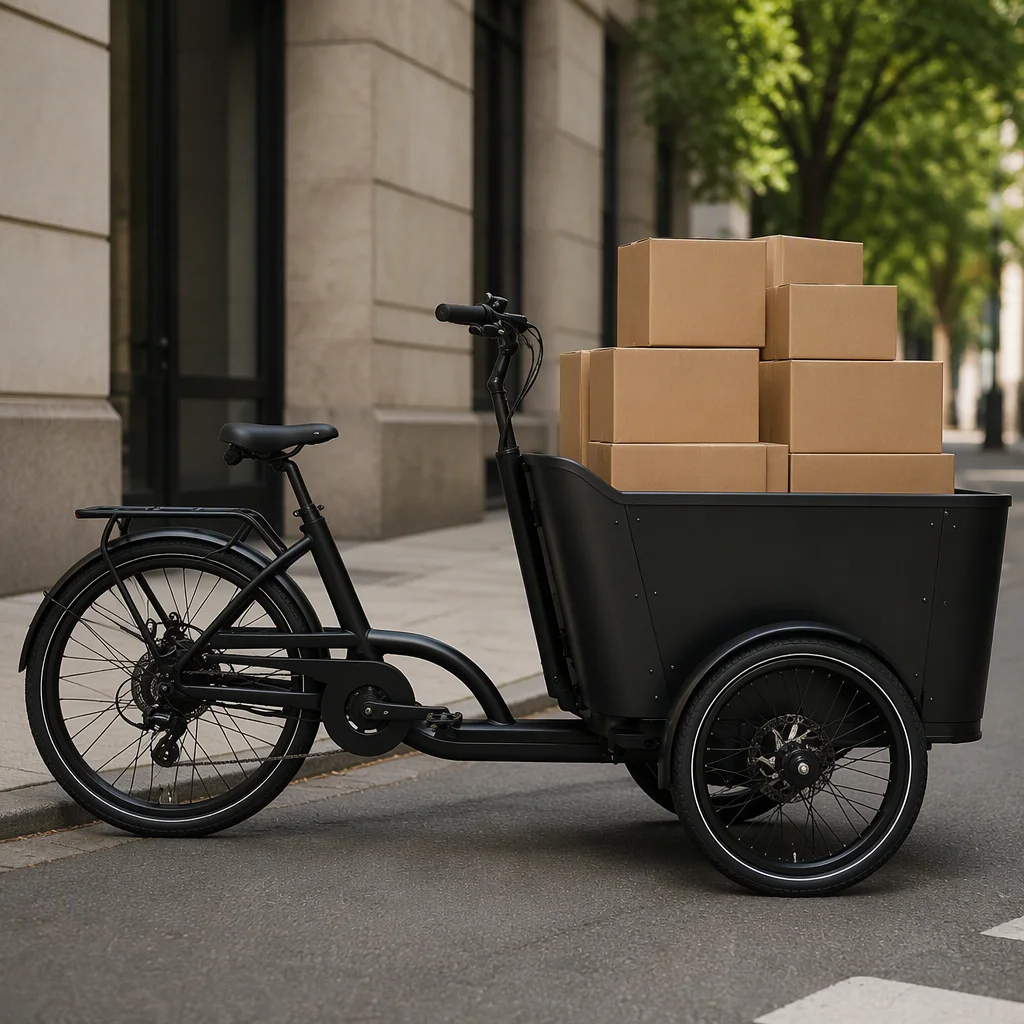
This guide is written from the buyer's side of the table. It sets out what a logistics fleet should verify — in the order you should verify it — before placing a first order, and it names the numbers a real supplier should be able to produce on request. Every threshold below is a specification our own quality system is built around, published so you can hold any supplier to the same standard.
Why Cargo Fleet Supplier Selection Is a Different Job
Consumer e-bike buying is a product decision. Commercial cargo fleet buying is a systems decision, and the supplier is part of the system. Three factors make it structurally harder than buying commuter bikes:
- Uptime is the business model. A rental or delivery fleet earns revenue per vehicle-day. One trike down for three weeks waiting on a proprietary part costs far more than the part.
- The insurance chain is audited. Fleet insurers increasingly require documented rack-strength and electrical compliance (ISO 11243, EN 15194, UL 2849) before underwriting a commercial policy. A supplier who cannot produce those documents stalls your cover.
- Batches must be identical. A commuter buys one bike. A fleet buys fifty. If batch two uses different cells, a different BMS firmware or a different brake caliper, your maintenance inventory doubles and rider muscle memory breaks.
The cargo & last-mile logistics hub covers the vehicle-side economics. This article covers the supplier-side verification.
The Six Gates: A Verification Sequence That Actually Works
Vet in this order. Each gate is cheaper than the next one to fail, so a supplier who cannot clear an early gate should be dropped before you spend money on samples.
Gate 1 — Ask for the Quality Documents Before the Sample
A supplier capable of commercial fleet work has a written QC flow. Ask for it in the first call and read it for specificity. Vague answers ("we have strict quality control") mean no system exists. Specific answers look like this:
- Incoming inspection standard and level. Ours is AQL 2.5 Level II on incoming material. Lithium cells are sorted for internal resistance and open-circuit voltage, with cells rejected outside a 3 mΩ internal-resistance window or a 0.02 V voltage delta.
- In-process checkpoints. Not a separate lab — inspectors stationed at assembly stages, with logged torque values on safety-critical fasteners. Reference values: handlebar clamp bolts 25 N·m, axle nuts 40 N·m, brake caliper mounts 18 N·m.
- Outgoing gate. Ours runs AQL 1.0 at final release, after a pre-IPQC pressure-decay leak test at 3 kPa for 15 seconds on the sealed battery compartment.
- Defect escalation. A defined trigger is the tell. Ours: sub-suppliers failing incoming inspection twice in a quarter trigger an on-site supplier audit within 14 days.
If a supplier cannot name their AQL level, ask why. If the answer is that they inspect "everything", they have no sampling standard — which means no defensible release criteria.
Gate 2 — Look for In-House Test Equipment, Not Outsourced Lab Slips
Anyone can mail a sample to a third-party lab once. A supplier who owns test benches can re-verify a changed component next month without a purchase order. Four benches matter for cargo platforms:
| Bench | What it verifies | Reference acceptance threshold |
|---|---|---|
| Motor dynamometer | Torque curve, power, efficiency across throttle range | ≥82% peak efficiency hub / ≥78% mid-drive |
| Battery thermal chamber | Charge/discharge cycling across temperature | 200 cycles at 45 °C, <15% capacity fade, per new cell supplier |
| IP water spray chamber | Sealing with electrical systems live | >1 MΩ insulation resistance at 500 V DC post-spray |
| Brake test bench | Stopping distance on a simulated 0.7µ surface | ≤4.2 m with 160 mm rotors, ≤3.8 m with 180 mm |
For a logistics fleet the brake bench matters more than riders expect: cargo trikes stop a loaded vehicle, and brake specification on a loaded trike behaves differently from an unladen commuter. A supplier who cannot state a stopping-distance target is guessing.
Gate 3 — Verify the Payload Number Is an Engineering Figure
Payload claims are where marketing and engineering diverge most sharply. A credible payload rating is derived from a limiting component, not chosen for a brochure. Ask which part sets the limit, then check that the running gear matches.
Our cargo platform runs a 300 kg EU / 500 kg non-EU payload split — and that split is a chassis-rail and axle-set limit, not a marketing number, which is why the two figures differ by market rather than by model. The supporting specification is what you should compare against a competing quote:
- Motor: 800 W / 1000 W / 1200 W brushless hub with differential, 60 V or 72 V system
- Battery: 60 V 32 Ah NMC or 72 V 40 Ah LFP, swappable, heavy-duty BMS
- Braking: hydraulic disc front, dual drum rear, plus parking brake
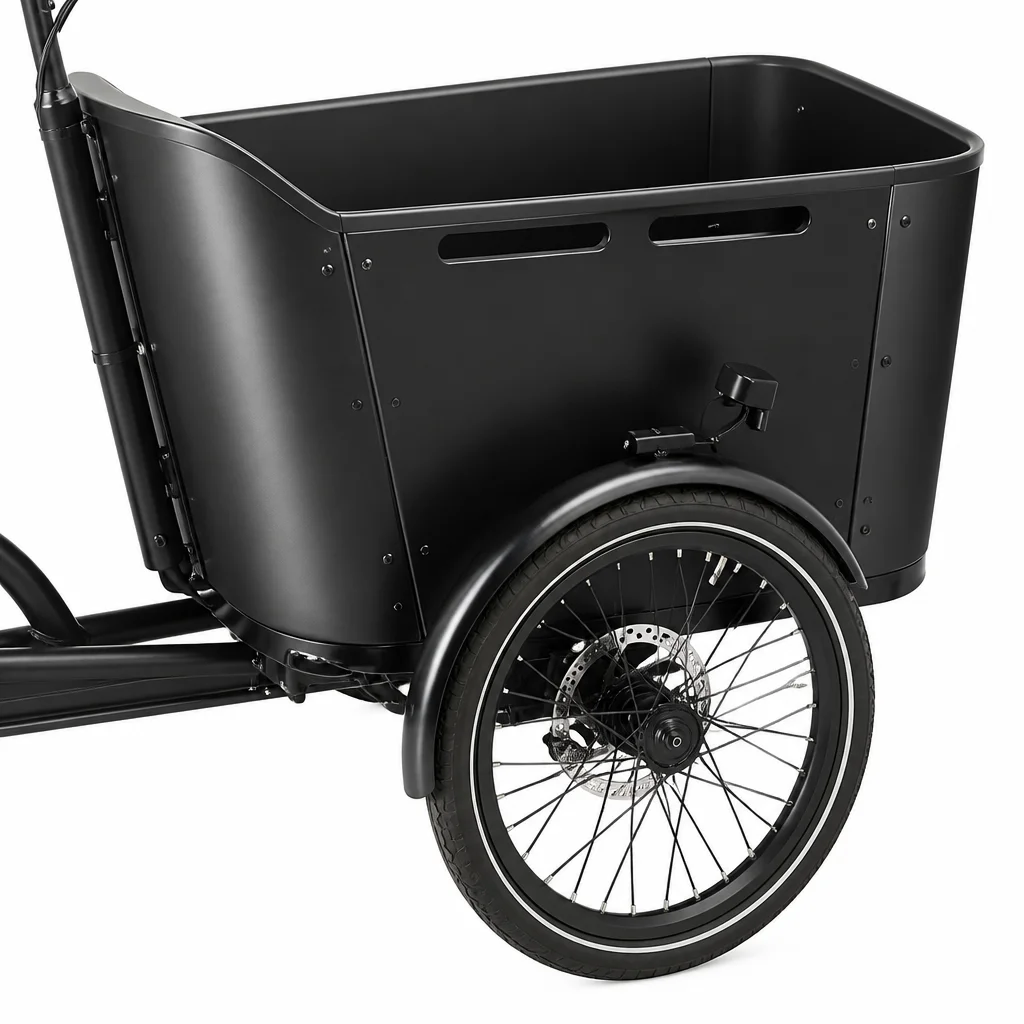
- Tyres: 3.00-12 front and dual 3.75-12 rear — a twin-rear-wheel layout that carries load without a differential steering compromise
- Box: 150–500 L with drop-sides; insulated sandwich panel for cold-chain duty
Make the supplier state the derating condition too. A 300 kg rating applies at a defined grade and speed; our published range of 50–80 km assumes 200 kg payload on flat ground. A supplier who quotes payload and range without stating the test condition is selling you a number, not a capability. See payload capacity limits for how the four limiting systems interact.
Gate 4 — Test the Traceability Story with One Question
Traceability is the single most predictive question in the whole vetting process, because it reveals whether the factory records data or just claims to. The question: "If I report a battery failure on one vehicle eighteen months from now, what can you tell me about that unit?"
A supplier with batch-level traceability answers concretely: the vehicle serial number resolves to the arriving cell batch, its internal-resistance test values, the spot-welding station, and the QC checkpoints the unit passed. A supplier without it answers with a warranty policy instead of a data path.
For a fleet, this connects directly to spare parts and after-sales planning: traceable batches are what let you decide between a targeted recall of one batch and a blanket replacement of the fleet.
Gate 5 — Confirm the Certification File Ships With the Order
Certificates are not a sales attachment; they are part of the deliverable, and they must be issued by licensed labs rather than generated in-house. Ask for the file list at RFQ stage and check it covers your market:
| Document | Market / scope |
|---|---|
| EN 15194 / EN 50604 | EU electrically power-assisted cycles and battery systems |
| UL 2849 / UL 2271 | North America electrical system and battery standards |
| eMark (ECE R136) | Type-approval route where the vehicle is homologated |
| UN 38.3 | Lithium battery transport — required to ship at all |
| CE (Machinery & EMC), RoHS 2015/863, FCC | EU / US market access and restricted substances |
Two details separate a real file from a decorative one. First, RoHS and REACH SVHC declarations should be maintained per component revision — a declaration that predates a component change is worthless. Second, originals should be available for review in your RFQ call, with the supplier handling market-specific re-verification when your order targets a regulated lane. For the practical differences between the two main frameworks, see EU vs US certification.
Gate 6 — Interrogate the Commercial Terms Against the Factory Schedule
Commercial terms should be explainable by the production schedule. If a lead time does not decompose into real steps, it is a guess.
| Term | What to ask | Reference answer |
|---|---|---|
| MOQ | Per model or per mixed container? | 50 units on cargo platforms (pack-level components run higher) |
| Lead time | Deposit to container, or deposit to production start? | 15–30 days; add ~10 days for custom box fabrication |
| Price basis | FOB band by specification grade | $1,250–1,550 / $1,580–1,880 / $1,880–2,250 depending on motor and battery grade |
| Incoterm | FOB, CIF or DDP — and who clears customs | All three offered; DDP shifts clearance to the supplier |
| Payment | Deposit against what milestone? | Tied to BOM freeze and sample approval |
Compare quotes on an identical specification or the numbers are meaningless. A lower FOB band usually reflects an 800 W/60 V NMC build; the 1200 W/72 V LFP grade sits in the top band. Our BOM cost breakdown shows where each dollar sits, and the import guide covers what happens after FOB. Packing is part of the same conversation — ask for the packaging standard, since a fleet order crosses 40+ days at sea: our cartons are 7-layer BC-flute rated to 1,200 kPa burst, with 30 mm moulded PE foam at 28 kg/m³ density and steel-reinforced 1,100 × 1,100 mm pallets rated to 1,200 kg static load.
Red Flags: Suppliers to Walk Away From
Most failing suppliers are identifiable before sampling. Any one of these is enough to keep looking:
- No test equipment, only lab reports. A report is a point-in-time artifact. Without benches, nothing can be re-verified after a component change.
- Payload and range quoted without a test condition. Numbers without a stated grade, load and surface cannot be compared or held to.
- Certificates offered "after order". If the file cannot be reviewed at RFQ stage, it either does not exist or will not cover your market.
- Sample cannot be traced to production. If the supplier will not show the actual line your order will run on — cell-level sorting and all — the sample and the shipment may come from different places.
- No named engineering contact. A fleet order needs one accountable person for specification changes. A trading company with a sales-only desk has no one to escalate to.
What to Put in the RFQ
Send the supplier a specification sheet, not a request for price. An RFQ that forces an apples-to-apples answer includes:
- Duty cycle: daily drop count, average parcel weight, route distance, max gradient.
- Payload target with the derating condition you will actually operate at.
- Box or body requirement: volume, lockable or open, insulated or ambient, swappable modules or fixed.
- Voltage and chemistry preference — 60 V NMC versus 72 V LFP changes cost, cycle life and cold-weather behaviour.
- Certification set required for your market, named explicitly.
- Target market and monthly volume so the supplier can price MOQ and container loading honestly.
- After-sales expectation: spare parts list, wear-part pricing and response window.
Our cargo e-tricycle OEM guide and the OEM buying guide expand each line; the courier & parcel RFQ checklist is the delivery-specific version.
The Cheapest Time to Verify a Supplier Is Before the Deposit
Every gate in this sequence costs you a conversation or a document request. Every gate you skip converts into a warranty claim, an insurance hold, or a spare-parts problem that compounds across fifty vehicles. A supplier who can produce AQL levels, bench thresholds, traceability paths and a certification file at RFQ stage is a supplier whose engineering matches their sales promise.
If you are building a logistics fleet and want the verification pack up front — quality manual, bench thresholds, certification list and a specification sheet for the 300 kg EU / 500 kg non-EU cargo platform — send us your duty cycle and target market. Our export engineers respond within one business day with a vehicle specification, a total cost of ownership model and a container-optimised shipping plan.
Get the Verification Pack Before You Place a Deposit
Send us your duty cycle, payload target and destination market. Our logistics engineers will return a vehicle specification for the 300 kg EU / 500 kg non-EU cargo platform, a total cost of ownership model, the quality and certification file list, and a container-optimised shipping plan — free, typically within one business day.
