
When a fleet buyer or a distributor lines up an e-tricycle or e-bike OEM program, the helmet rarely makes the first draft. The battery, the motor and the cargo box get the attention; the helmet is an afterthought that arrives at the end as a “do we bundle one?”. That is the mistake. A helmet is the single most visible branding surface a rider carries, it is the one line in the safety bundle that a market regulator actually certifies, and it is the item that turns into a returns problem when it is not sized and certified for the destination country. On this platform the accessory range is built so a safety kit and the vehicle are ordered from the same factory, against the same export file, a helmet family spanning half-face, open-face (jet), full-face and modular (flip-up) shells in ABS, polycarbonate or carbon-fibre composite, with multi-density EPS liners and configuration to ECE 22.06 (EU), CPSC 1203 (US), DOT FMVSS 218 or CCC (China) depending on the market. Every shell is impact-tested to the standard your market requires, and test reports ship with each batch. This guide walks through the certification decision, the shell and fit spec, and what to write on an OEM helmet order so the kit survives the first season.
Why the Helmet Is the Legal Gate on an E-Tricycle Sale
An electric tricycle or a fast e-bike is not a bicycle for the purposes of safety gear. In Europe a three-wheeler is an L-category vehicle and a speed-pedelec is treated differently from a slow city bike, and in the US the distinction between a Class 1, 2 and 3 e-bike changes the safety expectation a buyer has. That regulatory split, and where the helmet fits inside it, is the subject of the EU vs US certification guide, and the plain-language version of the riding rules is in the e-tricycle laws guide. What matters for a B2B program is simpler than the legalese: the helmet has to carry the certification mark of the country it is shipped into, or a dealer cannot legally put it on a rider’s head and a fleet operator will not accept it. A motorcycle-standard helmet sold into an EU market without ECE 22.06 is not a minor miss. It is a non-compliant SKU. The full safety case a factory should make is laid out in the safety features guide; the helmet is the wearable half of that story.
ECE 22.06 vs CPSC 1203 vs DOT: Which Standard, Which Market
The cert is a market decision, not a quality ranking. There are five standards in common play and each is tied to a destination:
| Standard | Market | Typical scope |
|---|---|---|
| ECE 22.06 | EU / ECE members | Speed-pedelecs, L-category & scooter helmets |
| CPSC 1203 | United States | Bicycle & e-bike helmets |
| DOT FMVSS 218 | US (motorcycle) | Full-face & higher-speed use |
| CCC | China | Mandatory domestic sale |
The decisive question is what class of vehicle the helmet will cover. A courier trike topping out around 25–35 km/h, or a pedelec-assisted cargo bike, sits in CPSC 1203 / pedal-cycle territory in the US and ECE 22.06 in the EU. A faster machine, or a full-face shell used on an L-category vehicle, often pulls in DOT (FMVSS 218). Because a single helmet platform can be built to any of these, the whole point of an OEM program is that you pick the cert per market and the factory configures the shell, liner and test documentation to match, so one product family serves a EU fleet and a North American dealer without carrying two separate SKUs for the same shell.
Shell, EPS and Vents: What Actually Protects the Head
Three things define how a helmet absorbs an impact. The shell spreads the load: ABS is the standard, polycarbonate is a step up for weight and impact, and carbon-fibre composite is the premium option with the best strength-to-weight ratio, the difference matters over a 8–10 hour delivery shift, not just a crash. The EPS liner is multi-density expanded polystyrene, tuned so the layer nearest the shell crushes first while the denser inner layer keeps the head decelerating over a longer distance. The ventilation is a front chin vent, a top crown intake and a rear exhaust, which is what stops a rider pulling the helmet off on a humid route. The rest of the vehicle’s safe-operation story, brakes, lights, stability and the systems that keep a laden trike upright, is in the safety features guide, which is where the head protection and the chassis protection meet.
Sizing and Fit: The Silent Return Driver
More helmets come back for a bad fit than for anything else, and a bad fit is usually a sizing gap, not a shell problem. The range runs XS (53–54 cm) up to XXL (63–64 cm) across six sizes, and the shell weight sits in a 800–1400 g band depending on the model and material.
| Size | Head circumference |
|---|---|
| XS | 53–54 cm |
| S | 55–56 cm |
| M | 57–58 cm |
| L | 59–60 cm |
| XL | 61–62 cm |
| XXL | 63–64 cm |
The retention system, micrometric ratchet or double D-ring . Decides how the helmet stays put once it is on, and it is partly a market preference: the ratchet is the dealer-friendly quick release, the D-ring is the track-standard that some markets still expect. Spec the size range as a full run, not a one-size shell, and the returns rate on the first container drops sharply. The routine a fleet should run on helmets and the rest of the kit over a season is in the maintenance guide.
Visor, Liner and Ventilation: The Comfort That Keeps Riders Wearing It
Insurance claims do not come from riders who wear a helmet; they come from riders who do not, and nobody wears a helmet they dislike. The visor is scratch-resistant polycarbonate with UV400 and an anti-fog coating, with a quick-release hinge so a scratched or fogged shield is swapped in seconds rather than forcing a whole-shell return. The interior liner is removable, washable and hypoallergenic with moisture-wicking fabric, which across a fleet that sweats eight hours a day is a genuine spec. A non-removable liner is a hygiene and resale liability. A chin curtain, breath deflector and Pinlock insert-ready visor are all available, and these are the comfort items that separate a helmet a delivery rider accepts from one they leave on the handlebars.
OEM Customization: The Visible Brand Touchpoint
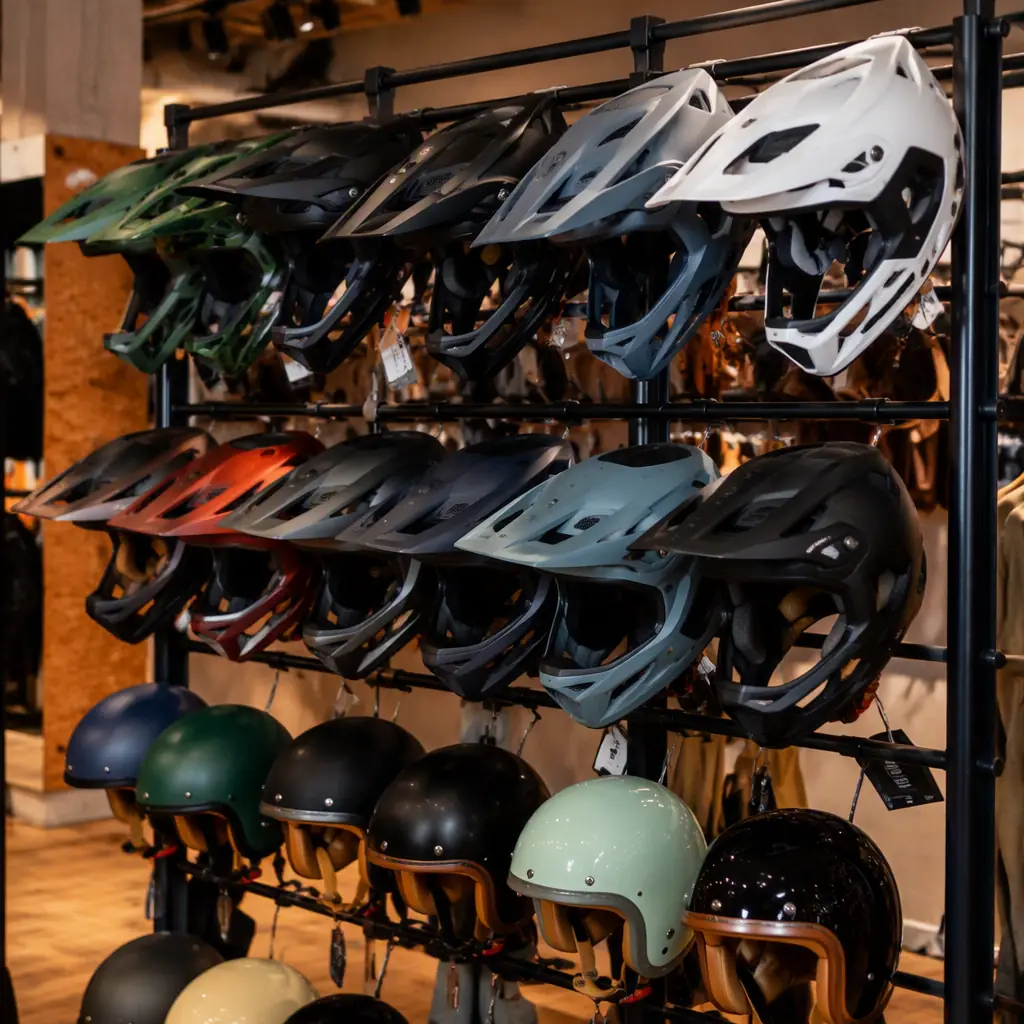
On a vehicle, the brand lives on the frame and the cargo box. On a rider it lives on the helmet, and the graphics studio handles everything from a single-colour logo placement to a full-wrap multicolour design with Pantone-matched colour across the production run. The OEM dropdown is deep: shell graphics, visor tint (clear / smoke / mirror / iridium), interior fabric colour and pattern, strap type, accessory pack inclusion (chin curtain, Pinlock, carry bag), packaging (individual box with EAN barcode or bulk), pad-set colour, glove logo and helmet-bag material. Because the lids sit on the driver’s head in every photo, a matching helmet range is the cheapest brand impression a fleet buys. The same pairing discipline that keeps the motor and controller working as a matched set applies here. The helmet and the vehicle should be ordered together so colours and branding line up.
The Compliance File and What to Request
Certification planning runs per standard and per market, and everything is assembled for the destination before shipment. For a head-protection item this is not a nice-to-have, it is the whole order. Ask the factory for the compliance set that matches the market, ECE 22.06, CPSC 1203, DOT FMVSS 218 or CCC . And the test documentation for it. For the matching protective gear, knee and elbow pads are built to CE EN 1621-1 with a hard shell and foam construction, and the riding gloves are goatskin or synthetic with touchscreen-compatible fingertips and knuckle protection, so a whole safety kit can ship as one documented line. Understanding where the helmet standard sits against the vehicle standard is the same certification conversation covered in the EU vs US guide . A helmet for a Class 3 e-bike and a helmet for an L-category tricycle are not always the same lid.
Cost, MOQ and Lead Time in an OEM Helmet Line
As a line item a helmet is low cost next to a battery, but it unlocks the whole safety bundle and it is a recurring consumable, fleets replace them, and dealers restock them. In an OEM configuration the helmet family starts at a 50-unit MOQ per model with a 15–30 day standard lead time and 30–45 days for a first custom-branded run. Pre-production samples ship before mass production, which is the right way to check fit and graphics on a real head before 500 units land. For a distributor the commercial logic, bundling, margin, and reorder cycles, is in the dealer & distributor guide, and the wider OEM program that the complete safety kit slots into is described in the cargo e-tricycle OEM guide.
What to Put on a Helmet in an OEM Spec Sheet
Write the helmet down the same way you would write the motor or the pack, and the surprises stop before they ship:
- Destination certification: list the market, ECE 22.06, CPSC 1203, DOT FMVSS 218 or CCC, and request the test reports for your own filing.
- Shell type and material: half-face, open-face (jet), full-face or modular, in ABS, polycarbonate or carbon-fibre composite.
- Size run: XS–XXL and whether you want a single size or a full range per market.
- Retention: micrometric ratchet or double D-ring, and the dealer versus track preference for your market.
- Visor spec: tint (clear / smoke / mirror / iridium), anti-fog, UV400, quick-release.
- Liner: removable, washable, hypoallergenic, moisture-wicking, non-negotiable for a fleet.
- Branding: logo placement, full-wrap graphics, visor tint, pad-set colour and packaging.
- Kitting: whether to include knee/elbow pads (CE EN 1621-1), gloves and a carry bag in the same box.
- Samples and QC: confirm pre-production samples and the per-batch impact-test report.
Treating the helmet as a certified, sized, branded line rather than an impulse add-on is the same after-sales discipline that keeps a fleet serviceable over several seasons, the spares and out-of-box philosophy is in the after-sales & spare parts guide. When the lid and the vehicle come from the same factory and the same export file, the safety story on the invoice is coherent, compliant and ready to defend.
Spec a Helmet for Your Market
Tell us the destination market, the vehicle class and how many riders you need to cover, and our export engineers will send an ECE 22.06 / CPSC / DOT helmet recommendation with the size run, graphics and lead time. So you can price the safety bundle before you commit.
