
“What is the market for electric scooters and tricycles?” is the wrong question to ask a supplier, because the answer is a single number that tells you nothing about what to build. The question an import buyer actually needs answered is narrower: which segment am I selling into, how many units does that segment move, and which platform do I order to serve it? This guide breaks the micromobility category into the four scooter segments and the two tricycle segments that buyers actually order against, with the platform specs that match each one.
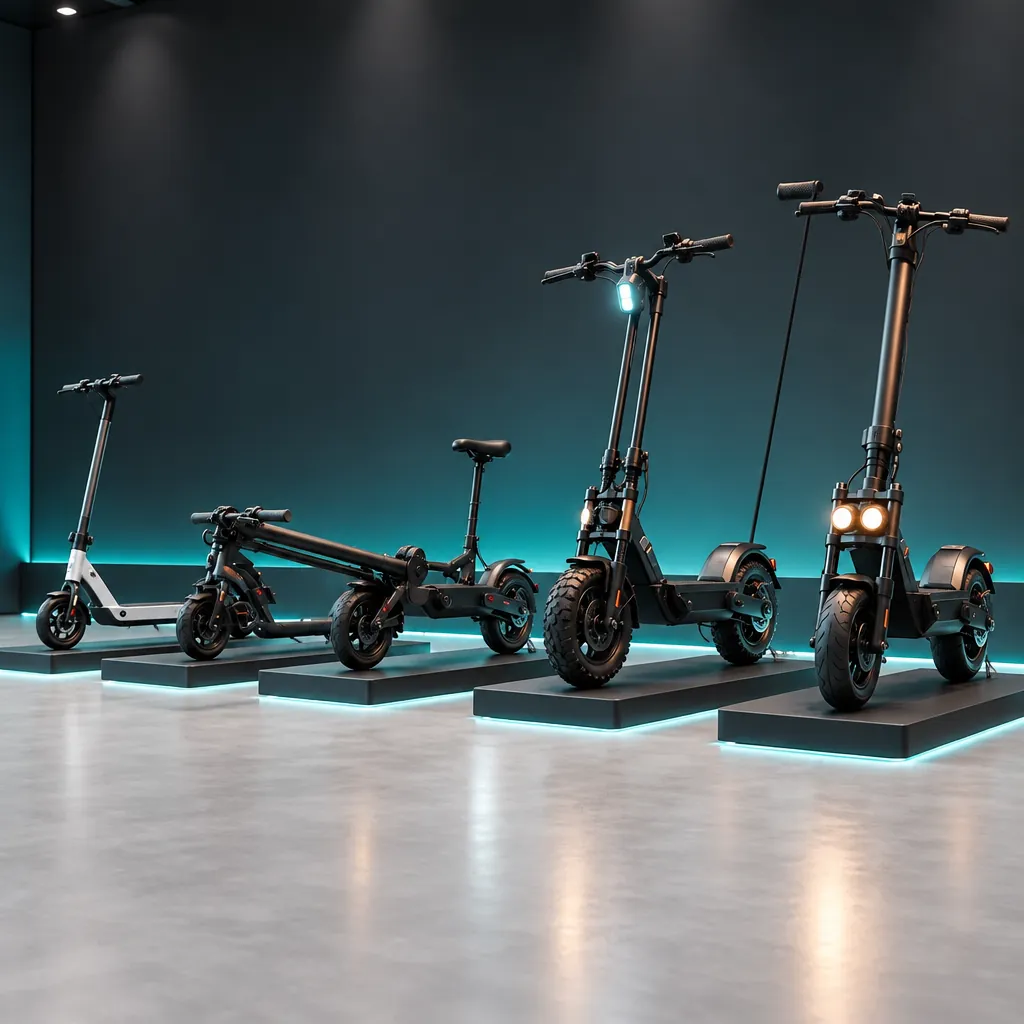
The reason segment-first sizing matters: a 500W city scooter and a 2,000W dual-motor performance scooter share a category name and nothing else. They share no battery architecture, no compliance path, no retail price band and no buyer. Ordering against a category average gets you a container of the wrong vehicle. Ordering against a segment gets you a line that turns.
Why "The Micromobility Market" Is Not a Buying Signal
Category-level market figures are published constantly and are useless at the order desk. They aggregate a €280 foldable commuter and a €2,400 performance machine into one number, then report a growth rate that is the weighted average of two completely different demand curves. Segments do not move together. When commuter demand softens on fuel prices falling, shared-fleet demand can hold because it is driven by city permits and operator capex cycles, not consumer discretionary spend.
What a buyer can actually act on is segment-level demand structure — three inputs that each map to an ordering decision:
- Demand driver — what makes a unit get bought. This tells you whether your segment is cyclical or resilient, and therefore how much inventory to hold.
- Replacement cycle — how long a unit stays in service before it is replaced. This sets your recurring revenue and your spare-parts volume, and it determines how much of your margin has to fund warranty.
- Compliance path — which standard the segment must clear in your destination market. This is a hard filter: it eliminates platforms before price is even discussed.
Below, each segment is laid out against those three inputs, followed by the platform spec that serves it.
Segment 1: The Commuter Scooter — Volume, Price-Led, Replacement-Driven
Demand driver: first-and-last-mile substitution. The buyer is replacing a walk, a bus leg or a car trip of under 8 km. Demand is highly price-elastic and swings with fuel cost, transit reliability and parking cost. This is the highest-unit segment and the lowest-margin per unit.
Replacement cycle: short. Commuter scooters are frequently treated as semi-disposable — two to three seasons of regular use before deck, battery or folding hardware degrades the value below repair cost. That short cycle is the segment's real economic feature: it drives repeat purchase, which is why commuter is the segment where a dealer relationship beats a one-off container.
Compliance path: EN 17128 for EU market placement, UL 2272 for the US. The 25 km/h ceiling is a design constraint, not a limitation to engineer around — exceeding it changes the vehicle class and the approval route.
Platform to order: the City E-Scooter platform is built for exactly this segment. It runs a 250W / 350W / 500W brushless hub motor (front or rear wheel drive on a 6061 aluminum alloy deck with an integrated battery bay), on a 36V 10Ah / 36V 13Ah / 48V 10Ah removable deck pack, delivering 20–40 km in ECO mode at a 75 kg rider load. Three motor tiers across four battery capacities is the point: it lets you hold one frame and chase the budget commuter and the premium fleet-grade commuter without a second tooling spend.
The Foldable E-Scooter platform serves the sub-segment where storage, not range, is the constraint. At 10–13.5 kg with a one-click folding latch that collapses stem and handlebar in under three seconds, it targets multimodal commuters — the rider who needs the unit to disappear into a trunk, a locker or under a desk. Spec is 250W / 350W front hub on 36V, with 36V 7.5Ah / 36V 10Ah packs giving 15–30 km. Order this platform when your market's deciding question is “where do I put it,” not “how far does it go.”
Segment 2: The Shared Fleet — Permit-Driven, Capex-Cycled, Durability-Led
Demand driver: city permits and operator expansion capital. This segment does not respond to consumer sentiment at all; it responds to municipal micromobility tenders and to whether an operator's existing fleet is hitting its utilisation target. Order volumes here are lumpy and large — 500 to several thousand units in a single commitment — which makes it the segment where a supplier's QC documentation matters more than unit price.
Replacement cycle: the shortest of any segment in practice, not because the vehicles fail but because street duty is brutal. Units are parked outdoors, ridden by riders with no ownership stake, and exposed to vandalism and curb impact. An 18-month street-duty life is the planning assumption that a fleet's TCO model should carry, and it is the single most common number operators under-estimate.
Compliance path: UL 2272 and EN 17128 for the vehicle, plus local operating permits that are granted per city rather than per country. The permit is the gate: a fleet that cannot document its battery and electrical safety will not be licensed, regardless of spec.
Platform to order: fleet orders are specified around swappable battery architecture and serviceability, not top speed. The requirement set that operators contract on is covered in detail in our shared scooter fleet economics guide, which models revenue per scooter per day and the 3-year TCO against an 18-month vehicle life.
Segment 3: Off-Road — Rental and Adventure, Torque-Led
Demand driver: rental fleets and enthusiast retail in terrain-rich markets. This segment's buyer is not commuting; they are riding trails, farm tracks and fire roads, often as a paid experience. Demand concentrates in tourism regions and correlates with outdoor recreation spend rather than with urban transport policy.
Replacement cycle: medium-to-long, but with high consumable turnover. The frame and motors are over-built for the duty; the wear items — tires, suspension seals, brake pads and the battery — drive the maintenance cost line. The economic model is closer to a rental asset than a consumer durable.
Compliance path: more fragmented than commuter. Off-road units frequently sit outside the EN 17128 road-placement route entirely, and where they are used on public land the local land-management rules govern, not the vehicle standard.
Platform to order: the Off-Road E-Scooter platform pairs a reinforced 21 cm wide deck with dual suspension delivering 135 mm of travel, available in 1000W single-motor or 1000W+1000W all-wheel-drive dual-motor configuration on 48V or 60V, with 48V 18Ah / 60V 20Ah removable or integrated packs. All-wheel drive is the spec decision that defines the segment: it is what makes loose-surface traction credible, and it is the line item that separates a rental-grade unit from a commuter unit dressed in knobby tires.
Segment 4: Performance — Premium Enthusiast, Margin-Led
Demand driver: enthusiast discretionary spend, above roughly €1,200 retail. This is the smallest unit segment and the highest-margin one. Buyers in this segment compare specifications against each other, so component brand — cell manufacturer, brake brand, controller architecture — is a purchase driver rather than a footnote.
Replacement cycle: longest of the four. Enthusiast owners maintain and upgrade rather than replace, which converts the aftermarket into a genuine revenue line and makes spare-parts supply a contract term rather than an afterthought.
Compliance path: moped-class rules apply in most EU markets once the unit exceeds 25 km/h, which pulls in helmet requirements and in some markets type approval. This is the segment where getting the compliance path wrong is most expensive, because the retail price band means a single impounded container is a material loss.
Platform to order: the Performance E-Scooter platform is the flagship of the lineup — 2000W×2 / 3000W×2 dual brushless hub motors on 60V with 6,000W peak output, 11-inch tubeless road tires, a 60V 20Ah / 60V 25Ah LG or Samsung cell pack feeding a dual-BMS architecture, and 70–80 km/h with NFC and app integration. The dual-BMS architecture is the spec that matters at this price band: it is what keeps a single cell-string fault from taking the whole pack out of service on a machine whose owner expects it to work every time.
The Two Tricycle Segments That Sit Alongside Scooters
Tricycles are a separate order decision and should not be sized with scooter demand, even though GSC and search data lump them together. Two segments carry the volume:
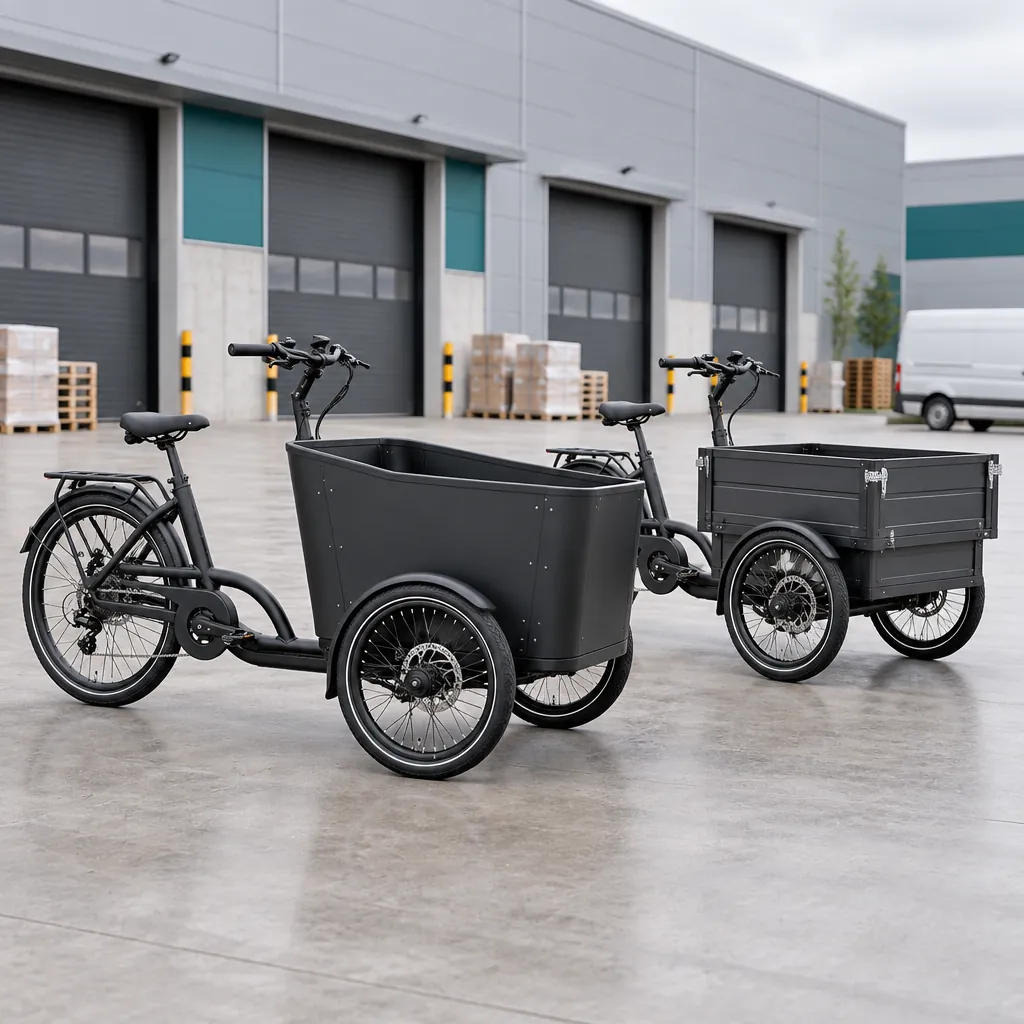
Cargo and utility tricycles are the commercial-work segment: last-mile parcel and grocery delivery, farm and ranch duty, construction and landscaping, waste collection and vending. Demand is driven by labour cost and route economics, not by consumer sentiment, which makes it the most resilient segment in the category. The platform is the cargo tricycle — 800W / 1000W / 1200W brushless hub motors with differential, 60V 32Ah NMC or 72V 40Ah LFP packs, 300 kg payload for the EU configuration and 500 kg outside the EU, 150–500 L drop-side boxes, hydraulic disc front with dual drum rear braking, on 3.00-12 front and 3.75-12 rear wheels. For the demand structure behind this segment, see our cargo tricycle market forecast.
Passenger and accessibility tricycles are the people-carrying segment: tourism rental, taxi and shuttle duty, and adaptive mobility for riders who cannot balance a two-wheeler. Demand here is demographic and regulatory. Tourism rental scales with visitor volume and is highly seasonal; adaptive mobility scales with reimbursement frameworks, which in most markets means the buyer is an institution or a funded individual rather than a discretionary consumer. Our passenger tricycle rental guide covers the fleet specification for the rental side, and the adaptive tricycle guide covers the standards and funding route for the accessibility side.
How to Size a Segment Before You Commit to a Container
Segment selection is a four-step filter, and each step eliminates platforms before price enters the conversation:
- Fix the compliance path first. Determine the destination market and the speed class, then list which standards the unit must clear — EN 17128 and UL 2272 for scooters, EN 15194 and UL 2849 for pedal-assist, UN 38.3 for the battery pack in every case. This step alone removes platforms from consideration. Our EU vs US certification comparison maps the two regimes side by side.
- Identify the demand driver, and classify it as cyclical or structural. Fuel price and discretionary spend are cyclical; city permits, labour cost and reimbursement frameworks are structural. Sell into a structural driver if you want predictable reorders.
- Set your replacement-cycle assumption, then check it against warranty cost. A 2-year commuter cycle and an 18-month fleet cycle both mean your margin has to carry a warranty reserve. A unit priced with no reserve is a unit that loses money in year two.
- Match the platform to the segment, then confirm the voltage tier. Motor wattage is the headline, but battery voltage is the architecture decision that locks in range, charging time and cost. The trade-off is laid out in our 60V vs 72V comparison.
One market-specific caution on sizing: do not import a unit-count forecast from a different speed regime. A market with a 25 km/h ceiling and a market with a 45 km/h moped class have entirely different addressable bases, because the second admits riders who will not buy a vehicle they cannot keep up with in traffic. Segment sizing that ignores the speed class is off by multiples, not percentages.
What This Means for Your Order
If you are ordering one container to test a market, order the commuter or cargo platform. Both have structural demand drivers, both have short replacement cycles that generate reorders, and neither requires you to win an enthusiast argument on component spec. If you are ordering against a fleet tender or a tourism operator, the fleet and passenger platforms are the right entry — but bring a documented QC and after-sales commitment, because those buyers contract on service continuity, not on unit price.
What is worth avoiding is the mixed container. Buying across three segments to “cover the market” splits your MOQ across platforms, leaves you without volume pricing on any of them, and puts your compliance documentation into three separate approval tracks. Pick the segment, size it against the four-step filter above, and put the whole order behind one platform.
Match a Platform to Your Segment
Tell us your destination market, speed class and target retail band. We will map the right scooter or tricycle platform to it and send the spec sheet, compliance documentation and pricing tier for that segment.
