
Public-sector fleets are the most overlooked buyer in electric mobility, and one of the most valuable. Municipalities, police departments, parks agencies, postal operators, and public utilities are under binding climate targets, and a growing share of their vehicle budget is being converted from light trucks and mopeds to e-bikes. The procurement is different from commercial buying: it runs through formal tender processes with published scoring criteria, multi-year warranty demands, and supplier qualification requirements that would disqualify half the factories in China on paperwork alone. For OEM suppliers and their importer partners, the public channel rewards preparation: the tender documents tell you exactly what will be scored, and a compliant, documented response wins even when the price is not the lowest.
Why Public Fleets Are Converting to E-Bikes
The conversion is being driven by four forces that are measurable in every tender we see:
- Climate targets with deadlines. EU municipalities must cut fleet emissions under national climate laws; many US states and cities have adopted zero-emission fleet mandates with specific vehicle-class deadlines. E-bikes are the fastest way to decarbonize the light-vehicle segment of a municipal fleet.
- Cost pressure on fuel and maintenance . A municipal light truck costs $0.30–0.60 per mile to operate; an e-bike runs $0.02–0.05 per mile. Public fleet managers publish these comparisons in their own tender justifications.
- Urban access rules . Low-emission zones and congestion schemes are restricting combustion vehicles in city centers, which pushes municipal services (parking enforcement, inspection, mail) onto bikes and e-bikes.
- Federal and EU grant programs . Procurement subsidies (including EU cohesion funds and US federal grants for clean fleets) reimburse a share of e-bike fleet purchases, making the tenders larger and more formal.
The typical public tender that results is for 20–500 units with a 3–5 year service contract, smaller than a commercial fleet order, but with a reliability that commercial buyers rarely match: public agencies pay on schedule and reorder.
How Public Procurement Works: RFQ/RFP Mechanics
Public buying runs on published procedures, and each stage has a spec implication:
- RFQ (Request for Quotation) . Used for standardized, low-risk purchases below a value threshold. The award is usually lowest compliant price. Spec implication: match the published spec exactly, down to the battery capacity and tire size; a non-compliant bid is rejected without discussion.
- RFP (Request for Proposal) . Used for larger or more complex fleets. Proposals are scored on published criteria (typically 30–50% price, 20–40% technical merit, 10–20% service and warranty, remainder local content or social value). Spec implication: the technical proposal is where a prepared supplier wins against cheaper bids.
- Framework agreements . Multi-year purchasing vehicles where a supplier is pre-qualified and agencies place call-offs against the framework. Winning a framework position is the highest-value outcome in public procurement: it converts one tender into years of recurring orders.
- Evaluation and scoring . The evaluation panel tests the sample (ride, battery range under the published test cycle, brake performance) and verifies documentation. The scoring matrix is published in the tender; build the bid to the matrix line by line.
The negotiation structure and payment terms for public contracts differ from commercial OEM deals. The commercial-side mechanics (MOQ, samples, payment terms) are covered in our OEM buying guide, while this guide focuses on what changes when the buyer is a government.
Specs That Win Tenders
Across the public tenders we see, five specs dominate the evaluation matrix:
- Durability and serviceability . Public fleets run hard and expect a 5+ year service life. The tender will ask for frame fatigue certification, IP ratings, and a documented service plan. A factory that can produce fatigue test data and a service-parts catalog has a decisive advantage.
- Battery warranty and range under a defined test . Tenders specify a range test cycle (e.g. 40 km at 20 km/h average with 100 kg load) and demand a 2-year battery warranty. The battery engineering that makes those numbers defensible is in our battery technology guide.
- Telematics and fleet management . Public agencies want GPS tracking, usage analytics, and maintenance alerts on every unit. The telematics-hardening and management-console requirements overlap with commercial fleets, see our shared fleet guide for the vehicle-side lessons.
- Operator ergonomics . Police and municipal staff ride in uniform, in all weather, for full shifts. Step-through access, 100+ km of range, integrated lighting, and weather protection are scored items, not options.
- Spare parts and service infrastructure . Tenders require a local spare-parts stock and a repair turnaround commitment (often 48–72 hours). The supplier's service network is scored as heavily as the vehicle in most RFPs.
What Agencies Actually Buy: Fleet Configurations
Public fleets are not one product, they are several configurations sharing a platform:
| Agency | Typical Config | Key Specs | Volume Pattern |
|---|---|---|---|
| Police / security patrol | Step-over patrol e-bike | 750W (US) / 250W (EU), 80–120 km range, telematics, high-vis lighting | 10–100 units per force |
| Parks & ranger services | Trail-capable e-bike | Mid-drive, suspension, cargo rack | 5–50 units |
| Municipal maintenance | Utility e-bike with racks | 100+ kg payload capacity, 48V 17.5Ah pack | 20–200 units |
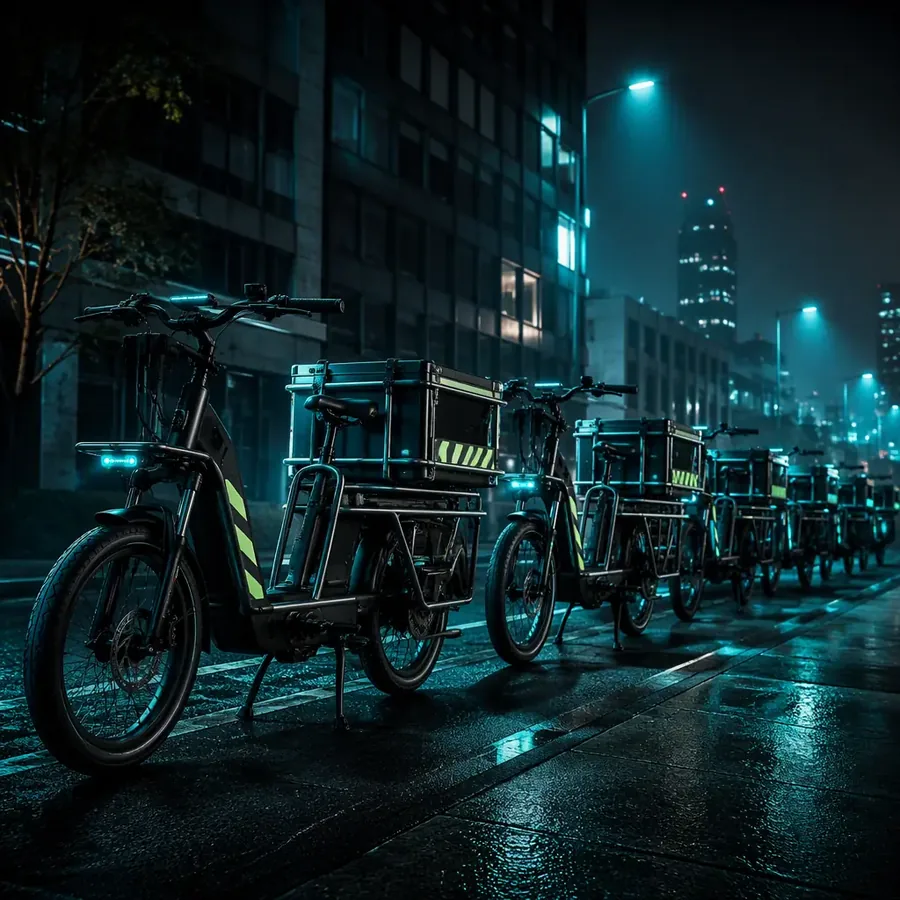
| Postal & parcel delivery | Cargo e-bike / e-tricycle | Payload 100–200 kg, multi-shift battery | 50–500 units, the largest volume |
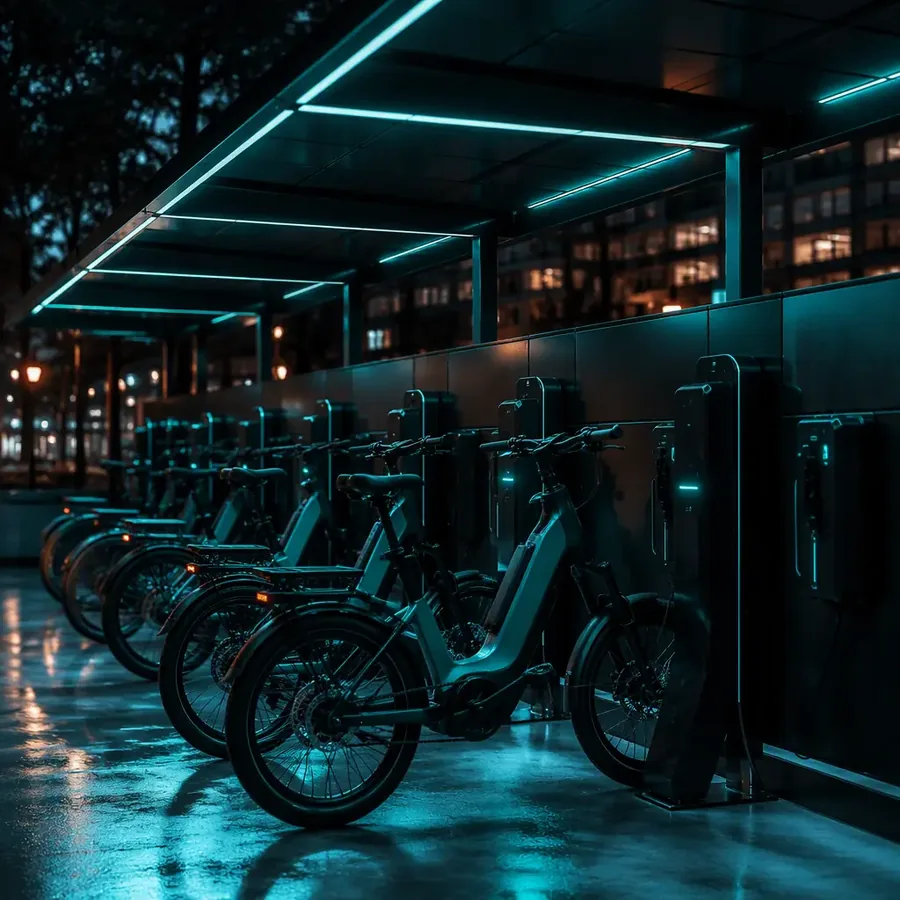
| Community shared fleets | Step-through commuter fleet | Docking or lock-to, app access, anti-vandalism | 20–300 units |
The postal and municipal-delivery configurations are the largest tender volumes, and the cargo-specific engineering (payload, torque, multi-shift battery math) is covered in depth in our cargo delivery fleet guide.
Compliance, Insurance, and Risk
Public buyers are risk-averse by design, and the compliance burden is heavier than commercial:
- Electrical-system certification. UL 2849 for US tenders and EN 15194 for EU tenders are typically mandatory minimums; the scope and documentation comparison is in our EU vs US certification guide.
- Insurance and liability . Public agencies require product liability coverage from the supplier and documented compliance with local vehicle laws. For US fleets, the state-by-state e-bike classification (which determines where police bikes can ride) is part of the legal review.
- Data protection . Telematics on public vehicles generates location data subject to privacy rules; the tender will specify data residency and retention requirements. Build the data layer to be auditable from day one.
- Warranty bonding . Larger tenders require a performance bond or warranty bank guarantee (typically 5–10% of contract value). The supplier's financial documentation must support this; it is a qualification gate, not a negotiation point.
Total Cost of Ownership: The 3-Year Public Model
Public agencies evaluate bids on total cost of ownership, not sticker price. The standard model:
| Cost Item | Light Truck | Cargo E-Bike |
|---|---|---|
| Purchase price | $28,000–35,000 | $3,000–6,000 |
| Fuel/energy per year | $3,500–5,000 | $80–150 |
| Maintenance per year | $1,500–2,500 | $200–400 |
| Insurance per year | $1,200–2,000 | $100–250 |
| 3-year TCO | $40,000+ | $5,000–9,000 |
The TCO case is why the tenders exist at all. But note the maintenance line: the public TCO model assumes the supplier can actually deliver low maintenance costs. That is the service contract, not the vehicle. A bid that includes a credible 3-year service package at a fixed price wins disproportionate evaluation points.
Supplier Qualification: What Governments Verify
Before a tender is even scored, the supplier must pass qualification. The documents governments actually request:
- ISO 9001 quality certification . The most common gate. A factory without ISO 9001 documentation is disqualified in most EU tenders regardless of product quality.
- Financial statements . The last 2–3 years of audited accounts, to confirm the supplier can honor multi-year warranties and performance bonds.
- Factory audit and reference projects . Governments audit factories directly or via third parties (SGS/BV) and ask for references from existing public or large private fleets. The audit readiness structure is the same QC discipline as our OEM buying guide.
- Certificate of origin and trade compliance . Tariff classification, country-of-origin documentation, and (for US tenders) compliance with applicable trade rules can be scored items.
- Local service partner . Most tenders require a local maintenance partner with a physical address. For an importer responding to a tender, the factory's role is to supply documentation and spare parts; the local service partner is the bidder's job to arrange.
How to Structure Your Tender Response
The bid document is a technical proposal, not a sales brochure. The structure that scores well:
- Compliance matrix . A line-by-line table mapping every tender requirement to the bid's compliance status, with the supporting document reference. This single page is what evaluators use to shortlist.
- Technical specification sheets . The vehicle spec in the tender's own format, including the range test cycle, brake performance, and battery warranty terms. No marketing language.
- Service and spare-parts plan . The repair turnaround commitment, the spare-parts list with prices, and the service network map.
- Training and documentation . Operator training materials and service manuals in the agency's language.
- TCO model . The 3-year total cost of ownership calculation matching the agency's own model, including energy, maintenance, and insurance assumptions.
Finally, time the response: public tenders run on published calendars, and the documentation package (ISO 9001, financials, certificates, factory audit) takes weeks to assemble from a Chinese factory. Start the documentation request in parallel with the bid, not after winning it. The motor and battery spec choices that keep the fleet within budget, and the compliance path for each market, are in our motor power class guide and certification guide.
Prepare a Public Fleet Bid With Factory Documentation
Tell us the tender you are responding to (agency, configuration, volume). We will supply the ISO 9001 documentation, technical spec sheets, certificate files, and factory audit access your bid needs, with sample units for evaluation.
