
Most accessible-mobility content is written for one rider buying one vehicle. Care providers do not purchase that way. A residential home, a rehabilitation centre or a day programme equips a fleet against a capability range, has to keep it roadworthy with rotating staff, and often needs the purchase to sit inside a reimbursement or grant framework rather than a personal budget.
That shift in framing changes almost every specification decision. A single rider optimises for their own comfort. An institution optimises for transfer safety across many users, charging that a night-shift carer can perform without instruction, spare parts that arrive before a vehicle is parked permanently, and documentation that satisfies a funder's dossier. This guide is the procurement-side version: how to size an adaptive mobility fleet, what to demand in test evidence, and where programmes usually get the arithmetic wrong.
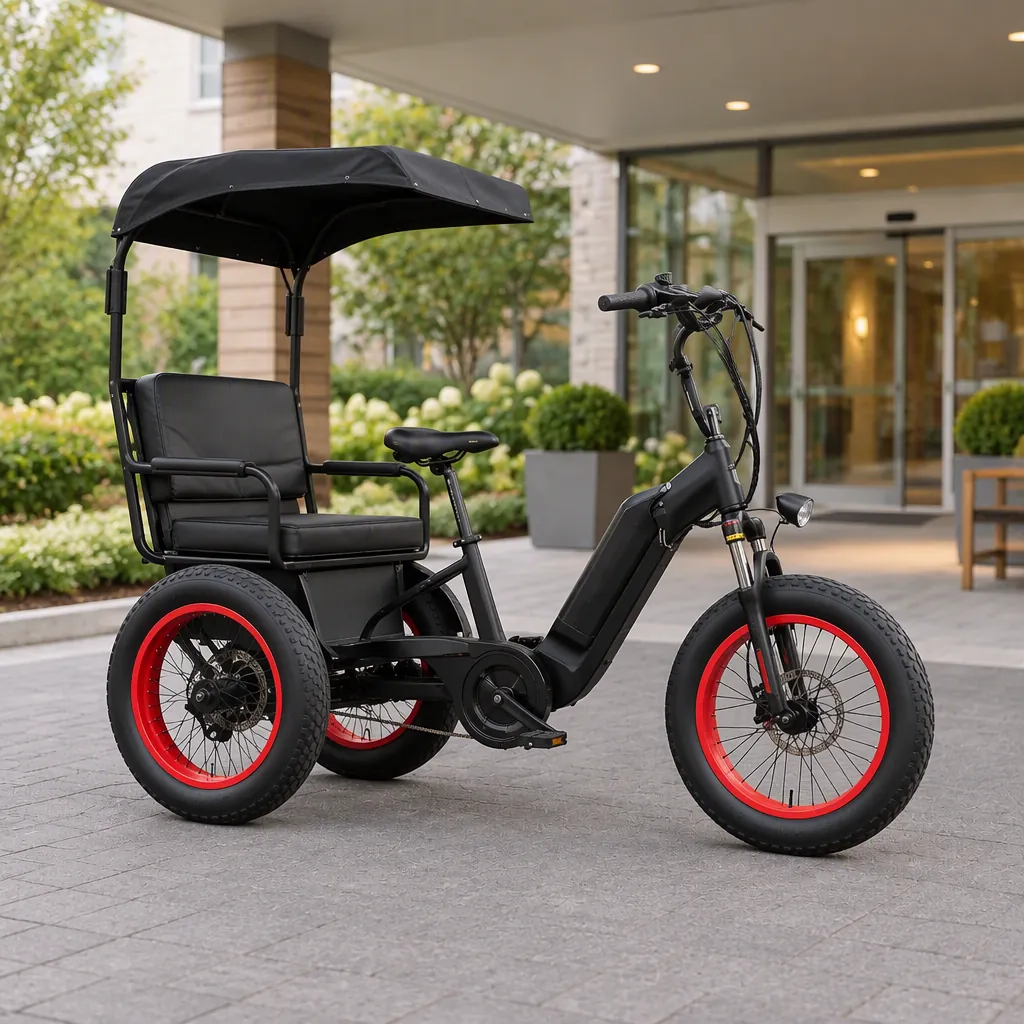
Why a Care Fleet Is Not Just More Vehicles
A mobility fleet for an institution differs from a consumer purchase in four structural ways, and each one moves a specification line:
- Multiple riders share each unit. Seat position, handlebar reach and control layout must be re-adjustable in under a minute, because a shared vehicle changes riders between morning and afternoon sessions.
- The operator is not the user. Staff oversee charging and daily checks. A battery that a fit rider lifts easily must still be manageable by a carer on a night shift, or charging simply does not happen.
- Utilisation is lower but harder. A care vehicle may run 8–15 km a day, well inside range, but indoors, on paving, across thresholds and at walking pace, where low-speed control matters far more than top speed.
- The funder is a third party. Purchases frequently route through insurance, health-fund or grant programmes, which impose their own classification and documentation conditions on the vehicle itself.
Start With Capability Tiers, Not Models
The most common procurement error is choosing vehicles first and then discovering they do not fit the resident population. Reverse it. Group intended users into capability tiers, then map one platform per tier. Three tiers cover almost every institutional programme:
| Tier | Rider profile | What the platform must provide | Typical institution |
|---|---|---|---|
| Tier A — Independent | Reduced endurance or balance confidence; still mounts and steers unaided | Delta three-wheel stability, step-through frame, upright seating, walking-speed reverse | Retirement villages, day centres, senior transport |
| Tier B — Assisted | Limited upper-body strength or dexterity; needs help boarding but rides actively | Low step-over height, large-toggle battery connector at seated height, wide padded seat with armrests, tiller or extended-reach controls | Residential care homes, respite facilities, community health circuits |
| Tier C — Supported | Significant balance or coordination impairment; supervised use only | Maximum static stability, thumb throttle rather than twist grip, speed governed low, tool-free adjustment, in-home setup documentation | Rehabilitation units, assisted-living programmes, therapy gardens |
This tier split is operational, not clinical — it does not require a therapist on the procurement committee, only an honest reading of who will actually ride. A programme that buys only Tier A vehicles and then admits a Tier C population ends up with a fleet nobody can use and a support complaint that looks like a product fault.
Delta Geometry Is the Reason Tier C Exists
Two-wheel vehicles are unusable for riders with balance impairment, and that is not a marketing statement — losing stability on a bicycle at any speed produces a fall. A delta configuration (one front wheel, two rear wheels) holds static stability at rest and retains dynamic stability at low speed through corners. That is why every Tier B and Tier C platform in this category is a trike.
Stability is not automatic, though. Three engineering details decide whether a delta trike is genuinely safe for an impaired rider:
- Ackermann steering geometry. Without it, the front wheel scrubs instead of tracking through a turn, which makes low-speed manoeuvring in a corridor or through a doorway feel unpredictable — exactly the situation a balance-impaired rider cannot compensate for.
- Anti-roll behaviour in the rear axle. A trike that corners flat at 12 km/h can still feel precarious where the surface slopes. Delta geometry reduces the risk but does not remove the need for the rider to lean into the turn.
- Walking-speed reverse. Institutional environments are full of dead ends: alcoves, ramps that end at a door, tight parking bays. A rider who cannot reverse under their own power is dependent on a carer every time they misjudge an approach.
The relevant testing reference here is ISO 7176 — a wheelchair standard, not an e-bike standard. Its parts map directly onto trike procurement: ISO 7176-1 covers static stability, ISO 7176-3 covers brake effectiveness, and ISO 7176-8 covers fatigue testing. A three-wheel mobility platform can be verified against these, and a supplier who offers to is signalling that they understand the clinical context rather than only the e-bike market.
Transfer and Mounting: The Specification Nobody Puts in the Tender
Procurement documents obsess over motor wattage and range. The specification that actually determines whether a fleet gets used is how the rider gets on and off, because that is where injuries and refusals happen.
Three numbers to demand from any supplier, in writing:
- Step-over height. For a rider with reduced hip mobility or an unweighted leg, every centimetre matters. A 35 cm step-through frame height is the working benchmark in this category — comparable to the transfer height a rider manages from a wheelchair or a walking frame, and low enough that mounting does not require a helper.
- Seat adjustment range and adjustment tool. If a seat height change needs a torque wrench, staff will not do it between sessions. Ask for the adjustment range in centimetres, not "adjustable", and ask what tool is required. Adjustment fasteners that need no more than hand-tight torque are the practical target for shared fleets.
- Armrest and backrest geometry with the seat at its highest position. Armrests help a rider stabilise during a seated transfer, but only if they remain reachable and clear of the seat cushion when the seat is raised for an able-bodied staff member's test ride. Ask for the dimension at maximum seat height, not the nominal position.
Charging That a Shift Rota Can Actually Sustain
Battery lifting is the single most common reason institutional mobility vehicles sit unused. A standard removable e-bike pack weighs 3–5 kg and must be lifted, aligned with connector pins and inserted into a frame cavity — a sequence that rules out riders with limited upper-body strength, arthritis or fine-motor impairment, and that many carers will skip when the shift is short-staffed.
Two design features resolve this, and both should be in the specification rather than bought as options:
- On-board charging. The vehicle charges where it is parked from a normal wall socket. Nobody lifts anything.
- Seated-height large-toggle connectors with an LED charge indicator. Where a pack does need attention, the connector sits at seated height and uses a large toggle rather than a small latch. The rule to state plainly in a tender: a rider or carer should never need to lift a battery above waist height or manipulate a small latch to keep a vehicle operational.
Charging arithmetic matters for fleet sizing. A 48V 20Ah on-board-charge battery returning 50 km, charged from a standard socket, suits an institutional pattern of 8–15 km per day with an overnight top-up. It does not suit a multi-vehicle bay with one socket. Count sockets before you count vehicles: a programme with four trikes and one usable outlet has one usable trike, and the failure will be reported as a range problem.
Map the Reimbursement Path Before the Purchase Order
Institutional purchases frequently need to fit a funded category. The pathways differ enough by market that the vehicle specification changes with the target country, and this is where the compliance work has to start — not at the end.
| Market | Funding route | What the vehicle needs to carry |
|---|---|---|
| Germany | Mobility aids listed in the Hilfsmittelverzeichnis can receive partial statutory health insurance (GKV) reimbursement when prescribed by a physician | Device classification, documentation aligned to the assistive-device directory criteria, spec fixed before production |
| United States | Medicare Part B covers durable medical equipment meeting specific device-classification criteria | Certificate-of-medical-necessity evidence; clear device classification |
| France | MDPH (Maison Départementale des Personnes Handicapées) funding for approved devices | Dossier de demande with technical documentation |
| Australia | NDIS assistive technology pathway | Supporting-evidence pack linked to participant goals |
| EU (general) | Non-invasive mobility aids that do not penetrate the body or administer substances fall under Class I of the Medical Device Regulation | CE medical device technical file assembly |
Alongside the funding framework, the baseline compliance set for an export-ready accessible platform is EN 15194 (EU e-bike), ISO 7176 as the reference framework for stability, brake and fatigue testing, UN 38.3 for battery transport, IP54 ingress protection, and RoHS / REACH materials compliance. A supplier who cannot produce these on request is not a viable institutional partner regardless of unit price, because the dossier is what unlocks the funding.
Sizing the Fleet: A Worked Calculation
Fleet size arguments usually stall on "how many do we need". Here is the arithmetic that resolves it, using figures an institution can actually measure:
- Riders per session, not residents in total. If a 90-bed home has 22 residents who would ride, and sessions run morning and afternoon with 8 riders each, you need concurrent capacity for 8 — not 22.
- Add 25% for availability. With workshop time, adjustments and charging rotation, 8 concurrent riders implies a working fleet of 10.
- Split by tier. If the 8 concurrent riders break 5 Tier A / 2 Tier B / 1 Tier C, that is the mix to buy — not a uniform batch of one model.
- Check the storage and charging footprint. A delta trike occupies substantially more floor area than a bicycle and cannot be hung. Measure the actual bay, including the turning space a rider needs to park unaided.
Note what this calculation deliberately excludes: top speed. Institutional adaptive fleets run on speed-governed platforms, and the specification that matters is the low-speed governor range and whether it is adjustable per rider, not the maximum. A trike governed at walking pace for a rehabilitation garden and the same platform governed higher for a retirement village commute are the same chassis with a different setting — which is an argument for buying one platform family rather than two unrelated models.
Spare Parts, Training and the Service Contract
An institutional fleet fails on service, not on specification. Four clauses to settle before signing:
- Consumables with a stated reorder horizon. Tyres and brake components are the recurring items. For a platform on 10-inch pneumatic tyres, confirm the tyre and tube part numbers are catalogued and reorderable, and get the expected replacement interval under institutional daily use.
- A spares kit shipped with the first order. Not a catalogue — actual stock on site, sized to the fleet. The first flat tyre should not take a facility offline for a fortnight.
- Staff training, not a user manual. Carers need to perform the daily check, the seat adjustment and the charging routine confidently. Ask for the training scope in the quotation, and check whether setup documentation is illustrated and available in multiple languages — the working set for European programmes is English, German, French, Spanish, Italian and Dutch.
- Clinical technical support. Prescribing clinicians and occupational therapists ask engineering questions — fitment, home-environment compatibility, custom adaptation. Establish whether that channel exists and at what cost. A supplier offering it free of charge is materially easier to run a programme with.
Warranty scope should be read structurally rather than as a duration. The meaningful split for an institutional buyer is three years on structural welds and the trike chassis plus two years on electrical components — motor, controller, battery and on-board charger. A single blanket figure hides which failures are covered, and structural failure is the category that matters for a fleet carrying impaired riders.
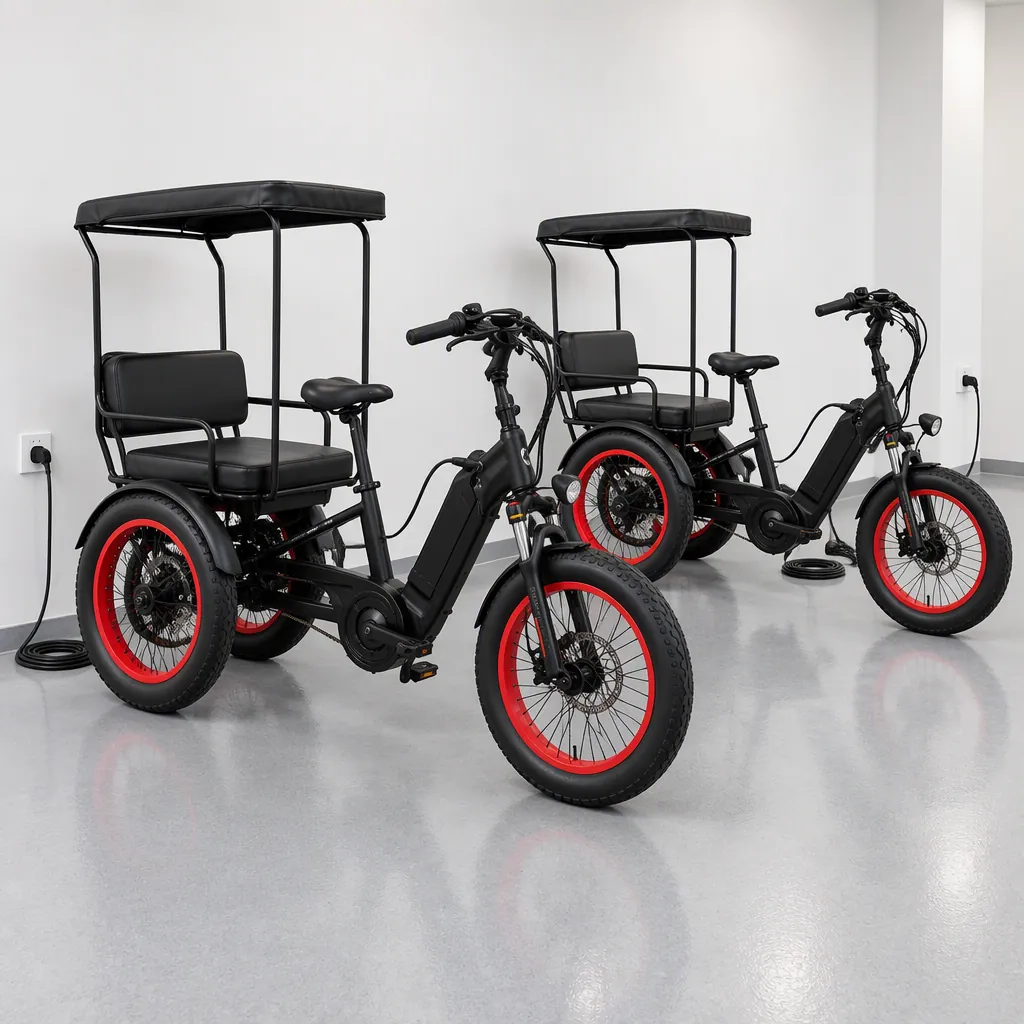
Programme Patterns That Work
Three institutional buying patterns recur, and each implies a different configuration emphasis:
Reimbursement-driven programme
Driven by a health-fund or insurance channel. Device classification, documentation aligned to the reimbursement criteria and a spec fixed before production are the priorities; the vehicle is one line in a regulated pathway. Expect the funding body to impose evidentiary requirements that must be met at the factory, not after import.
Community access programme
Run by a municipality, community centre or active-ageing service. Several sites each hold a small fleet, so the design emphasises safety margin over speed: delta trike geometry, step-through access, on-board charging and a low-maintenance daily routine. District programmes typically bundle vehicle, spares and staff training as one delivery.
Rehabilitation and care-home fleet
Equips a therapy garden, a grounds circuit or an escorted outdoor route. The specification centres on supervised use: governed speed, thumb throttle, tool-free seat adjustment and in-home setup guidance. Because the rider population changes, adjustability across the tier range matters more than any single rider's fit.
For readers who have not yet settled the vehicle architecture itself, the companion pieces on specifying an adaptive e-tricycle as an OEM programme and on the accessibility and inclusive mobility platform range cover the engineering and programme-design side in more depth. Fleet-level charging economics are covered in the fleet charging guide, and the funding and procurement-finance structures in the fleet financing guide.
The Procurement Checklist
Before issuing a purchase order for an adaptive mobility fleet, a care provider or rehabilitation centre should be able to answer every line below. An unanswered line is a gap that will surface as an unusable vehicle or a rejected funding claim.
- Capability tiers defined, with rider counts per tier and platform per tier
- Concurrent capacity calculated from session size, not total population
- Delta trike geometry confirmed, including Ackermann steering and walking-speed reverse
- Step-over height stated as a number — 35 cm is the working benchmark
- Seat adjustment range, required tool and time-to-adjust given in writing
- On-board charging confirmed, with connector height and type specified
- Charging sockets counted against fleet size before the order
- ISO 7176-1 / -3 / -8 evidence and EN 15194 certificate requested
- Reimbursement pathway identified per market, with the required dossier documented
- Spares kit on site with reorder part numbers for tyres and brake components
- Staff training scope and language set included in the quotation
- Warranty split confirmed: structural chassis term versus electrical component term
- Storage and parking footprint measured, including unaided turning space
Related reading for adjacent institutional fleet contexts: municipal public-works fleet specification, community health outreach circuits, in-plant material handling platforms, and after-sales and spare-parts programmes.
Spec an Adaptive E-Tricycle
Tell us your rider group, target market and whether you need device-classification and reimbursement documentation. We will quote the delta trike platform with a step-through frame, captain seat and on-board charging, FOB China.
